A raised bed is not a box of soil. It is a promise to manage everything the ground used to manage for you.
Raised beds look simple because the edges are straight. The work inside them is not. Once you lift a garden above the native soil, you take responsibility for drainage, fertility, moisture, depth, access, and the way roots will share a limited volume.
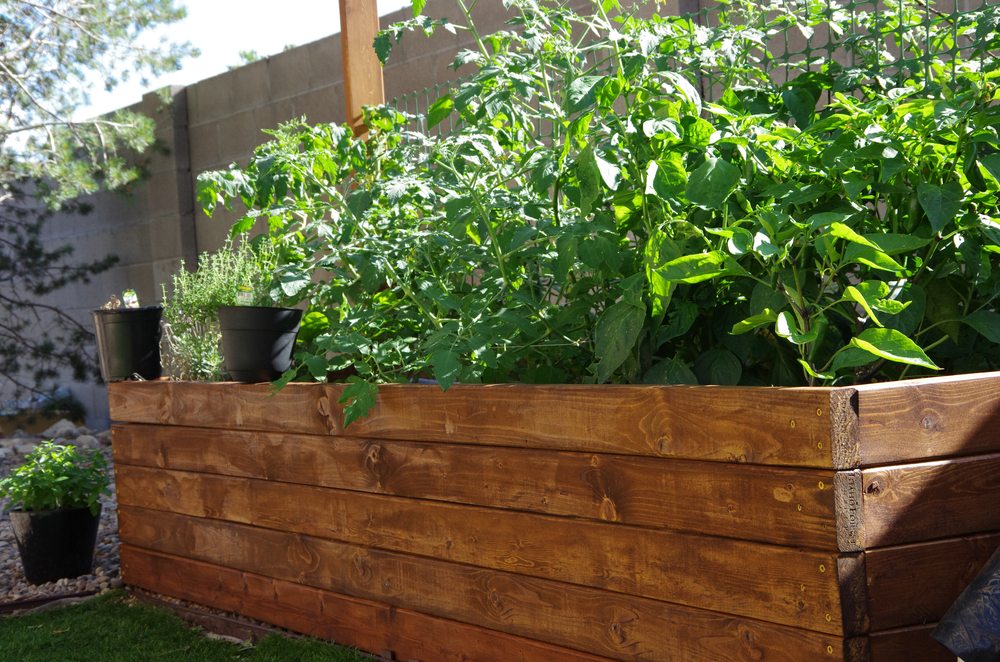
I have learned to judge a bed by what happens in July, not by how clean it looks in March. Can water reach the center without flooding the edges? Can a gardener reach every plant without stepping into the soil? Does the mix hold moisture after three hot days? Is the trellis placed where it will not shade the crops behind it?
A 4 × 8 bed can produce an astonishing amount of food, but only when the design respects mature plant size and harvest access. Crowding looks efficient at planting time. By midsummer it becomes a negotiation over light, airflow, and disease.
This guide treats the raised bed as a working system—one that should still make sense after the first season, when the boards have weathered and the gardener knows which promises were realistic.
Spring forgives bad design. Summer exposes it. A shallow bed dries fast. A walkway that looked wide enough disappears under squash leaves. A trellis becomes a wall. Build for the season when the plants are largest and the gardener is tired.
Design the work before you build the box
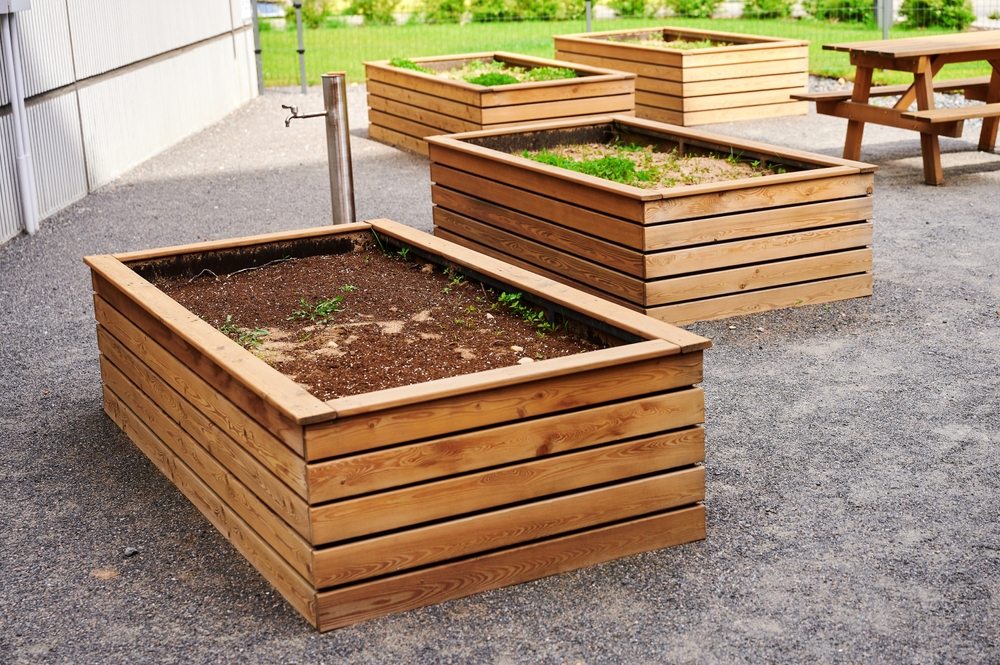
A raised bed solves specific site and access problems. It also creates new management needs.
| Decision | Good question | Why it matters |
|---|---|---|
| Width | Can every part be reached without stepping in the bed? | Foot traffic compacts the root zone |
| Height | Is the goal drainage, accessibility, contaminated-soil separation, or aesthetics? | More height increases soil volume, cost, and drying |
| Location | How many hours of direct sun does the crop need? | A bed cannot compensate for the wrong light |
| Water | Can irrigation reach every corner consistently? | Raised beds often dry faster |
| Number of beds | Would several smaller beds improve rotation and access? | Separate beds make crop-family rotation and cover cropping easier |
A 4-by-8 rectangle is common because it is easy to build, not because every gardener or crop needs that exact size.
Measure reach, water, sun, and mature size
Measure the gardener and the site before ordering materials.
- Reach comfortably from each accessible side.
- Allow paths wide enough for the actual tools and mobility devices used.
- Track sun from spring through fall; nearby trees cast different shadows later.
- Check where rain drains and whether the bed will sit over compacted soil or pavement.
- Locate water before the bed is full.
- Calculate soil volume and delivery access.
Leave a little space unclaimed. Keep notes on where water pools, where the soil settles, which crops shade their neighbors, and how far you can comfortably reach. A raised bed becomes valuable when it stops being a photograph and starts becoming a tool.
A step-by-step setup that can be maintained
The best build is durable enough for the site and simple enough to repair.
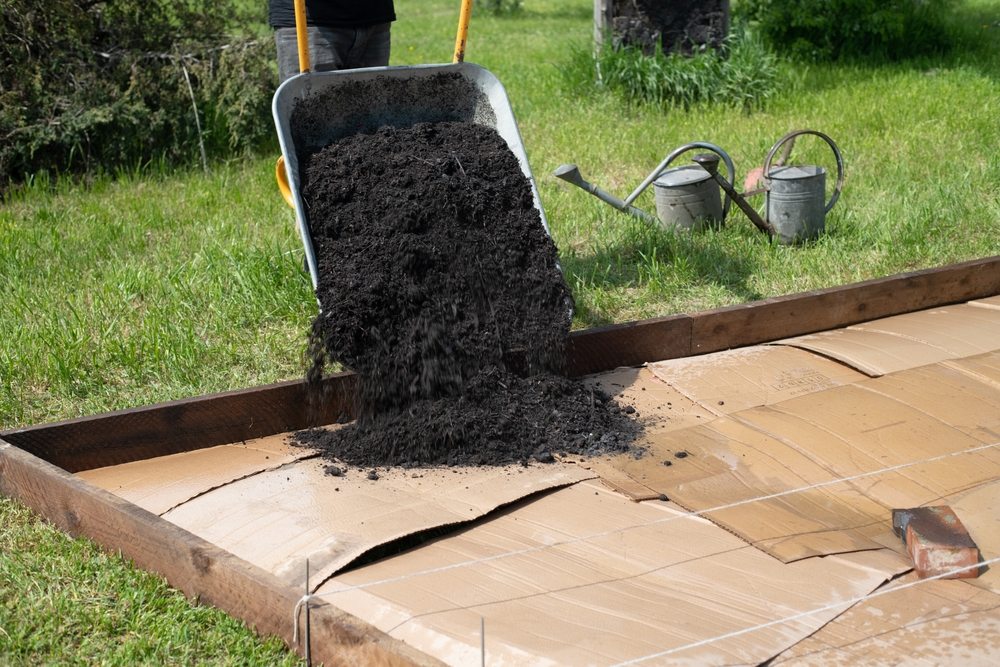
- Remove or suppress existing vegetation without creating an impermeable bottom.
- Loosen compacted native soil when the bed sits over ground.
- Build a level frame with materials appropriate for food gardening and the local climate.
- Use hardware cloth only where burrowing animals justify it.
- Fill with a balanced mineral soil and compost blend rather than pure compost.
- Install irrigation or a reliable watering plan.
- Mulch after planting and keep permanent access paths outside the bed.
Repeated heavy compost additions can build excessive phosphorus and salts. Test raised-bed soil just as you would an in-ground garden.
On a wet Coastal Plain site, elevation and drainage may be the main advantage. In heavy Piedmont clay, a bed can create a workable root zone while the surrounding paths remain firm. In the mountains, quick spring warming may help, but exposed beds can also dry and cool faster.
The best raised bed is not the most expensive one. It is the bed that makes watering, weeding, harvesting, and soil care easier for the person who must return to it every week. Beauty matters. So does reach. So does the ability to repair one board without dismantling the whole garden.
Match the plan to the crop
A bed layout should reflect plant size, vertical support, harvest frequency, and succession.
| 4 × 8 layout | Example planting | Design logic |
|---|---|---|
| Spring salad bed | Rows or blocks of lettuce, radish, spinach, scallions, and peas on a north trellis | Fast crops, repeated harvest, vertical support away from shorter greens |
| Summer kitchen bed | Two trellised cucumbers, compact peppers, basil, and edge-grown scallions | Trellis on north side; frequently harvested herbs near path |
| Tomato bed | Two or three supported tomatoes with basil or low herbs at the edge | Airflow and access matter more than filling every square |
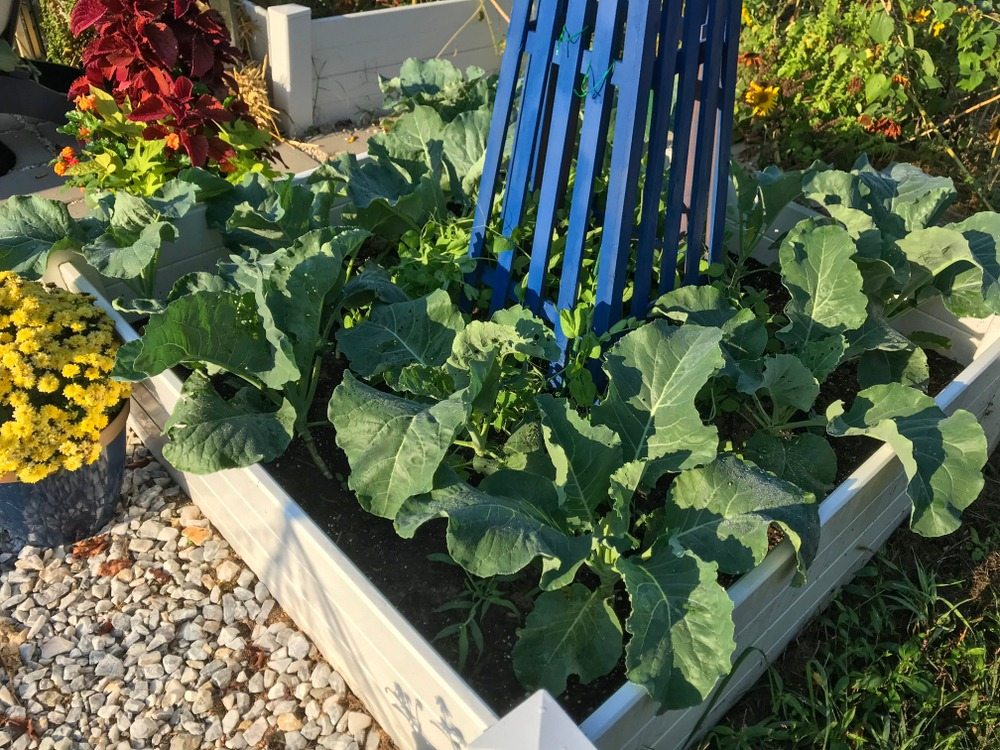
| Fall transition bed | Brassica transplants, carrots, beets, and a small lettuce succession | Start transplants before summer crops are removed |
| Pollinator-and-food bed | Okra or compact sunflower at north, bush beans, herbs, and annual flowers | Combines height, harvest, and bloom without shading the whole bed |
These are starting frameworks, not fixed square-foot formulas. Variety size and climate should change the plan.
Common mistakes and why they happen
Raised beds fail most often through overfilling, under-watering, and over-planting.
| Mistake | Why it causes trouble | Better approach |
|---|---|---|
| Filling with pure compost | It can settle, dry, and accumulate nutrients or salts | Use a balanced soil blend and test it |
| Bed too wide | The center is stepped on or neglected | Reduce width or add access |
| No irrigation plan | Edges and high beds dry quickly | Install drip or schedule direct checking |
| Planting every inch | Airflow and harvest access disappear | Plan mature plant size |
| No rotation | Soilborne problems accumulate in a small footprint | Use multiple beds or crop-family records |
Keep records that make the next season easier
A bed map turns a small space into a learnable system.
- Bed dimensions and soil depth
- Soil source and amendment dates
- Soil-test results
- Crop family by season
- Plant spacing and support location
- Irrigation changes
- First and last harvest
- Disease or pest patterns
- Cover crops and fall protection
A raised bed earns its value when it becomes easier to manage every year.
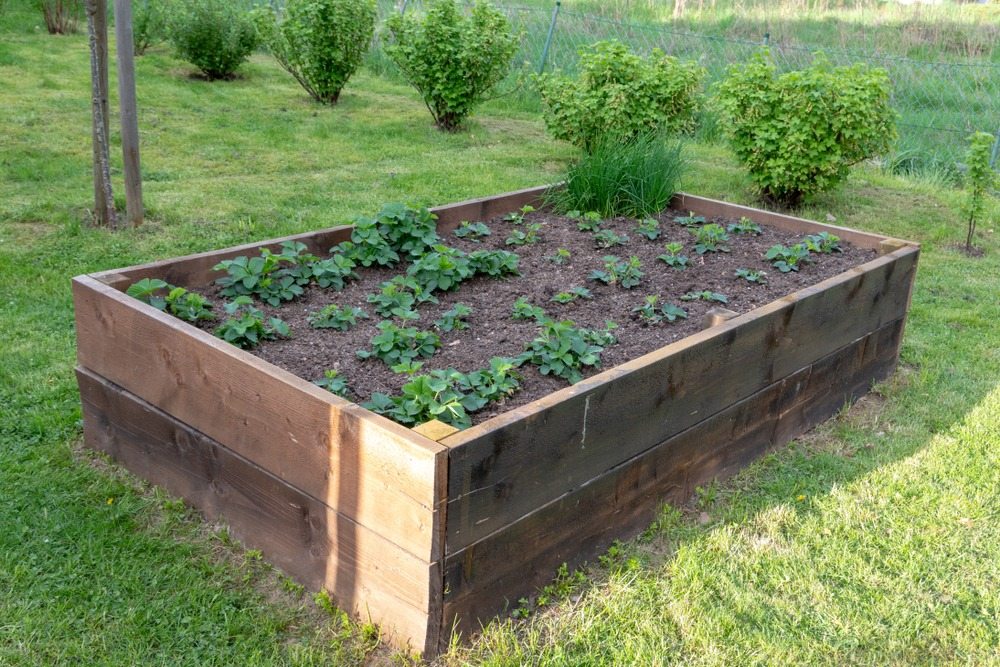
A 4 × 8 layout that still works in midsummer
A four-by-eight-foot bed is popular because most gardeners can reach the center from both sides. I still plan it around plant height, harvest traffic, irrigation, and succession rather than dividing it into identical squares and filling every square at once.
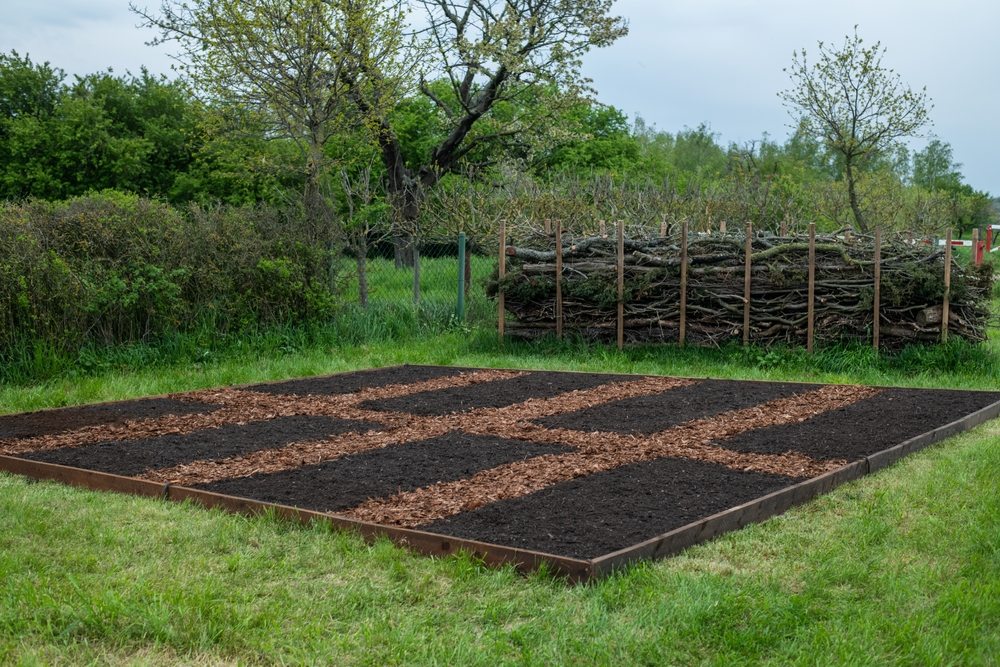
- Place the tallest trellised crop where it will not shade the rest of the bed unnecessarily.
- Reserve an edge for crops harvested often, such as lettuce, herbs, or snap beans.
- Group crops with similar watering needs so one corner is not constantly too wet or too dry.
- Leave a small open area for a second sowing instead of planting the entire bed on one date.
- Keep sprawling squash outside the main path or train a suitable variety vertically.
- Use the bed perimeter for quick crops, flowers, or herbs only when they do not block access.
One workable plan is a north-side trellis, two central blocks for medium-height crops, and a south-facing strip for low greens or roots. The exact compass direction changes with the site, but the principle stays the same: design for sunlight and hands at harvest time.
I draw the bed twice—once as it looks on planting day and once at mature size. The second drawing usually catches the spacing mistake the first one hides.
Questions gardeners ask
How deep should a raised bed be?
The answer depends on the underlying soil, crop roots, drainage, and accessibility goal. A shallow frame over good loosened soil can grow many vegetables; beds over pavement need sufficient root-zone depth and drainage.
Can I put cardboard under a raised bed?
Cardboard can temporarily suppress vegetation but may slow water movement until it breaks down. UMN Extension recommends removing impermeable barriers and focusing on killing vegetation and loosening soil.
What should I fill a raised bed with?
Use a balanced mix containing mineral soil and mature compost. Avoid filling the entire bed with compost or fresh manure.
Why does my raised bed dry out so fast?
Raised sides, warm soil, wind, shallow root zones, and porous mixes increase water loss. Mulch, irrigation design, and deeper watering help.
How many tomatoes fit in a 4-by-8 bed?
Often two to four depending on variety, support, pruning, climate, and access. Large unpruned indeterminate plants may need more room than a square-foot chart implies.
Should I line a raised bed with plastic?
Impermeable plastic can trap water and restrict roots. Use a food-garden-appropriate side liner only when needed to protect materials, and preserve drainage.
The goal is not to fit the maximum number of plants. It is to build a bed that still feels workable in August.