Squash bugs and squash vine borers can both leave a plant wilted, but they do not attack in the same way. One feeds on the surface as a true bug. The other hides as a larva inside the stem. Treating them as the same pest wastes the short window when either can be stopped.
The first job is to look at the plant base, leaf undersides, and the timing of the collapse. The evidence is usually there.
Squash bug management is strongest against eggs and young nymphs on leaves. Vine borer management is strongest before larvae enter the stem. Once the damage is hidden, the options narrow quickly.
Confirm squash bugs or squash vine borers before treating
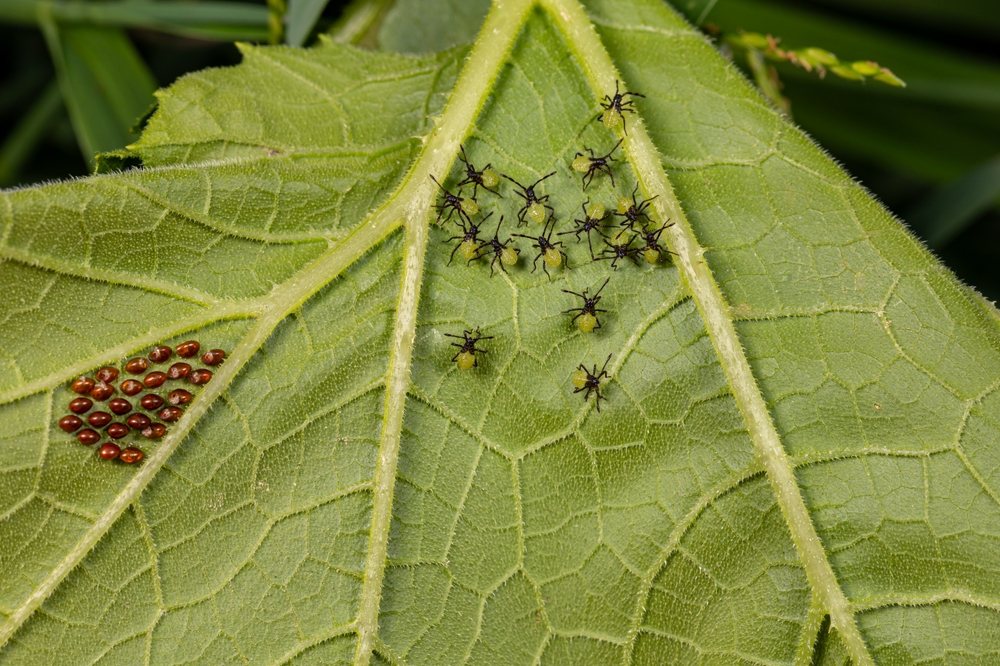
Squash bugs are flattened gray-brown insects that lay bronze eggs in neat clusters, often along leaf veins. Their young nymphs begin pale and darken as they grow.
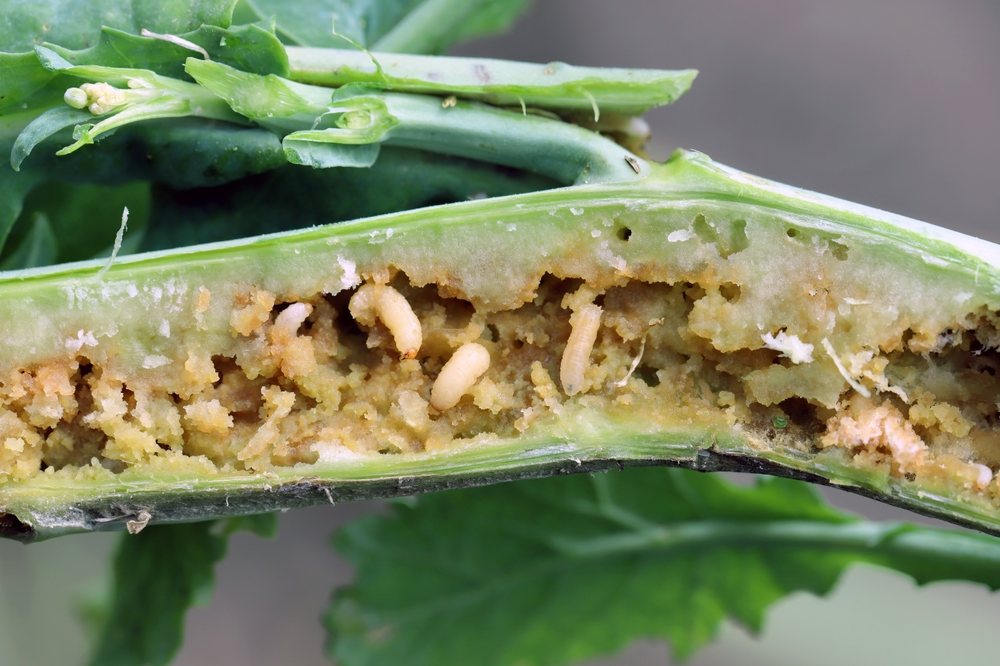
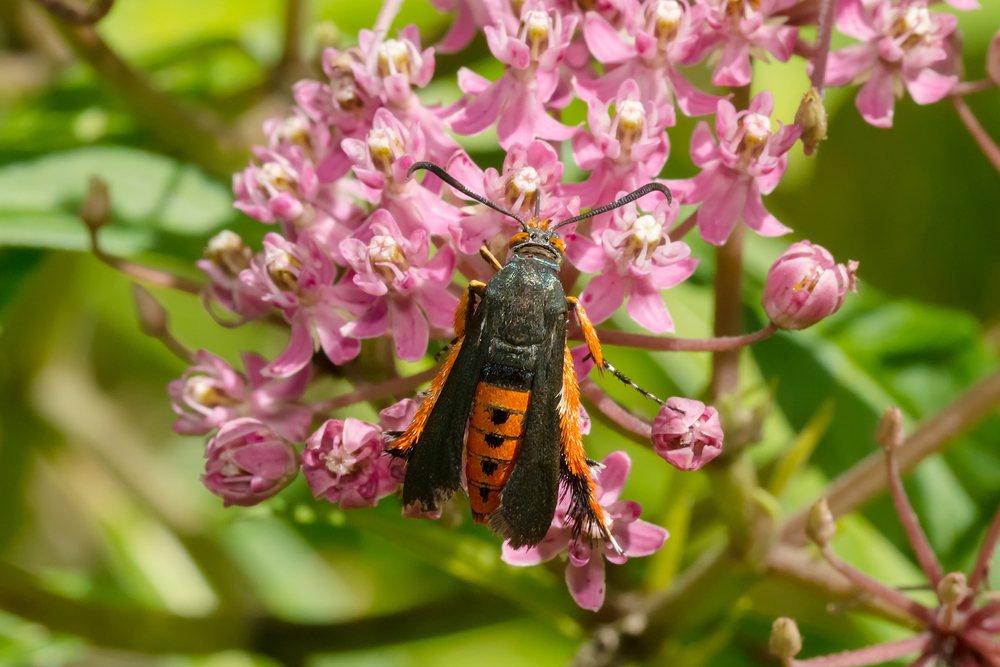
Squash vine borer adults are day-flying clearwing moths. Their cream larvae enter stems, leaving a hole and moist sawdust-like frass near the crown.
- Look under leaves for bronze egg clusters.
- Look at the crown for frass, split tissue, and entry holes.
- Check whether wilting is worst in sun or continues into the cool morning.
Read the pattern, not one damaged leaf
Squash bugs remove plant fluids from leaves and stems, producing yellowing, bronzing, and wilt when numbers are high. Vine borer larvae physically destroy water-conducting tissue inside the stem.
Bacterial wilt, drought, root injury, and other stem borers can imitate part of the picture, so the base of the plant matters.
| What you see | What it suggests | What to check next |
|---|---|---|
| Bronze eggs in clusters under leaves | Squash bug | Remove eggs and look for gray nymphs |
| Fine orange or green frass at stem base | Squash vine borer | Inspect the crown and confirm an entry hole |
| Sudden wilt with no stem frass | Water stress, root damage, or disease | Check soil moisture and cut stems only after other causes are considered |
| Gray adults hiding under boards | Squash bug | Use boards as monitoring refuges and remove insects each morning |
Start with the least disruptive correction
Scout twice a week from early growth through midsummer. Remove squash bug egg clusters and small nymphs before the population spreads. Watch for vine borer adults and protect susceptible stems before eggs hatch.
- Grow Cucurbita moschata types where vine borer pressure is severe.
- Use row cover early, but remove it when flowers need pollination.
- Destroy vines killed by borers rather than leaving larvae to complete development.
- Rotate cucurbits where space allows and clean crop residue at season end.
Protect the crop while the garden recovers
The common failure is waiting until the whole plant collapses. Squash bug nymphs are easier to manage than adults, and vine borer larvae are far harder to reach after entry.
A heroic surgery on a collapsed vine may save a plant, but prevention is the better bargain.
- Do not leave row cover over flowers that require insect pollination.
- Do not confuse stink bug eggs with squash bug eggs without checking arrangement and host.
- Do not assume every wilted squash has a borer.
Use weather and season as part of the diagnosis
In the Mid-Atlantic, adult vine borers may appear earlier than northern charts suggest. Begin watching in late spring as vines gain size, especially in warm coastal and Piedmont gardens.
A second sowing of summer squash after the main adult flight can sometimes escape the worst pressure. Mountain timing may be later, but local observation is more useful than a national date.
Know when the problem needs a different answer
Split stems only when evidence points to a borer, and do it with a clean blade. Removing tissue from a plant with bacterial wilt or root failure does not solve the cause.
Seek extension help when multiple cucurbit species collapse, a disease is suspected, or pesticide timing must be matched to local insect activity.
Apply any pesticide strictly according to the crop, pest, pollinator, and harvest directions on the label.
Put this guide to work in a real garden
Put this guide beside the plant, not just beside the computer. Begin with one affected specimen and compare it with a healthy plant of the same kind. Record where the symptoms begin, whether the newest growth is changing, and what insects or fungal signs are actually present. With squash bugs, the pattern is usually more useful than the most dramatic leaf.
- Mark the affected plant and the date.
- Inspect the upper and lower leaf surfaces, stems, crown, and nearby soil.
- Note recent rain, irrigation, heat, fertilizer, transplanting, or pruning.
- Choose the least disruptive correction that addresses the confirmed cause.
- Return on a scheduled date instead of treating repeatedly from anxiety.
Use a 30-day checkpoint instead of guesswork
Day 14: decide the next level
Keep a one-season record
- Host plant and cultivar
- First symptom and plant part affected
- Weather and watering during the previous week
- Natural enemies, eggs, larvae, spores, or residue observed
- Action taken and what changed afterward
Questions gardeners ask
Which pest lays bronze eggs under squash leaves?
Squash bugs commonly lay bronze to reddish-brown eggs in clusters, often arranged near leaf veins.
What does squash vine borer frass look like?
It resembles moist, coarse sawdust and may be greenish, tan, or orange around a hole near the plant base.
Can row cover prevent both pests?
Early row cover can reduce access by adults of both pests, but it must be removed for pollination unless flowers are hand-pollinated.
Are butternut squash resistant to vine borers?
Cucurbita moschata types such as butternut are generally less susceptible than many summer squash, though they are not invulnerable.
Should I compost infested vines?
Do not leave living larvae in a slow or cool compost pile. Destroy badly infested vines or use a hot, actively managed compost system that reliably reaches lethal temperatures.
The difference between these pests is not academic. It is the difference between scraping eggs from a leaf and searching for a larva already sealed inside a stem.
Sources and further reading
Control hierarchy
- Confirm the affected plant, growth stage, and damaged tissue.
- Remove the immediate stress when possible: water correctly, improve airflow, exclude the pest, or remove badly infected material.
- Use physical and cultural controls before broad treatments.
- Protect beneficial insects and follow every pesticide label exactly when a labeled treatment is justified.
- Record the outcome and change next season’s timing, rotation, sanitation, or variety choice.