
A zucchini plant in a small pot is not a compact garden. It is a thirsty plant under sentence. The leaves are broad, the roots occupy more volume than the transplant suggests, and the fruit grows fastest when water and pollination do not fail at the same time.
The container must be chosen for the mature plant. A five-gallon pot is a minimum starting point for many compact types; larger containers buffer heat and moisture better.
Crowding several zucchini plants into one decorative pot creates an impressive first month and a disappointing harvest. Give one plant enough root room and access to every flower.
Know what kind of container zucchini you are growing
Zucchini is a summer squash, usually Cucurbita pepo, with separate male and female flowers on the same plant. Bush types are more practical in containers than long vining forms.
Female flowers have a small immature fruit behind the bloom. Male flowers appear on slender stems and often arrive first.
- Compact does not mean tiny roots.
- Flowers are open for a short period.
- Fruit should be harvested young and often.
Choose the form or variety for the job
Choose a compact, productive variety and the largest container the space can support.
Dark pots heat quickly; fabric pots dry quickly; shallow pots restrict roots.
| Garden goal | Best fit | What to watch |
|---|---|---|
| Balcony or patio | Compact bush zucchini in 10-20 gallons | Secure the pot and expect frequent watering |
| Hot exposed site | Large light-colored or insulated container | Protect roots from extreme heat |
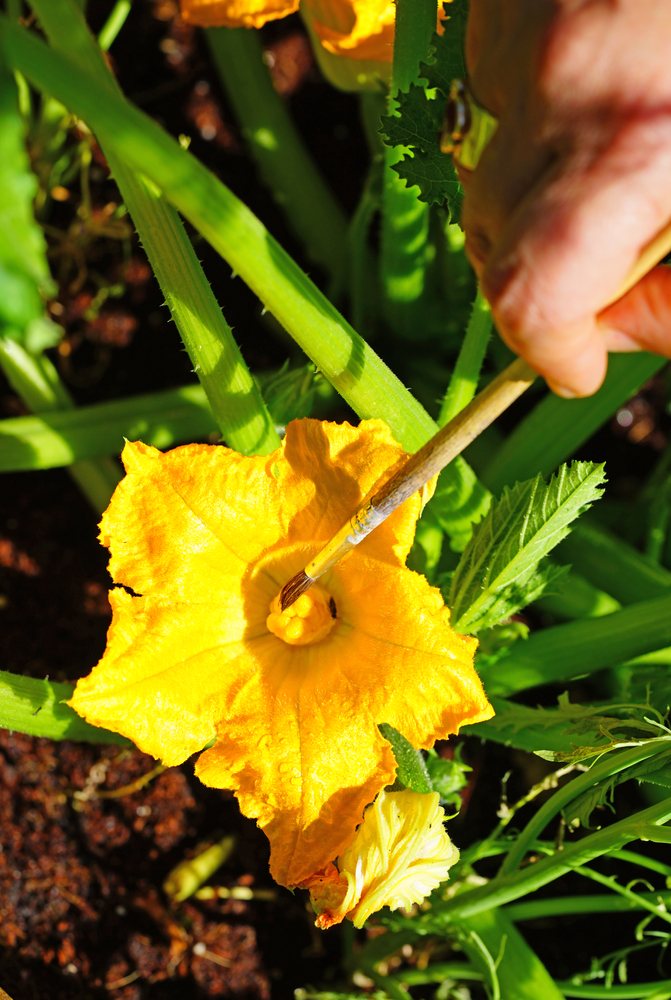
| Pollinator-poor space | Plant with hand-pollination access | Check flowers early in the morning |
| Small decorative pot | Choose a smaller crop instead | Zucchini will outgrow it |
Start seed at the right time and depth
Start indoors only a few weeks before transplanting or direct sow in the final container after frost danger.
Squash roots dislike being held too long in small cells.
- Sow 1 inch deep.
- Use warm mix.
- Thin to one strong plant.
- Harden transplants carefully.
Build the site before the plant asks for rescue
Use full sun, high-quality potting mix, and a container with generous drainage.
Leave space around the plant for air movement and flower access.
- Do not use heavy garden soil alone.
- Raise pots so drainage holes remain open.
- Mulch the surface after the plant is established.
Manage water, fertility, and growth
Water thoroughly whenever the upper mix begins to dry. During hot fruiting weather, this may be daily.
Feed with a balanced program based on the potting mix and plant response. Containers lose nutrients through drainage.
- Avoid chronic saturation.
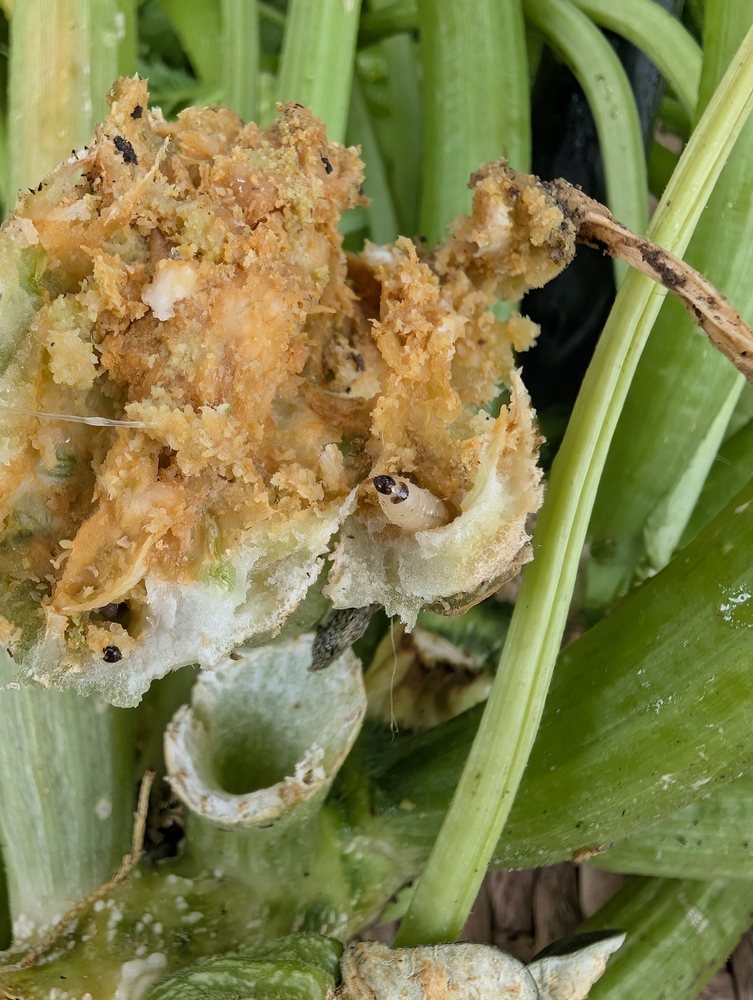
- Inspect for vine borers and squash bugs.
- Hand-pollinate early flowers when needed.
Harvest at the stage that matches the use
Harvest zucchini small to medium, before skins harden and seeds enlarge. Frequent harvest keeps the plant producing.
Cut fruit with a clean knife rather than twisting the stem.
Troubleshoot the common failures
Wilting, blossom-end rot, poor fruit set, powdery mildew, squash vine borers, and rootbound decline are common.
A plant that wilts every afternoon but recovers by morning may be managing heat; a plant that stays wilted needs immediate investigation.
| Symptom | Likely cause | First correction |
|---|---|---|
| Tiny fruit yellows and drops | Incomplete pollination | Hand-pollinate and support pollinators |
| Fruit end turns brown | Moisture-driven blossom-end rot | Stabilize watering |
| Plant suddenly collapses | Vine borer or root failure | Inspect stem base and roots |
| White coating on leaves | Powdery mildew | Increase airflow and remove badly affected tissue |
Adjust the plan across the Mid-Atlantic
Coastal and Piedmont heat makes container volume critical. Morning sun with some late-afternoon relief can protect pots without depriving the plant of light.
Mountain gardens may have a shorter season but cooler root zones.
A productive container is a water and soil reservoir first, a decoration second.
Put this guide to work in a real garden
Put Growing Zucchini in Containers: Pot Size, Pollination, and Productive Plants into a one-season plan before buying more inputs. Choose the variety or material, mark the bed or container, write the sowing or planting date, and decide what success will look like: first harvest, stem length, fruit set, bloom, survival, or control of spread.
Inspect on a schedule. Early problems are usually easier to correct because the crop has more season left and the cause has not been buried under secondary damage. Water, fertility, airflow, support, and harvest timing should be adjusted from the plant’s response rather than from a rigid weekly ritual.
At the end of the crop, keep the record honest. Note what performed, what merely survived, what required too much labor, and what deserves a larger planting next year. Experience becomes expertise only when it is remembered accurately.
- Choose the variety and define the intended use.
- Prepare soil, container, support, or irrigation before planting.
- Set a weekly inspection date.
- Harvest or prune at the stage described in the guide.
- Write a short end-of-season verdict.
Use a 30-day checkpoint instead of guesswork
Before planting
Choose the variety, site, support, soil preparation, and irrigation method while the bed is still easy to change.
First two weeks
Protect establishment. Watch moisture, light, wind, transplant shock, and early pest pressure.
At rapid growth
Adjust spacing, support, pruning, and fertility before the plant becomes difficult to handle.
At first harvest or bloom
Record quality, timing, labor, and the plant’s response. Use that evidence to guide the rest of the season.
A guide provides a sound starting system, not a guarantee. Cultivar, weather, soil history, and management interact, and the correct response may change as the plant moves from establishment to harvest.
Keep a one-season record
The record does not need to be elaborate. A notebook page, spreadsheet row, or labeled photograph is enough when it captures the variables that matter.
- Variety and source
- Planting date and location
- Water, fertility, and major weather events
- First harvest or bloom and total season length
- Problems, corrections, and next-year decision
Write enough that another grower-or you, one year later-could understand what was planted, what happened, and why the next decision changed.
Questions gardeners ask
What size pot does zucchini need?
Use at least a substantial five-gallon container for a compact type, though 10 to 20 gallons gives better water and root buffering.
Can one zucchini plant make fruit?
Yes, one plant has male and female flowers, but timing and pollination must align.
Why do baby zucchini rot and fall off?
Incomplete pollination is common. Moisture stress and disease can also contribute.
How often should container zucchini be watered?
Whenever the upper mix begins to dry; in hot weather, a large fruiting plant may need daily watering.
Should zucchini be hand-pollinated?
Hand pollination is useful when pollinators are scarce or early female flowers are not setting fruit.
Container zucchini is not a miniature crop. It is a full-sized appetite held inside a boundary. Build the boundary generously, and the harvest will stop feeling like an accident.


