
Marigold growing guide
Marigold usually means a species of Tagetes, but French, African, signet, and Mexican mint marigolds differ in height, flower size, flavor, and garden use. Calendula is often called pot marigold and belongs to a different genus.
French marigolds stay compact and branch freely. African marigolds grow taller with large flower heads. Signet marigolds carry smaller single flowers and finely divided foliage. Mexican mint marigold is a distinct warm-season herb and perennial in mild climates.
Choosing the type first prevents disappointment and keeps pest-control claims from replacing actual horticulture.
Marigolds are dependable, which is not the same as magical. They earn their place through heat, color, cutting, insects, and the simple discipline of continuing to bloom.
Choose the marigold by species and scale
| Type | Botanical name | Best fit |
|---|---|---|
| French marigold | Tagetes patula | Edges, containers, mixed beds, repeated bloom |
| African marigold | Tagetes erecta | Tall bedding, large cuts, bold display |
| Signet marigold | Tagetes tenuifolia | Fine texture, small edible-use cultivars, edging |
| Mexican mint marigold | Tagetes lucida | Anise-scented herb and warm-climate perennial |
Use cultivar height as well as species. A dwarf African marigold and a tall French selection can blur the common-name expectation.
Start indoors for early bloom or direct sow in warm soil
Sow seed in a clean mix several weeks before planting out, or direct sow after frost when soil is warm. Cover lightly, maintain even moisture, and provide strong light after emergence.
Marigolds grow quickly. Do not start so early that they become root-bound and flower in small cells. Harden gradually before planting outdoors.
Give sun, drainage, and restrained fertility
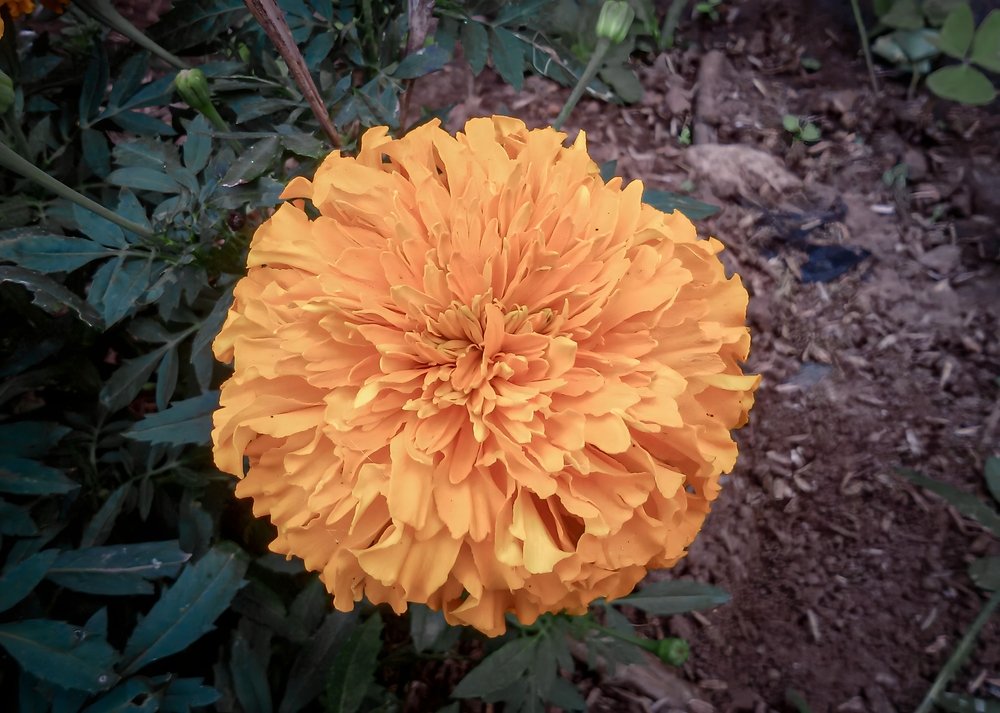
Full sun produces compact branching and heavy bloom. Marigolds tolerate average soil and should not be driven with excessive nitrogen. Rich wet conditions can produce soft foliage and disease.
Space for mature size and air movement. Water the root zone, especially in humid weather. Tall African types may need support where storms and heavy flowers bend stems.
Pinch and deadhead according to the type
Pinch young branching plants when a fuller habit is wanted. Deadhead spent blooms to maintain appearance and direct energy toward new flowers. Leave selected heads only when saving seed.
For cutting, harvest fully formed flowers with firm stems during the cool part of the day. Large African types usually provide longer stems than compact French types.
Use marigolds realistically in the garden
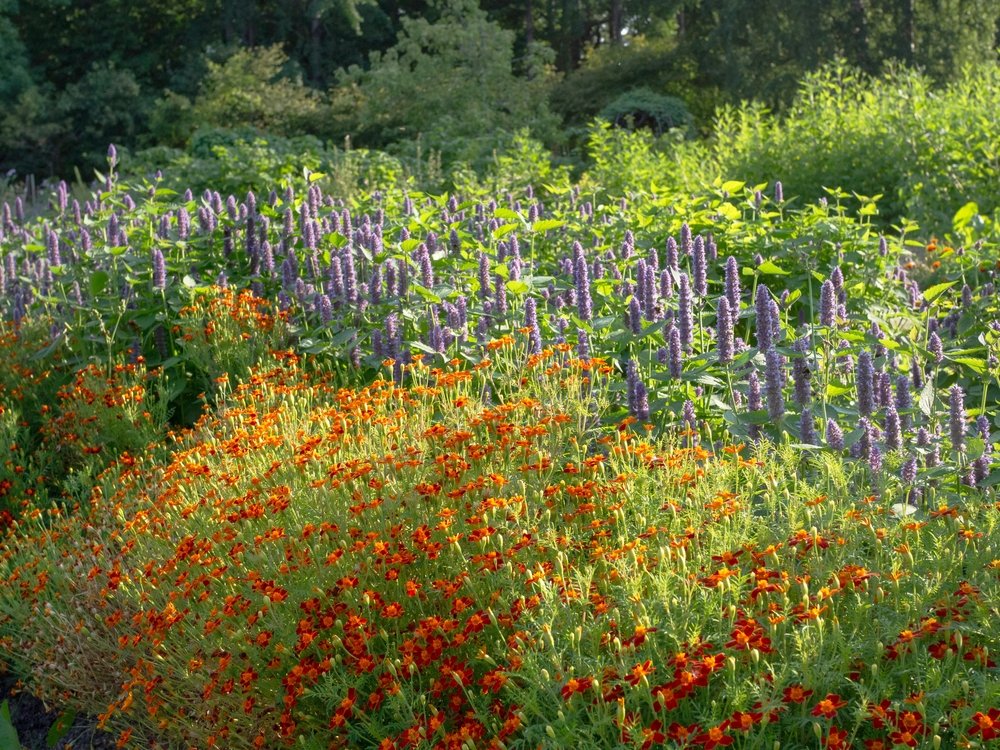
Marigolds add bloom, pollen and nectar, visual diversity, and roots that may suppress certain nematodes under specific species, cultivar, and cropping conditions. They do not form a universal shield around vegetables.
A few plants beside tomatoes will not reliably repel every insect or cure infested soil. Use crop rotation, sanitation, scouting, resistant varieties, and targeted management alongside any companion planting.
For edible use, identify the Tagetes species and cultivar and confirm the edible part. Do not assume every ornamental marigold is intended for the plate.
Save seed from mature dry heads
- Choose healthy plants with the desired habit and flower.
- Allow heads to brown and dry on the plant in fair weather.
- Remove the head and pull out the long black-and-tan seeds.
- Dry seed further before storage.
- Label species, cultivar, color, and nearby marigolds.
Open-pollinated marigolds may cross with compatible plants. Double-flowered and hybrid strains can segregate. Save enough seed to select from variation rather than expecting every seedling to match perfectly.
Troubleshoot the plant and the claim separately
| Symptom | Likely cause | Response |
|---|---|---|
| Tall weak growth | Shade or excess nitrogen | Increase sun and reduce feeding |
| Flower heads rot | Wet weather and poor airflow | Deadhead promptly and widen spacing |
| Mites or thrips | Hot dry stress or local pest pressure | Inspect closely and manage the identified pest |
| Few flowers | Too much nitrogen, shade, or immature plant | Correct conditions and allow time |
| No pest-control effect | Expectation was broader than evidence | Use integrated pest management |
Time marigolds for the regional season
Plant after frost and warm soil. In the coastal plain, they may flower from late spring into fall if heat and disease are managed. Piedmont and mountain gardens should wait for safe planting weather and use early starts when the season is shorter.
Marigolds often look tired in the hottest humid stretch and recover when nights moderate. Remove diseased flowers and keep the roots steady.
Questions gardeners ask
Are French and African marigolds from France and Africa?
No. Both Tagetes species are native to the Americas. The common names refer to horticultural history, not origin.
Is calendula a marigold?
Calendula is commonly called pot marigold, but it is a different genus from Tagetes.
Do marigolds keep all pests away?
No. Some Tagetes can affect certain nematodes and flowers support beneficial insects, but they do not provide universal pest control.
Can marigolds be direct sown?
Yes, after frost in warm soil. Starting indoors can produce earlier bloom.
Can I save marigold seed?
Yes from mature dry heads. Open-pollinated plants are the most predictable, though crossing can occur.


