
Zinnias are generous plants, but they are not careless plants. Warm soil brings them up quickly, cutting encourages more stems, and a clean bed can flower until frost. Crowding, wet foliage, and too much nitrogen can turn that promise into a tired patch before summer is finished.
The seed packet may show a color. The grower must choose the architecture: dwarf edging plant, branching cut flower, single bloom for pollinators, or tall double flower that needs room and support.
A zinnia grown for bouquets should be pinched, spaced, harvested, and succession-sown differently from a compact landscape zinnia. Decide the use first; then let the plant build the shape that use requires.
Know what kind of zinnia you are growing
Zinnias are warm-season annuals in the daisy family. Most garden forms are derived from Zinnia elegans, but mature height, branching, flower form, and disease tolerance vary sharply among cultivars.
Single and semi-double flowers usually provide easier access to pollen and nectar than densely doubled forms. Tall cutting types need longer stems and air movement; compact types are built for borders and containers.
- Tall cut-flower strains may reach several feet.
- Dwarf forms stay compact but usually provide shorter stems.
- Open-centered flowers can be especially useful in pollinator plantings.
Choose the form or variety for the job
Choose by mature height, flower form, stem length, and disease history rather than color alone.
For a humid Mid-Atlantic garden, spacing and disease tolerance deserve as much weight as bloom size.
| Garden goal | Best fit | What to watch |
|---|---|---|
| Long bouquet stems | Tall, branching cut-flower type | Provide support and regular harvest |
| Containers or edging | Compact dwarf type | Shorter stems and faster drying media |
| Pollinator use | Single or semi-double flowers | Avoid making the entire planting densely doubled |
| Late-season color | Fast annual succession | Count backward from first frost |
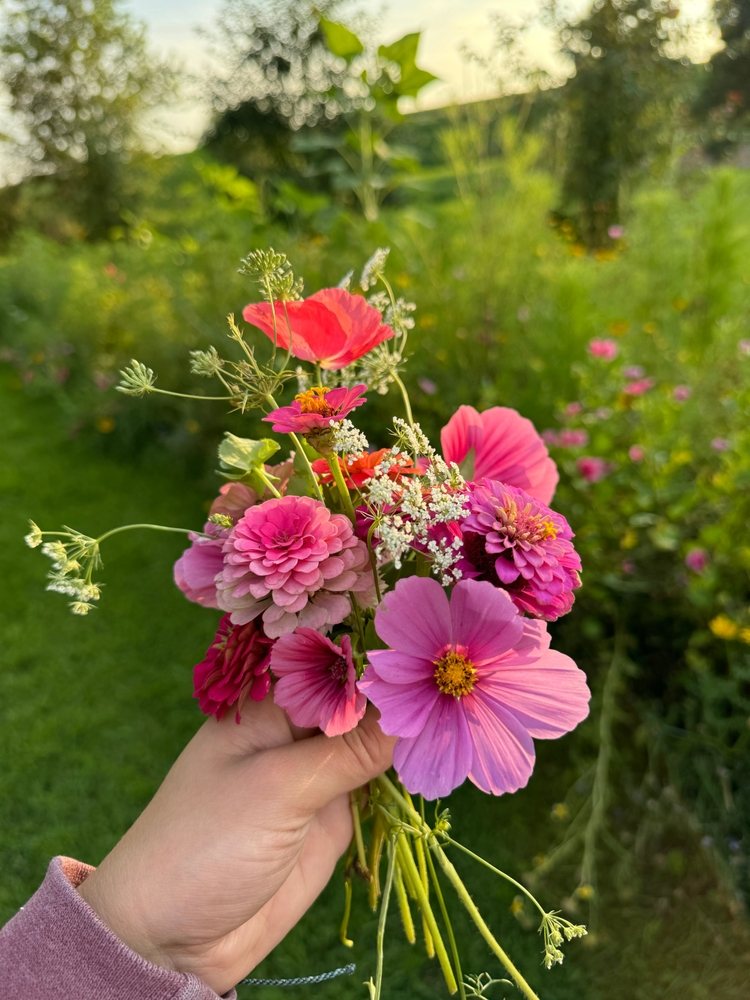
Start seed at the right time and depth
Sow after frost danger when the soil has warmed. Zinnias dislike cold, wet starts and usually gain little from being pushed into chilly ground.
Direct sowing reduces transplant disturbance, but indoor starts work when roots are kept young and moved carefully.
- Sow about 1/4 inch deep in loose soil.
- Keep evenly moist until emergence, not waterlogged.
- Harden transplants before setting out.
- Repeat sowing every few weeks when a long cutting season matters.
Build the site before the plant asks for rescue
Use full sun, fertile but not overly rich soil, and spacing that allows leaves to dry.
Tall plants benefit from netting, stakes, or neighboring support before stems lean.
- Avoid overhead watering late in the day.
- Mulch after the soil warms.
- Remove badly diseased lower leaves and fallen debris.
Manage water, fertility, and growth
Water deeply enough to wet the root zone, then allow the surface to begin drying. Excess nitrogen produces lush, soft growth and fewer durable stems.
Pinch tall cutting types above a set of leaves when young to encourage branching, unless the cultivar or desired single-stem method calls for otherwise.
- Cut flowers frequently.
- Deadhead landscape plants.
- Feed lightly according to soil condition rather than on a fixed weekly schedule.
Harvest at the stage that matches the use
Harvest when stems pass the “wiggle test”: hold the stem below the bloom and gently shake. A mature stem stays firm instead of bending loosely.
Cut early or late in the day, use clean tools, and place stems in clean water promptly. Leave enough nodes for regrowth.
Troubleshoot the common failures
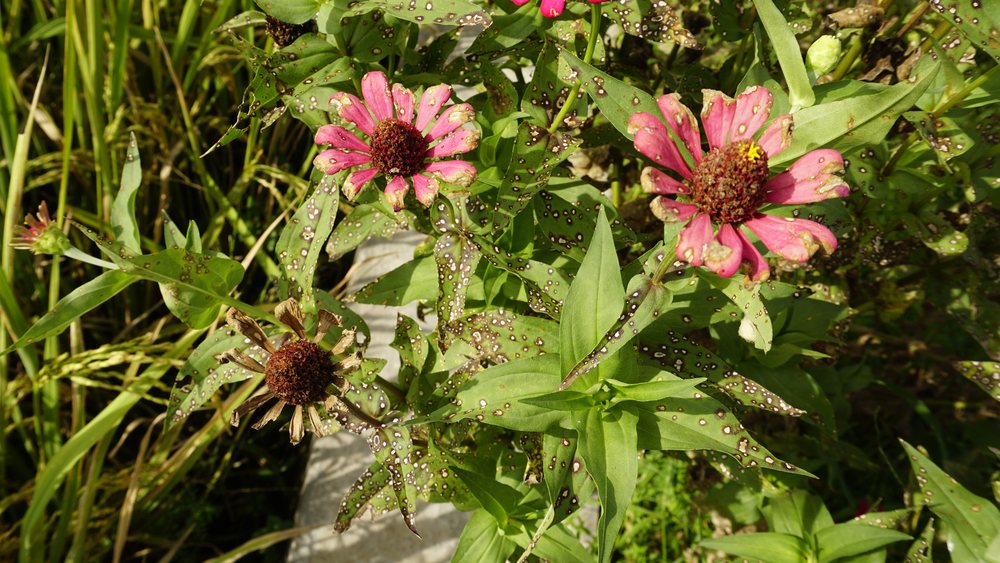
Powdery mildew, bacterial and fungal leaf spots, Japanese beetles, and stem weakness are common complaints.
A late-season plant may still flower well with cosmetic mildew; decide whether the crop is losing function before stripping it bare.
| Symptom | Likely cause | First correction |
|---|---|---|
| White coating on leaves | Powdery mildew | Increase airflow and remove heavily affected debris |
| Brown spots with yellow margins | Leaf spot disease | Avoid splashing foliage and rotate the site |
| Long weak stems | Crowding, shade, or excess nitrogen | Increase light and spacing; reduce feeding |
| Few side branches | No pinching or narrow genetics | Pinch suitable young plants or choose a branching strain |
Adjust the plan across the Mid-Atlantic
In the Coastal Plain, humidity and long warm seasons favor both repeated sowing and disease. In the Piedmont, succession sowing through early summer can keep fresh plants coming. Mountain gardens have a shorter window, so start promptly after frost.
Do not confuse a long frost-free season with unlimited plant health. A fresh succession often outperforms a worn first planting.
Plant enough to cut without taking every open flower from the pollinators.
Put this guide to work in a real garden
Put How to Grow Zinnias from Seed for Cutting, Pollinators, and a Long Bloom Season into a one-season plan before buying more inputs. Choose the variety or material, mark the bed or container, write the sowing or planting date, and decide what success will look like: first harvest, stem length, fruit set, bloom, survival, or control of spread.
Inspect on a schedule. Early problems are usually easier to correct because the crop has more season left and the cause has not been buried under secondary damage. Water, fertility, airflow, support, and harvest timing should be adjusted from the plant’s response rather than from a rigid weekly ritual.
At the end of the crop, keep the record honest. Note what performed, what merely survived, what required too much labor, and what deserves a larger planting next year. Experience becomes expertise only when it is remembered accurately.
- Choose the variety and define the intended use.
- Prepare soil, container, support, or irrigation before planting.
- Set a weekly inspection date.
- Harvest or prune at the stage described in the guide.
- Write a short end-of-season verdict.
Use a 30-day checkpoint instead of guesswork
Before planting
Choose the variety, site, support, soil preparation, and irrigation method while the bed is still easy to change.
First two weeks
Protect establishment. Watch moisture, light, wind, transplant shock, and early pest pressure.
At rapid growth
Adjust spacing, support, pruning, and fertility before the plant becomes difficult to handle.
At first harvest or bloom
Record quality, timing, labor, and the plant’s response. Use that evidence to guide the rest of the season.
A guide provides a sound starting system, not a guarantee. Cultivar, weather, soil history, and management interact, and the correct response may change as the plant moves from establishment to harvest.
Keep a one-season record
The record does not need to be elaborate. A notebook page, spreadsheet row, or labeled photograph is enough when it captures the variables that matter.
- Variety and source
- Planting date and location
- Water, fertility, and major weather events
- First harvest or bloom and total season length
- Problems, corrections, and next-year decision
Write enough that another grower—or you, one year later—could understand what was planted, what happened, and why the next decision changed.
Questions gardeners ask
Do zinnias need light to germinate?
They germinate well under a light covering of soil; they do not need to be left exposed on the surface.
Should I pinch zinnias?
Pinching young tall, branching types encourages more stems. Dwarf varieties and single-stem production may not need it.
Why do my zinnias get powdery mildew?
Humidity, crowded foliage, susceptible cultivars, and poor airflow favor infection. Water at soil level and space plants generously.
Can zinnias be transplanted?
Yes, while young. Avoid holding them rootbound or disturbing mature roots.
How often should I succession sow?
For cutting, sowing a new block every two to four weeks can maintain fresh stems, adjusted for heat and first frost.
Zinnias are not difficult. They are direct. Give them heat, space, a clean cut, and enough discipline to remove what is finished. They will answer in color until the cold closes the gate.


