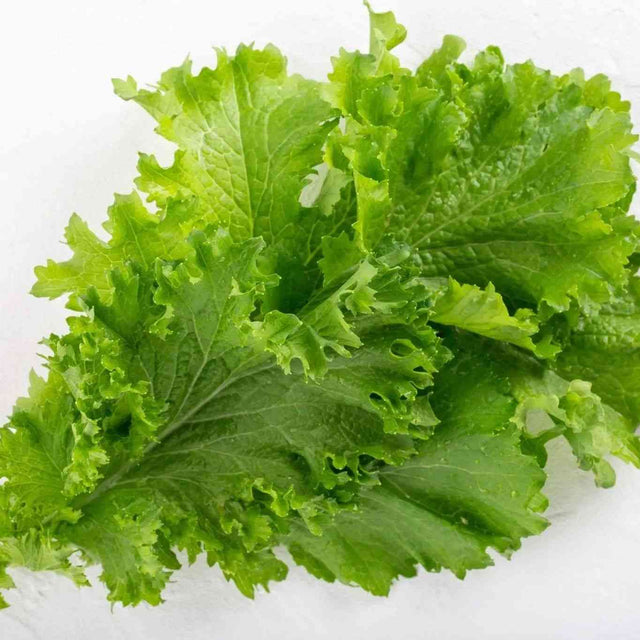
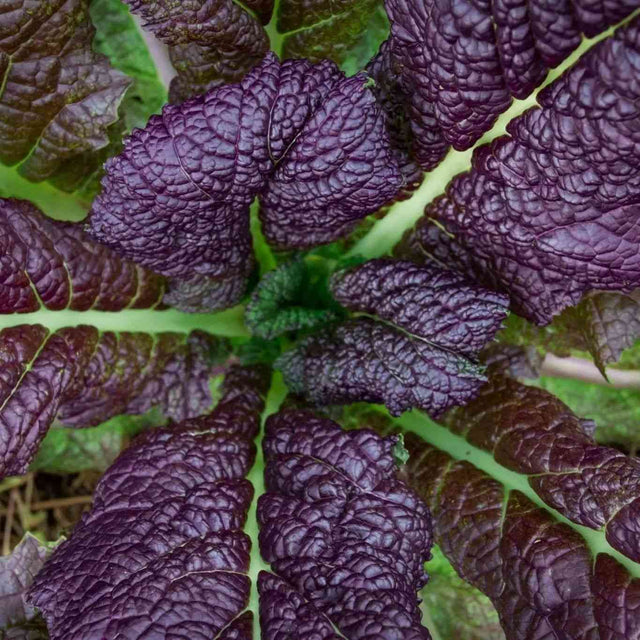
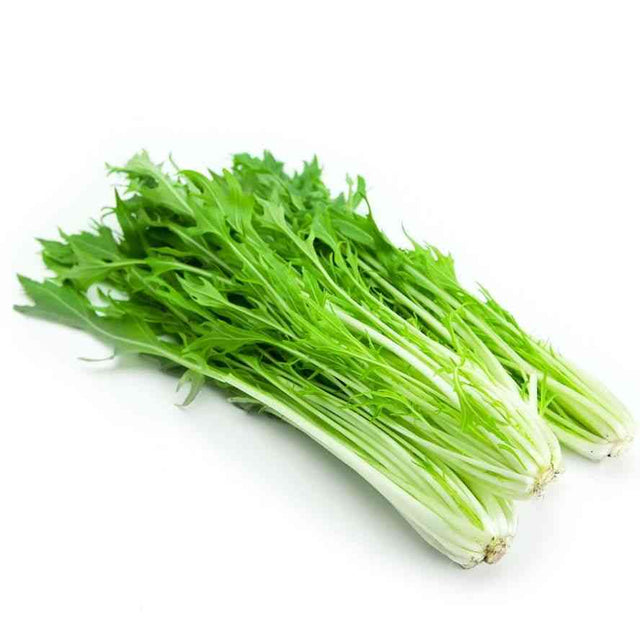
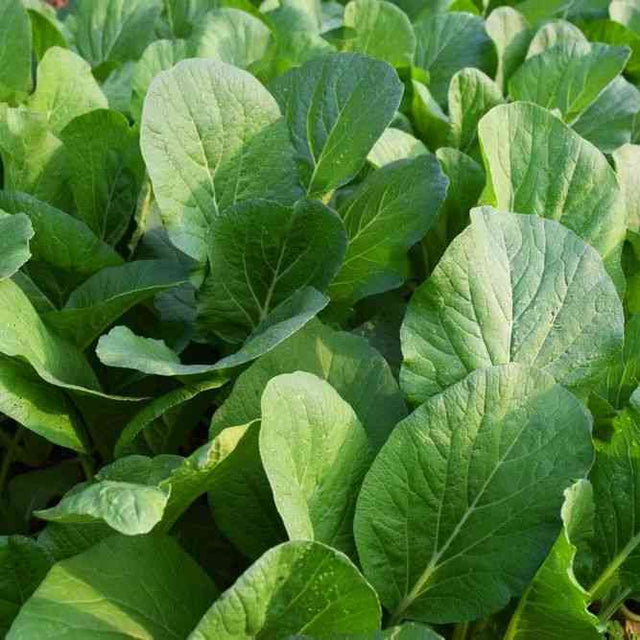
Mustard greens are not one vegetable wearing several different names. They are a working family of crops spread across more than one Brassica species, with leaves that may be broad, curled, frilled, feathery, red, green, mild, sharp, or nearly horseradish-hot. The name on the packet matters because species affects flavor, growth habit, kitchen use, and what the plant can cross with when it flowers.
Mustard is quick enough to reward a beginner and complicated enough to keep a seedkeeper honest. This guide explains the major mustard-green groups, how to choose among them, how weather changes their flavor, how to grow a succession rather than one exhausted row, and how to save seed without crossing every compatible brassica in the garden.

Mustard greens begin with species, not leaf color
The broadest garden use of “mustard greens” includes several cultivated groups in the mustard family, Brassicaceae. Most familiar Southern curled, broadleaf, and red giant mustards belong to Brassica juncea. Mizuna, tatsoi, komatsuna, turnip greens, and many Asian mustard-like greens belong to Brassica rapa. White or yellow mustard grown mainly for condiment seed is usually Sinapis alba, while black mustard is Brassica nigra.
These crops can resemble one another in a young salad mix, but they do not all share the same flavor, maturity, or seed-saving relationships. Garden catalogs often simplify the category because customers shop by use. A seedkeeper cannot stop there. Species is the foundation of a reliable record.
| Common crop group | Typical species | Garden character | Seed-saving warning |
|---|---|---|---|
| Southern curled, broadleaf, red giant mustard | Brassica juncea | Fast, substantial leaves with medium to strong pungency | Can cross with other flowering B. juncea varieties |
| Mizuna, tatsoi, komatsuna, turnip greens | Brassica rapa | Wide range from feathery mild greens to thick-stemmed Asian types | Can cross with compatible B. rapa crops, including turnips and rapini |
| Black mustard | Brassica nigra | Very pungent leaves and small dark condiment seed | Keep isolated from other flowering plants of the same species |
| White or yellow mustard | Sinapis alba | Milder yellow condiment seed; leaves also edible when young | Different genus from the common Brassica greens, but still insect-pollinated |
Major types of mustard greens for the home garden
Southern curled mustard
Large, frilled leaves with a strong classic mustard flavor. Excellent for braising, pot greens, sautéing, and repeated outer-leaf harvests.
Broadleaf mustard
Smoother, wider leaves that are easy to wash and chop. Flavor ranges from medium to hot and becomes stronger with age and warm weather.
Red and purple mustard
Burgundy or purple-green foliage adds color to salad mixes. Mature leaves can be quite hot, and much of the red color softens during cooking.
Mizuna
Fine, feathery leaves with a mild peppery character. It regrows well after cutting and fits salads, soups, stir-fries, and containers.
Asian stem and leaf mustards
A large group selected for tender stems, broad leaves, heading habits, pickling, or quick cooking. Read the individual variety description carefully.
Mustards grown for seed
Black, brown, white, and yellow condiment mustards are carried to full pod maturity. The garden plan is different from a leaf crop harvested every week.
Mustard is green fire: quick from the ground, sharp on the tongue, and gone to flower before a careless gardener notices.
Flavor is built by variety, weather, and harvest stage
Mustard pungency comes from glucosinolates and the compounds produced when plant tissue is cut or chewed. The exact flavor differs among varieties, but the garden changes it too. Young leaves are usually milder and more tender. Mature leaves develop more body and heat. Warm weather, dry soil, slow growth, and the approach of flowering can intensify sharpness and bitterness. Cool nights and light frost often improve sweetness and texture.
That means the same packet can produce a mild baby-leaf salad in October and an assertive cooking green during a hot spring. A seed description should give a starting point, not pretend the environment has no vote.
| Garden goal | Useful type | Best harvest stage | What to watch |
|---|---|---|---|
| Mild salad mix | Mizuna and young red mustard | Baby leaf | Harvest before heat and crowding intensify flavor |
| Traditional cooking greens | Southern curled or broadleaf mustard | Young to medium mature leaves | Maintain moisture and remove tough midribs when needed |
| Color in beds and bowls | Japanese Red Giant and related red types | Baby to medium leaf | Color changes with temperature and fades during cooking |
| Repeated cut-and-come-again harvest | Mizuna and vigorous leaf mustards | Cut above the growing point | Feed lightly after repeated cuts and keep the crown clean |
| Condiment seed | Named seed mustard | Fully mature dry pods | Do not keep cutting leaves from the plants chosen for seed |


When to plant mustard greens
Mustard is a cool-season crop. Direct sow in late winter or early spring as soon as the seedbed is workable, then sow again in late summer and fall. The fall crop is often the finest because plants germinate in warm soil, mature into shortening days, and develop flavor under cooler nights.
Do not plan only from the frost date. Count backward from the date when short days and cold will slow growth, then add the variety's days to maturity and a margin for cloudy weather. A crop labeled 40 days may need longer in November than it does in September.
In eastern North Carolina and similar mild areas, mustard can be harvested through much of winter with light protection. In the Piedmont and mountains, fall sowing must begin earlier, and row cover or low tunnels extend the season. Spring sowing can be productive, but lengthening days and sudden heat push plants toward flowering.
How to sow mustard for baby leaves or mature plants
Sow seed shallowly, usually about 1/4 inch deep, in a fine, firm seedbed. Keep the surface evenly moist until emergence. A hard crust can trap seedlings, while saturated soil reduces oxygen and encourages rot.
For baby greens, sow densely in bands and cut when leaves are a few inches tall. For mature plants, sow more thinly and reduce the stand according to the variety. Large curled and broadleaf mustards may need 8 to 12 inches or more between plants for full rosettes. Mizuna can be kept closer for repeated cutting or given more room to form a broad clump.
Use succession sowing rather than planting the entire packet at once. A short row every 10 to 14 days during favorable weather gives a steadier harvest and protects the kitchen from the familiar problem of having no mustard for three weeks, then forty plants ready on the same morning.
Soil, fertility, and moisture management
Mustard grows best in fertile, well-drained soil with steady moisture. It is fast enough to reveal poor conditions quickly. Pale leaves may indicate nitrogen shortage, but they can also signal cold soil, saturated roots, or crowding. Before adding fertilizer, look at the whole bed.
Incorporate mature compost where organic matter is low, then feed lightly according to a soil test and crop response. Excess nitrogen creates soft growth attractive to aphids and can delay the firm, balanced growth needed for cold tolerance. Water the root zone before plants wilt. Drought makes leaves tougher and hotter and accelerates bolting.
A light mulch after seedlings are established reduces soil splash and moisture swings. Do not bury small crowns. In wet weather, prioritize drainage and airflow over a thick layer of damp mulch.
Growing mustard in containers, raised beds, and small spaces
Mustard is one of the easiest edible crops to fit into a small garden. Use a container at least 8 to 10 inches deep with free drainage. A window box can produce baby leaves, while a broad pot supports full-sized plants. Containers dry quickly, so check moisture daily during germination and warm weather.
In a raised bed, mustard can occupy the weeks before tomatoes, peppers, squash, or okra are transplanted, then return after those crops are removed. That makes it valuable in a garden plan: it earns a harvest without demanding the bed for the entire year.

Build a mustard succession around the harvest you want
A packet can produce baby salad leaves, full-sized cooking greens, flowering shoots, or seed. Those are different production plans. The seed does not know which one you intended, so spacing and timing must make the decision visible.
For baby leaves, sow a dense band and cut when leaves are 3 to 5 inches tall. Leave the growing point intact only when the variety and weather are likely to support regrowth. For full plants, thin early so roots and leaves have room to build. For repeated outer-leaf harvest, keep the center dry and open. For seed, mark selected plants before any kitchen harvest and stop cutting them.
| Harvest goal | Sowing pattern | First harvest | What usually goes wrong |
|---|---|---|---|
| Baby mustard | Dense band or wide row | 3–5 inch leaves | Overmature leaves become hot and fibrous before the whole row is cut |
| Full cooking greens | Thin to the variety's mature spacing | Large outer leaves or whole rosettes | Crowding traps moisture and reduces leaf size |
| Flowering shoots | Moderate spacing with repeated small sowings | Tender budded stems | Warm weather turns a short harvest window into open flowers |
| Seed crop | Healthy labeled population with isolation | After tan pods mature | Selected plants are eaten, varieties cross, or pods shatter before harvest |
Succession sowing is more useful than one heroic row. In a seed company, large numbers can create the illusion of security. A thousand plants at the wrong stage are less useful than three small sowings arriving when the kitchen and the weather are ready.

Culinary mustard seed and cover-crop mustard are not interchangeable promises
White or yellow mustard, brown mustard, black mustard, and leafy garden mustards may all be sold under the word mustard, but they are selected for different work. A cover-crop listing may emphasize biomass, soil coverage, or biofumigation. A spice crop emphasizes seed yield and pungency. A greens variety emphasizes leaf shape, tenderness, color, and the speed of regrowth.
Some types can serve more than one purpose, yet a gardener should not assume a bulk cover-crop mustard will produce the same leaves as Southern Giant Curled or Japanese Red Giant. Read the botanical name and the selection history. When buying seed for the kitchen, choose a named culinary variety. When buying for soil cover, choose a crop whose management and termination fit the rotation.
Harvest methods that preserve quality
For cut-and-come-again harvest, remove outer leaves or cut above the central growing point. Leave enough healthy leaf area for regrowth. For a whole-head harvest, cut at the soil line and cool the crop promptly. Mustard wilts quickly in sun and wind, so morning harvest is usually best.
Wash leaves in cool water, spin or drain them well, and refrigerate in a breathable or loosely closed container. Wet leaves sealed without airflow break down rapidly. Older leaves may need thick midribs removed before cooking.
Flowers, buds, and tender flowering stems are edible on many mustard crops. Once the stem becomes woody and the leaves turn coarse, the plant is better directed toward pollinators or seed production than forced into another kitchen harvest.
Using mustard greens in the kitchen
Young mizuna and baby red mustard can be eaten raw. Mature curled or broadleaf leaves benefit from sautéing, braising, simmering with beans, or cooking into soups. Blanching reduces sharpness. Fat rounds the flavor, and acid added near the end brightens it. Smoked meat is traditional in many Southern preparations, but mushrooms, onions, garlic, beans, and fermented seasonings can build the same depth without copying one fixed recipe.
Do not judge a strong mustard by taking one raw bite from an old leaf in warm weather. Cook it according to its stage. The crop is telling you what it has become.
Bolting is not a moral failure, but timing still matters
Mustard bolts when plant maturity, temperature, day length, stress, and variety genetics push it toward flowering. Warm spring weather and lengthening days are common triggers. Drought, crowded roots, and transplant shock can accelerate the shift.
For leaf harvest, sow earlier, maintain moisture, use quick successions, and harvest before stems elongate. For seed saving, bolting is the point. Stop cutting the selected plants, allow a strong branching flower structure to develop, and protect the future seed crop from compatible flowering brassicas.
Flea beetles, caterpillars, aphids, slugs, and leaf disease
Flea beetles can pepper young leaves with tiny holes before seedlings gain size. Lightweight row cover placed immediately after sowing is one of the most reliable preventive tools, provided the bed is rotated and pests are not trapped underneath. Remove or open the cover once plants flower if pollinators are needed.
Cabbageworms, loopers, and other caterpillars chew larger holes and leave frass. Inspect leaf undersides and central growth. Aphids cluster on tender stems and distorted new leaves. Slugs feed at night and hide beneath debris or boards. Downy mildew and leaf spots become more serious in crowded, wet plantings.
Build the defense before the damage
- Rotate away from recent brassica ground.
- Install insect netting or row cover at sowing, not after flea beetles arrive.
- Thin plants for airflow and harvest diseased leaves promptly.
- Water near the soil rather than wetting foliage late in the day.
- Remove crop debris and weeds that shelter pests between plantings.
- Use any pesticide only according to its current label for the exact crop and pest.

How to save mustard seed without creating an accidental mix
Begin with the scientific name. Mustards are insect-pollinated, and varieties within the same compatible species can cross. A Southern Giant Curled Brassica juncea plant may cross with another flowering B. juncea mustard. Mizuna, turnips, tatsoi, many Chinese greens, and rapini may share Brassica rapa relationships. Leaf shape alone does not reveal the whole crossing risk.
Choose a population of healthy, true-to-type plants. Save from more than one plant, and use a larger population when the variety will be maintained over many generations. Remove obvious off-types before flowering. Isolate compatible varieties by substantial distance, flowering time, or controlled cages and pollinators when purity matters.
Pods mature from the bottom upward and can shatter when fully dry. Harvest when most pods are tan or buff and the oldest are dry but before the entire plant spills seed. Cut whole stalks in the morning, place them on a tarp or inside large paper bags, and finish drying under cover with airflow. Thresh gently, screen and winnow the seed, and store only when fully dry.
Label species, variety, year, population size, isolation method, and selection notes. “Mustard, saved sometime in spring” is not a seed record. It is an invitation to confusion.
Choosing mustard seed for the garden you actually have
For classic Southern cooking greens, begin with Southern Giant Curled Mustard or Florida Broadleaf Mustard. For dramatic color and a sharper fresh bite, consider Japanese Red Giant Mustard. For fine texture, containers, and repeated cutting, Early Mizuna is a different kind of mustard experience.
Browse the full mustard seeds collection by leaf shape, flavor, harvest stage, and species. Buy the crop you intend to grow, not the photograph that happens to be brightest.
Mid-Atlantic and Upper South field note
Mustard is one of the region's most dependable cool-season crops. Along the coastal plain, fall plantings can carry deep into winter with modest protection. In the Piedmont and mountains, sow early enough for plants to size before growth slows. Spring crops are possible everywhere, but the heat can arrive abruptly. Keep seed ready for the fall window; that is often where the finest leaves are made.
Frequently asked questions about mustard greens
Which mustard green is mildest?
Young mizuna is often milder than mature curled or red Brassica juncea mustards. Harvest stage and weather matter greatly, so baby leaves from a strong variety can still be milder than old leaves from a supposedly mild one.
Can mustard grow in partial shade?
It tolerates light shade, especially as weather warms, but dense shade creates thin, weak growth. Aim for several hours of direct sun and good airflow.
Why did my mustard become extremely hot?
Heat, drought, age, and the approach of flowering intensify pungency. Keep soil evenly moist and harvest younger leaves during cool weather.
Can I plant grocery-store mustard seed?
Culinary seed may germinate, but it is not sold with reliable variety identity, germination information, treatment status, or planting guidance. Use labeled garden seed when a predictable crop matters.
Will mustard cross with broccoli or kale?
It depends on species. Brassica juncea mustard does not simply cross with every brassica, but crops within a compatible species can cross. Identify the botanical name of every flowering crop before saving seed.
Can I keep harvesting leaves from a seed-saving plant?
Light early harvest is possible, but repeated cutting weakens the flower and pod crop. Once a plant is selected for seed, allow it to build full structure and mature pods.