
Seed-starting mix has one job before all others: hold enough water for germination while still leaving enough air for the new root.
That sounds simple. Many failures come from breaking that balance. Garden soil packs into a tray. A heavy potting mix stays wet. A peat-based mix is used dry and repels water. A tray sits in water because the surface looks pale. A seedling emerges into warm, stagnant, saturated conditions and damping off takes it at the soil line.
The best mix is not the bag with the most fertilizer or the most ingredients. It is the medium that gives the seed the physical environment it needs at the stage it is in.
Seed-starting mix is an air-and-water system before it is a fertilizer system.
Five qualities a seed-starting mix needs
- Fine texture: small seeds make contact without falling into large bark gaps.
- Porosity: roots receive oxygen and excess water drains.
- Moisture retention: the surface does not dry between every check.
- Low pathogen and weed pressure: young stems are vulnerable.
- Predictable fertility: enough for early growth without salt injury.
University of Minnesota Extension recommends a sterile, lightweight seed-starting mix for indoor sowing.
What common ingredients do
| Ingredient | Main role | Watch for |
|---|---|---|
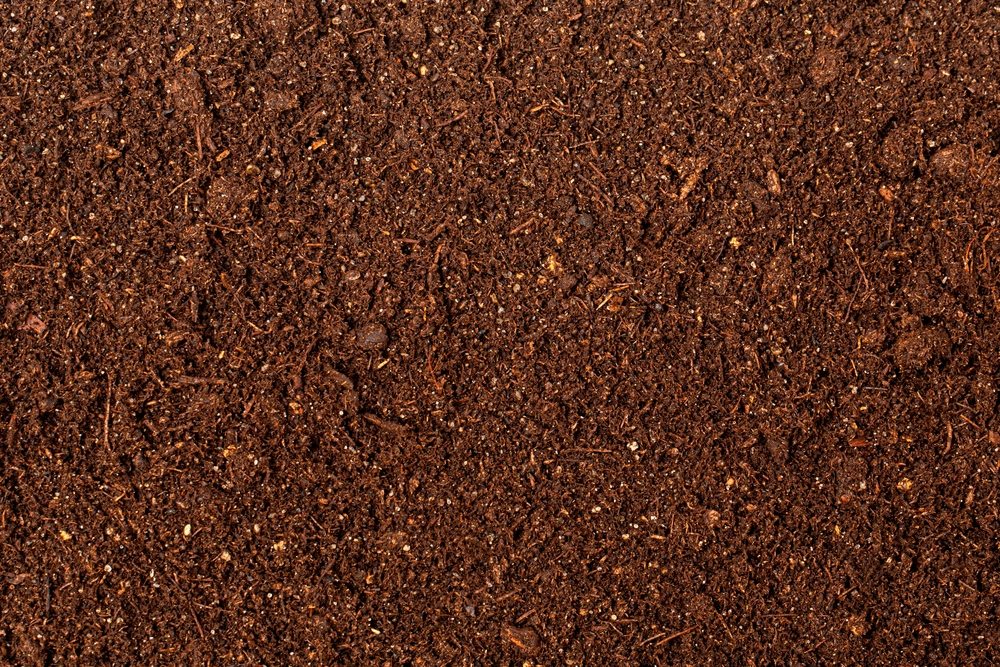
| Peat moss | Water holding and structure | Hard to rewet when bone dry; environmental sourcing concerns |
| Coco coir | Water holding and structure | Salt quality varies; may need nutrient management |
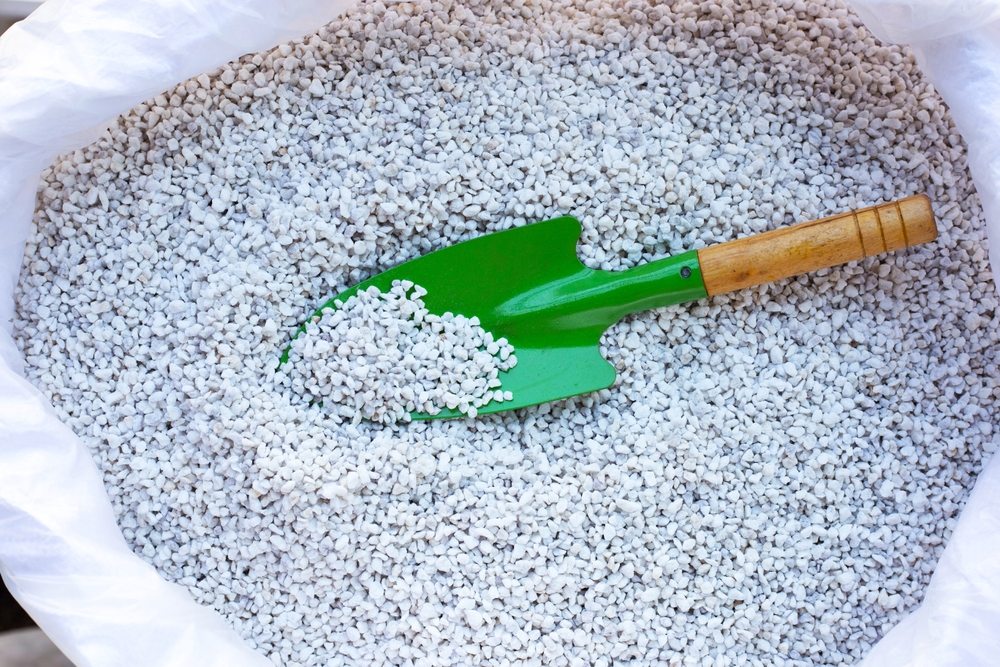
| Perlite | Air space and drainage | Dust; floats in heavy watering |
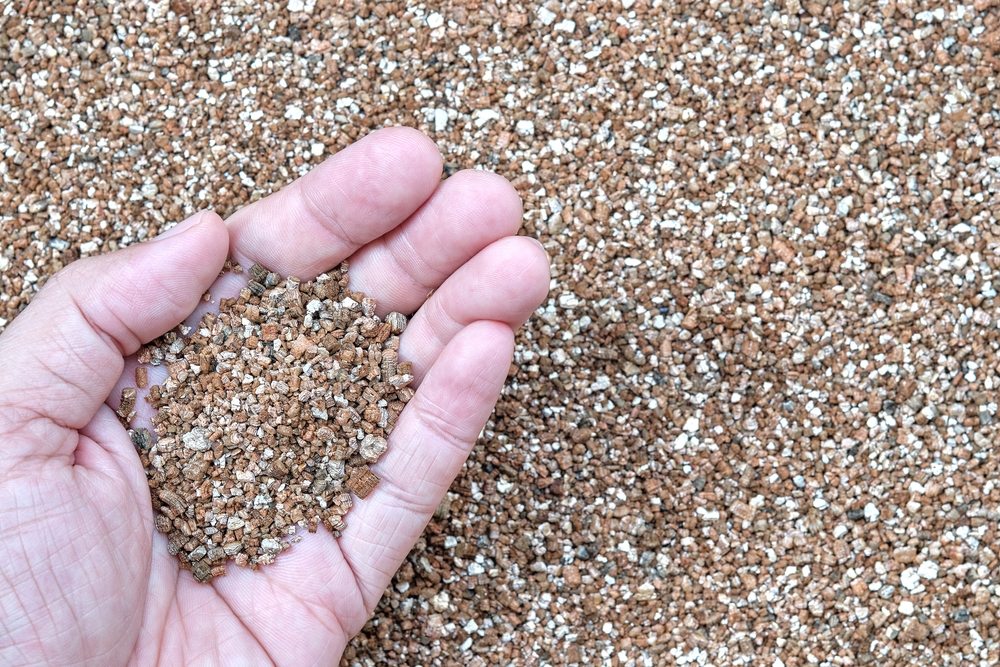
| Vermiculite | Moisture retention and fine texture | Too much can hold excess water |
| Fine compost | Nutrients and biology | Variable salts, particles, weeds, and pathogens; not always suited to germination |
| Bark fines | Structure in potting mixes | Large particles can be too coarse for tiny seed |
Commercial mixes use different ratios. Judge the finished behavior rather than one ingredient name.
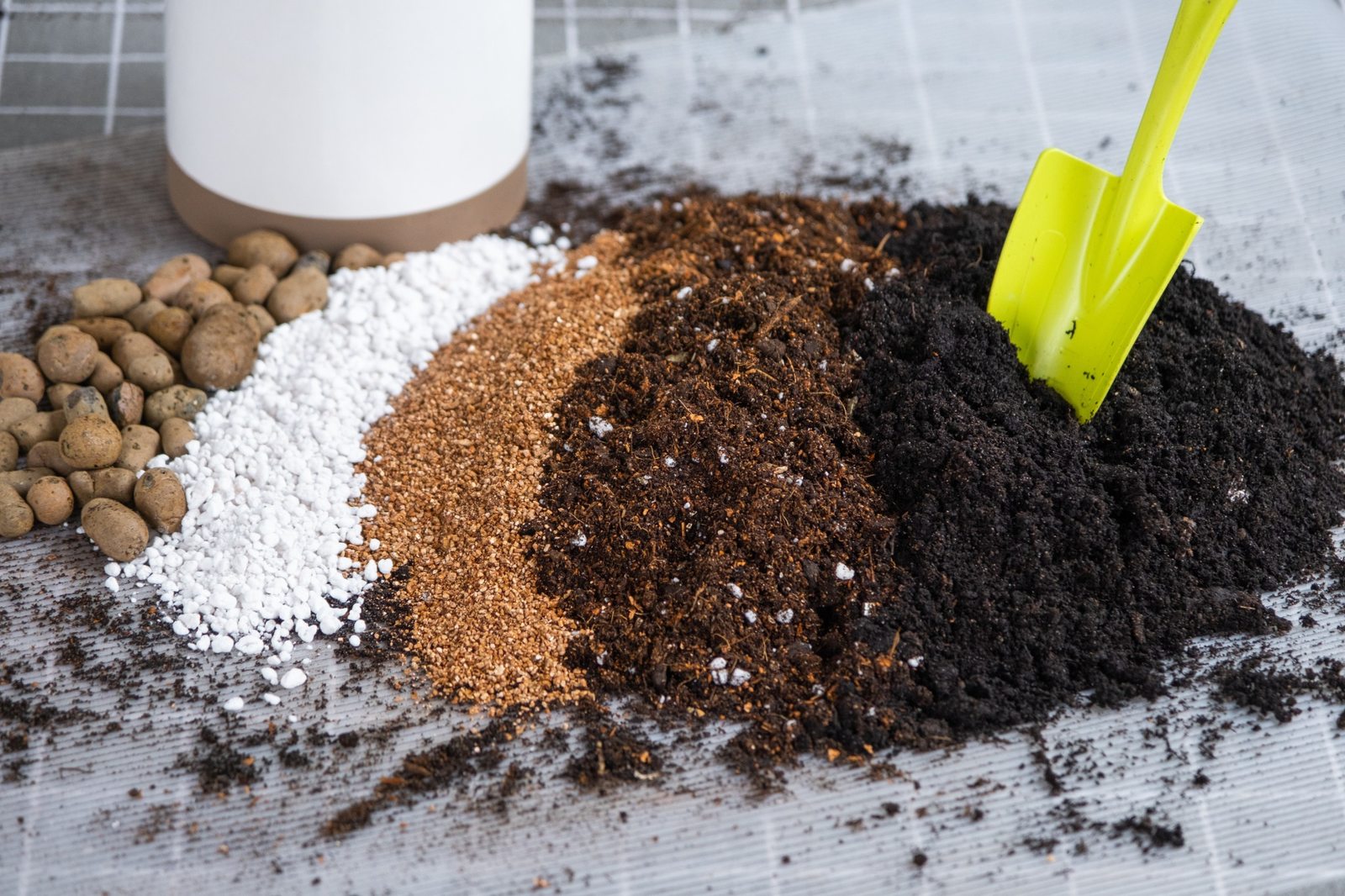
Why ordinary garden soil is risky in trays
Garden soil behaves differently inside a shallow container than it does in the ground. It compacts, drains slowly, and may carry weed seed and damping-off pathogens. Clay becomes dense; sand added casually can make a concrete-like mix rather than improve it.
Use garden soil for the garden. Use a purpose-built propagation medium for small indoor cells.
Seed-starting mix versus potting mix
Seed-starting mix is usually finer and lower in fertilizer. Potting mix is designed to support a growing plant for longer and may contain bark, compost, or slow-release fertilizer.
Large seeds and sturdy transplants can germinate in a quality fine potting mix, but tiny seeds benefit from a true germination mix. After seedlings develop true leaves and fill their cells, move them to a richer potting mix or begin an appropriate fertilizer program.
Moisten the mix before filling trays
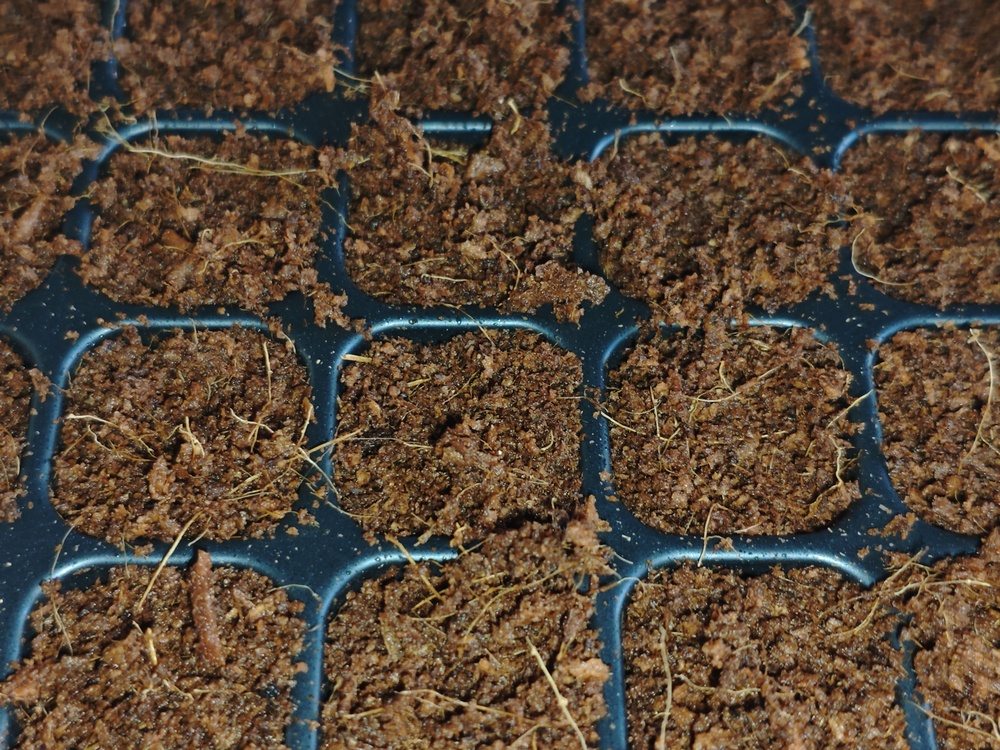
Dry peat or coir can resist water. Add water gradually and mix until the medium is evenly damp like a wrung sponge. It should hold together lightly when squeezed but not drip.
Pre-moistening prevents dry pockets and keeps tiny seed from floating when the tray is watered after sowing.
Fill and sow without compressing the air out
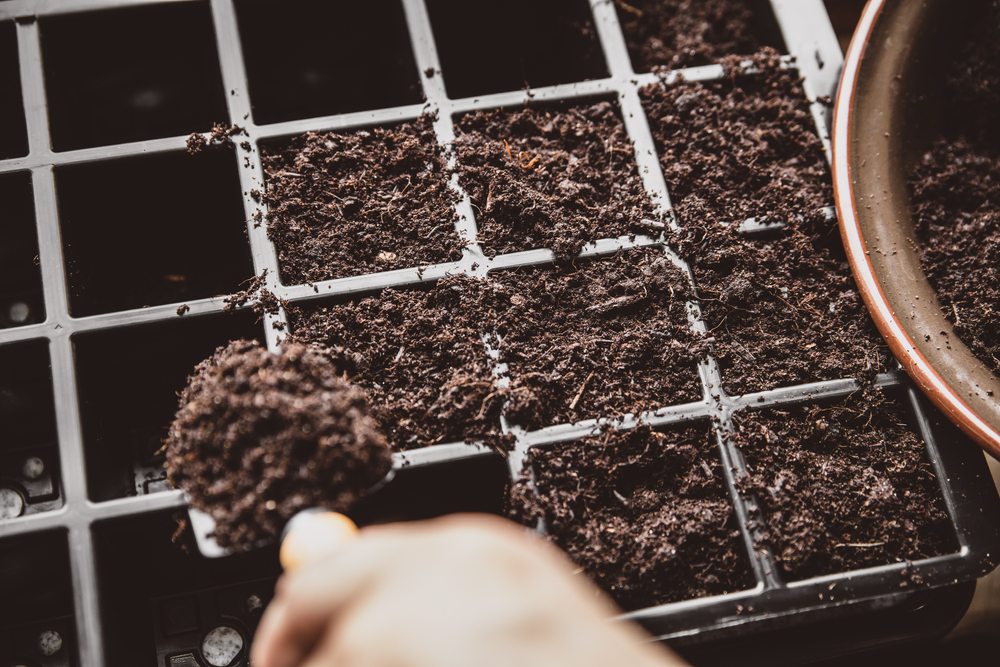
Loosely fill cells, tap the tray to settle, and level the surface. Do not pack the mix hard. Make a shallow depression or hole matching the seed depth, sow, cover according to the crop, and label immediately.
Surface-sown light-requiring seed needs firm contact without burial. Large seeds need enough cover to stay moist but not so deep that the seedling exhausts itself.
Bottom water carefully
Bottom watering draws moisture upward and avoids dislodging seed, but trays should not sit in water indefinitely. Remove them when the mix is evenly moist.
A covered tray can retain humidity during germination. Remove or vent the cover after emergence to improve airflow and reduce disease risk.
In eastern North Carolina and much of the Mid-Atlantic, a warm room with humid air can keep trays wet longer than the same mix would stay wet in a dry heated house. Judge the tray by weight and moisture below the surface, not by a fixed daily watering schedule.
Prevent damping off
Damping off is favored by excessive moisture, contaminated media or containers, poor airflow, and weak seedlings. Prevention includes:
- Clean trays and tools.
- Fresh quality mix.
- Correct sowing density.
- Bright light immediately after emergence.
- Air movement.
- Watering only as needed.
- Removing covers after sprouting.
- Avoiding cold saturated media.
A heat mat can increase drying and disease risk if moisture is not monitored.
When seedlings need fertilizer
Seeds contain stored energy for germination. After true leaves develop, seedlings begin relying more heavily on nutrients from the root zone.
If the mix contains little fertility, use a dilute complete fertilizer according to crop and product directions. Pale seedlings can result from low nutrition, but also from wet roots, cold media, high pH, or poor light. Diagnose before feeding heavily.
Should you make your own mix?
A homemade mix can work if ingredients are consistent and clean. The risk is assuming a recipe is universal.
Test a small batch for:
- How easily it wets.
- Drainage after saturation.
- Shrinkage after drying.
- Salt injury.
- Particle size for the target seed.
- Germination compared with a trusted commercial mix.
For rare or expensive seed, use a proven medium rather than experimenting on the whole lot.
What common tray symptoms mean
- Green algae: surface stays wet and receives light; improve drying and airflow.
- Fungus gnats: persistently moist organic mix; allow surface drying and manage adults and larvae.
- White crust: mineral or fertilizer salts accumulating.
- Mix pulls from cell edges: it dried severely and may need slow rewetting.
- Seedlings stretch: light is too weak or far away.
- Seedlings collapse at soil line: suspect damping off.
- Roots circle early: transplant or pot up before growth stalls.
Frequently asked questions
Can I use potting soil to start seeds?
A fine, clean potting mix can work for large seeds, but seed-starting mix provides a more consistent texture for tiny seeds and small cells.
Should seed-starting mix contain fertilizer?
It can contain mild starter fertility, but heavy fertilizer is unnecessary before germination and can injure seedlings.
Can I reuse seed-starting mix?
Used mix may carry roots, salts, pests, and pathogens. Reuse is risky for sensitive seedlings unless properly managed.
Is coco coir better than peat?
Both can work. Quality, salinity, pH, water behavior, and the complete mix matter more than one ingredient.
Why is my mix not absorbing water?
Peat and coir can become hydrophobic when very dry. Pre-moisten slowly and mix thoroughly.
Should I bake garden soil to sterilize it?
Heating soil indoors can smell unpleasant and be difficult to control. A quality commercial propagation mix is usually simpler and more consistent.
How wet should seed-starting mix be?
Evenly moist, not saturated. It should feel like a wrung sponge.
When should seedlings be potted up?
When roots fill the cell, plants crowd, or the crop needs more nutrition and root space - before severe stress or circling.
Editorial note: Mix formulas vary by ingredient source and crop. Avoid presenting one recipe as universally superior; test the finished medium.
How to test a mix before sowing
Moisten a small batch, fill a cell, water it, and observe whether it drains while holding together. A mix that becomes a sealed mud block or repels water needs correction before valuable seed is sown.


