
The Scoville number looks precise because it arrives with commas. The pepper does not. Heat can vary among fruits on the same plant, across seasons, with maturity, and with the method used to measure the sample.
Use the scale as a range and a comparison. A 5,000-SHU pepper belongs in a different kitchen conversation from a 1,000,000-SHU pepper, but neither number tells you the whole flavor, risk, or experience.
Seed companies can describe a typical Scoville range for a variety. They cannot promise that every fruit from every garden will land on one exact number.
Use heat ranges as a comparison, not a promise
The commonly listed range for Sugar Rush Peach peppers is about 50,000–100,000 SHU. That range is useful for comparison, but fruit maturity, weather, plant stress, and sample method can still change the heat of an individual pepper.
What the Scoville scale actually means
Scoville Heat Units describe the relative concentration of heat-producing capsaicinoids in pepper tissue. The original sensory dilution test has largely been replaced by laboratory chemical analysis and conversion to SHU.
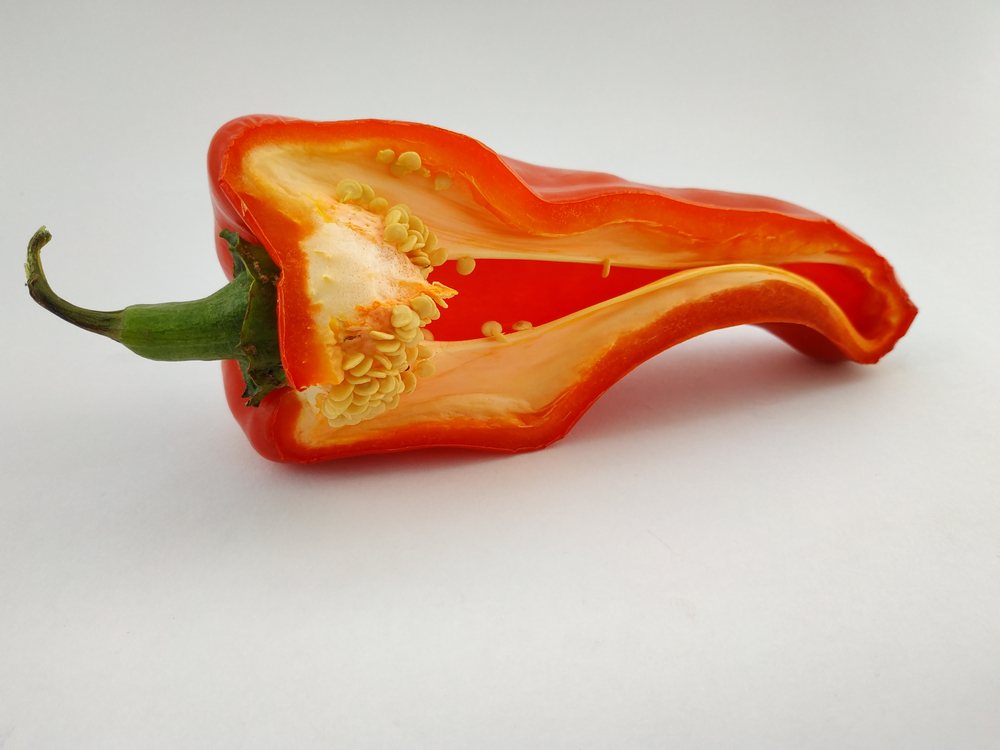
Capsaicin is concentrated mainly in the placental tissue that holds the seeds, not produced by the seeds themselves.
- Zero SHU means no detectable capsaicin heat.
- Higher SHU indicates greater capsaicinoid concentration.
- Flavor, aroma, sweetness, and heat are separate traits.
Separate the terms that are often confused
A variety name may have a published range, but individual fruits vary. Laboratory samples may combine several fruits and report a mean.
The scale also does not predict how much pepper will be used in a dish, whether heat is evenly distributed, or how a person will respond.
| Term | Practical meaning | What it does not guarantee |
|---|---|---|
| Scoville Heat Unit | Relative capsaicinoid heat measurement | An exact guarantee for one fruit |
| Capsaicin | Major heat-producing compound in peppers | The only flavor compound present |
| Variety range | Typical values reported for a cultivar or type | A fixed outcome in every garden |
| Heat perception | Human sensory response to capsaicinoids | A laboratory concentration measurement |
Put the information to work
Choose peppers by both heat range and culinary use.
- Wear gloves when processing hot and superhot fruit.
- Avoid touching eyes, face, children, and pets.
- Label saved seed and fruit clearly.
- Use tiny measured amounts when learning an unfamiliar pepper.
Avoid the shortcuts that create bad decisions
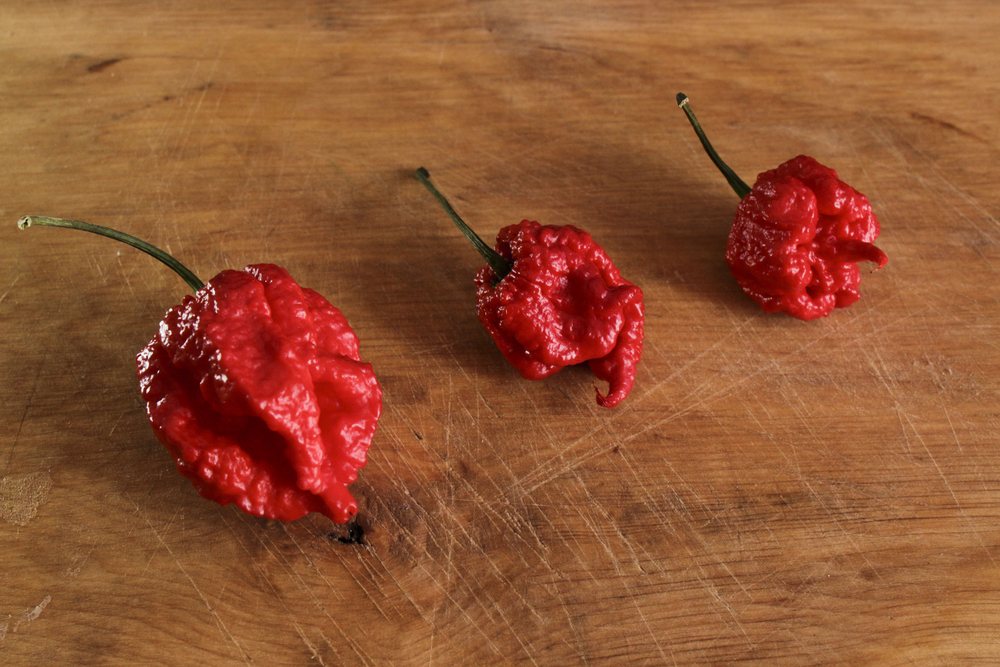
The most dangerous shortcut is treating a variety’s lowest published number as a safety ceiling. Superhot peppers can cause severe pain and contamination far beyond the cutting board.
Another mistake is assuming seed removal removes all heat while placental tissue remains.
- Do not taste an unknown superhot pepper to identify it.
- Do not use water alone to remove capsaicin from skin or tools.
- Do not equate high heat with superior flavor.
Account for place, season, and crop
Hot weather, plant stress, fruit maturity, genetics, and sampling can influence measured heat. The same variety grown in the humid Southeast may not match a published trial from a dry climate exactly.
That variation is a reason to publish ranges and handling guidance, not a reason to abandon the scale.
Keep the claim tied to evidence
Record variety, source, fruit maturity, growing conditions, and any laboratory result. Anecdotal heat impressions are useful to a cook but are not a substitute for analysis.
Keep seed lots separated when heat type and identity matter.
The number is a tool. Respect it, but do not let it erase the pepper’s flavor or the limits of measurement.
Put this guide to work in a real garden
Treat The Scoville Scale Explained: What Pepper Heat Numbers Mean—and What They Do Not as a variety record, not merely a harvest note. Keep the original source, lot, stated history, plant population, isolation method, and the traits you observed. A seed name is useful only when the crop grown under that name remains traceable.
Select from healthy plants that represent the intended variety, but do not narrow the population so severely that vigor and diversity are lost. Remove obvious off-types before flowering when purity matters, and keep disease or accidental crosses out of the seed lot.
Dry, clean, label, and store the seed as carefully as it was grown. The label should survive longer than memory: crop, variety, year, location, parent population, isolation, and any uncertainty that the next grower deserves to know.
- Record the original seed source and lot.
- Map neighboring compatible varieties.
- Mark representative healthy plants before harvest.
- Dry and clean seed to a stable condition.
- Label the lot with facts and uncertainties.
Use a 30-day checkpoint instead of guesswork
Before flowering
Confirm variety identity, neighboring compatible crops, and the minimum population you can maintain.
During flowering
Watch pollination and remove off-types before they contribute pollen when purity matters.
At seed maturity
Harvest from healthy representative plants and keep lots separate through drying and cleaning.
Before storage
Label, test, and record uncertainty. A beautiful seed lot without provenance is harder to steward well.
Historical claims and cultural associations require documentation and community context. This guide can explain categories and methods, but it should not be used to assign ownership, ancestry, or sacred status without evidence and permission.
Keep a one-season record
The record does not need to be elaborate. A notebook page, spreadsheet row, or labeled photograph is enough when it captures the variables that matter.
- Variety name and source
- Population size and isolation
- Off-types or disease removed
- Harvest and cleaning date
- Germination test and storage location
Write enough that another grower—or you, one year later—could understand what was planted, what happened, and why the next decision changed.
Questions gardeners ask
Are pepper seeds the hottest part?
No. Capsaicinoids are concentrated mainly in the placental tissue surrounding the seeds. Seeds can be coated with those oils.
How is SHU measured today?
Laboratories commonly use chromatography to measure capsaicinoids and convert the result to Scoville Heat Units.
Can the same plant produce peppers with different heat?
Yes. Fruit position, maturity, environment, and natural variation can produce different heat levels on one plant.
Does cooking destroy capsaicin?
Normal cooking does not reliably eliminate capsaicin. Heat may disperse into the dish, oils, steam, and cookware.
What should I do after handling superhot peppers?
Wear gloves, wash tools and surfaces with detergent, avoid touching the face, and follow poison-control or medical guidance if severe exposure occurs.
The Scoville scale gives heat a language, not a prophecy. Read the range, handle the fruit with respect, and remember that one pepper can still surprise the hand that grew it.


