Start pepper seeds indoors with sustained bottom warmth, shallow sowing, even moisture, and strong light immediately after emergence. Give seedlings time. Most pepper failures begin with cold roots, weak light, or impatience rather than bad seed.
Pepper seed has a hard little silence to it. Set it in cold mix and it can keep that silence for weeks. Give it warmth, oxygen, clean moisture, and patience, and the whole season begins in a cell no wider than a thumb. At our seed company, we see gardeners blame a packet after six cold days. A pepper seed is not late because a calendar is nervous. It is late when the root zone is wrong.
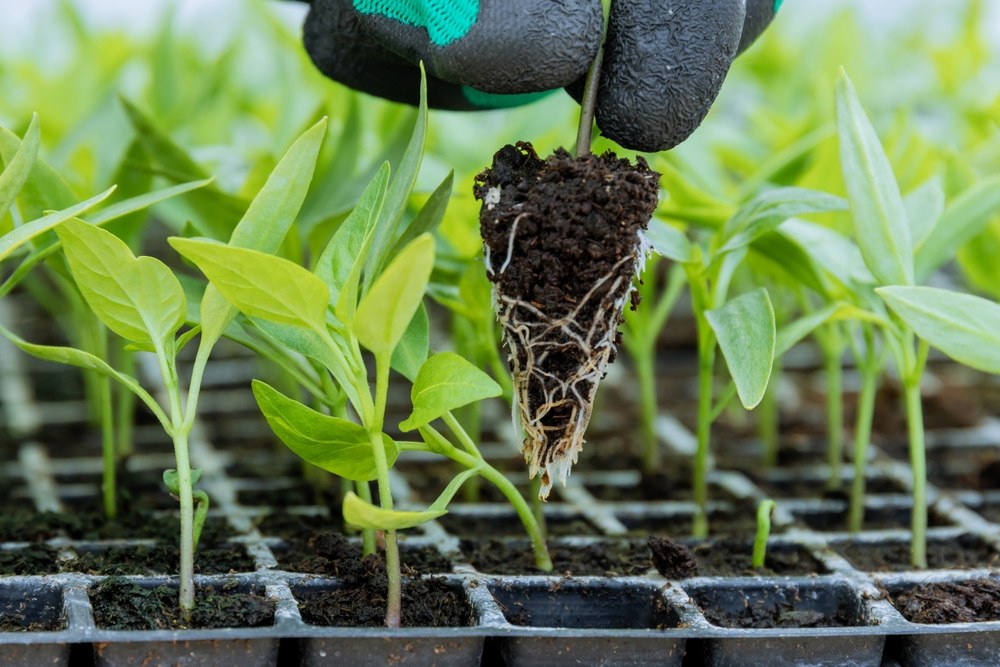
When to start pepper seeds
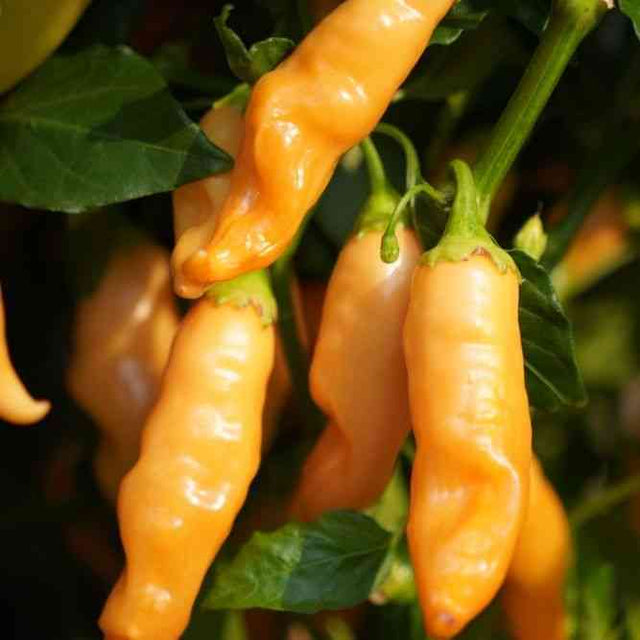
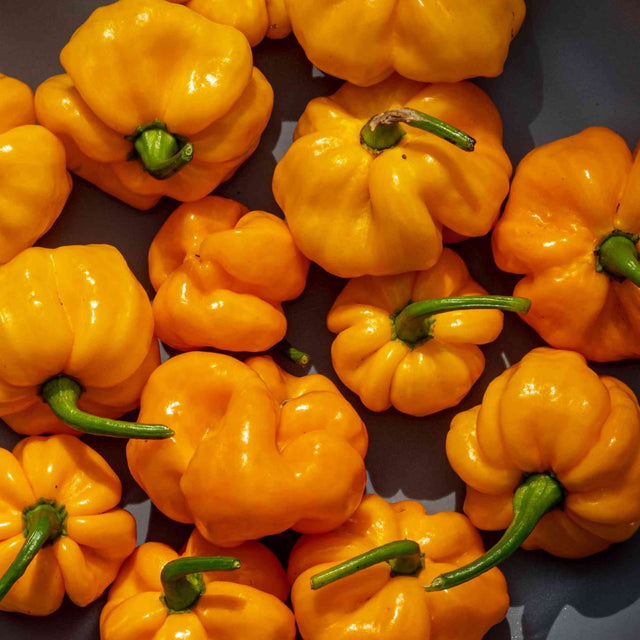
Peppers are warm-season members of the genus Capsicum. The varieties in a seed catalog may belong to several cultivated species, including Capsicum annuum, C. chinense, and C. baccatum. That distinction matters. A sweet bell, a jalapeño, an orange habanero, and an ají amarillo do not merely differ in heat. They can differ in germination pace, plant habit, season length, flower behavior, fruit wall, and seed-saving relationships.
For most home gardeners, the reliable starting point is eight to ten weeks before the last expected spring frost. Slow C. chinense and long-season C. baccatum varieties can benefit from an earlier start when the gardener can provide warmth and strong light without holding seedlings in tiny cells for months. Starting too early under weak conditions produces old, cramped plants rather than an earlier harvest.
The working rule is simple: count backward only as far as your equipment can support. A warm mat without light grows thin stems. A bright window without warm roots leaves seed asleep. A beautiful calendar without daily observation is paper pretending to be weather.
Seed-starting mix, containers, and sowing depth
Use a clean, fine-textured seed-starting mix that drains freely while holding a thin film of moisture around the seed. Heavy garden soil compacts in small cells, carries weed seed and disease organisms, and can remain wet at the surface while turning airless below. The container needs drainage holes. Cell trays, soil blocks, or small pots can all work if the moisture and temperature are controlled.
Sow most pepper seed about 1/4 inch deep. The seed should be covered enough to remain evenly moist, but not buried beneath a heavy layer of cold mix. Firm the surface gently so the seed has contact with the medium. Water with a fine stream or from below, then allow excess water to drain.
A humidity dome slows evaporation during germination, but it is not a sealed swamp. Open it briefly if condensation is excessive, and remove it as seedlings emerge. Constant saturation encourages damping-off and weak roots. The seed needs water, oxygen, and warmth together. One without the others is not care; it is imbalance.
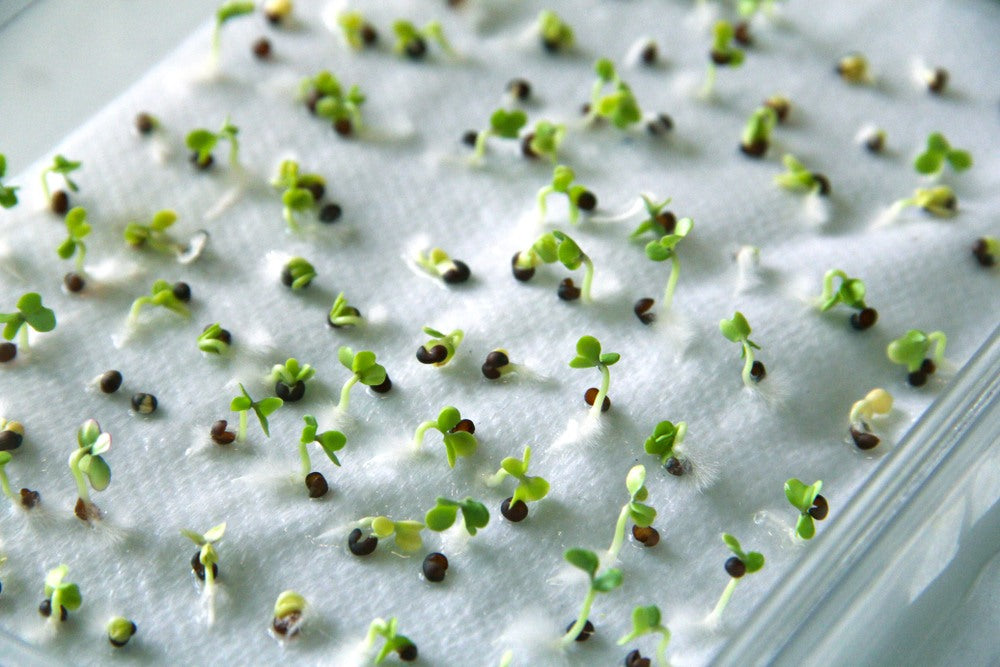
The temperature that actually matters
For many pepper varieties, a root-zone temperature around 80–90°F gives faster, more uniform emergence than a cool room. Air temperature and soil temperature are not the same. A tray can sit in a 70°F room while the wet mix near a cold window remains far cooler. Measure the medium when troubleshooting.
Heat mats are useful because they warm the root zone, not because peppers need tropical air every hour of the day. Use a thermostat when possible. Unregulated heat can dry small cells quickly or push the medium well above the intended range. Once a tray has largely emerged, remove or reduce bottom heat according to the room and the remaining unsprouted cells.
Emergence can begin in a week under ideal conditions, but ten to twenty-one days is common across the crop, and some lots or species take longer. Do not reseed solely because the fastest cells are up. Keep a full germination window, then investigate temperature, depth, water, and seed age before declaring failure.
Light, airflow, and early feeding
Move emerged peppers under strong light immediately. A seedling stretching toward a window is not “reaching for life” in a poetic sense. It is spending stem strength because the light is inadequate. Keep lamps close enough to provide firm, compact growth without heating or bleaching leaves. Adjust as plants rise.
Run a gentle fan or create light air movement after establishment. The goal is not to batter seedlings. The goal is to reduce stagnant humidity, strengthen stems, and help the surface dry at a reasonable pace. Water when the root zone needs it, not because the clock reached morning. Lift the tray, feel the mix, and learn its changing weight.
After the first true leaves develop, begin a restrained fertility program. Seed-starting mix often contains little long-term nutrition. Use a dilute, balanced fertilizer or a program matched to the medium. Pale leaves can indicate hunger, but cold roots, excess water, high pH, or damaged roots can produce similar symptoms. Diagnose before pouring.
Potting up and hardening off
Pot up when roots hold the plug together and growth begins to crowd the cell. Move into a container large enough to carry the plant to transplanting without turning the root ball into a tight knot. Handle by the leaves or root ball rather than squeezing the stem.
Peppers can be planted slightly deeper than they grew in the tray, but they do not root along buried stems as freely as tomatoes. Do not bury long sections of weak stem as a substitute for better light. Correct the conditions that caused stretching.
Before planting outside, harden seedlings over roughly a week or more. Begin with sheltered shade and mild temperatures, then increase sun and wind exposure gradually. Protect plants from sudden cold. A pepper seedling raised under lamps has tender leaves; a full day of hard sun can burn it before the roots have established.
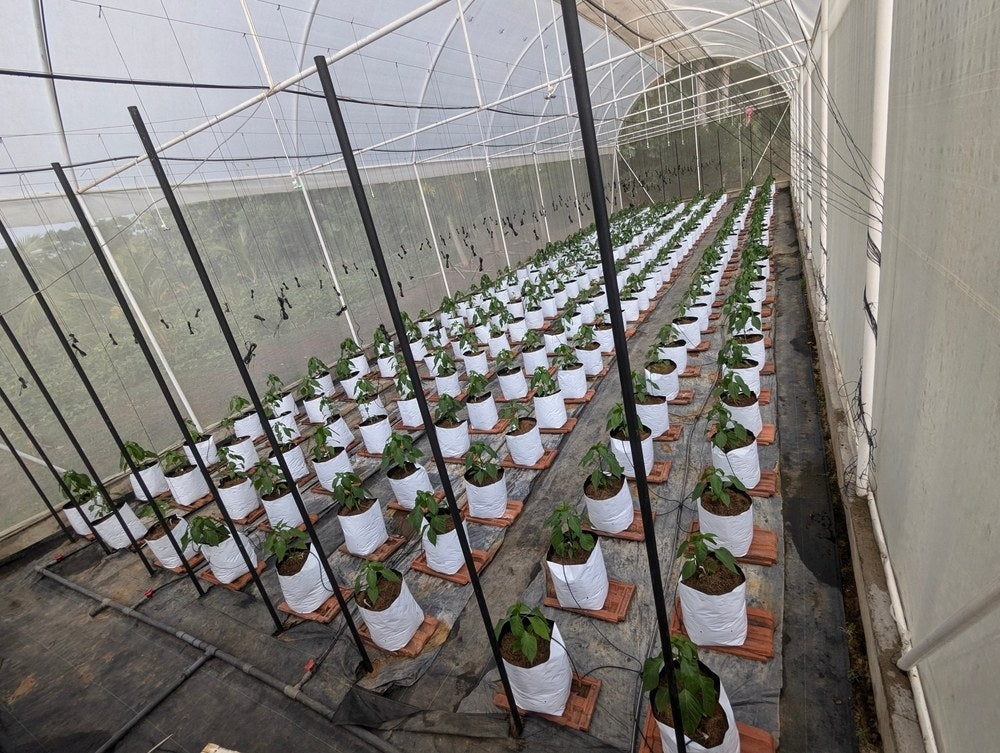
Transplanting, spacing, and support
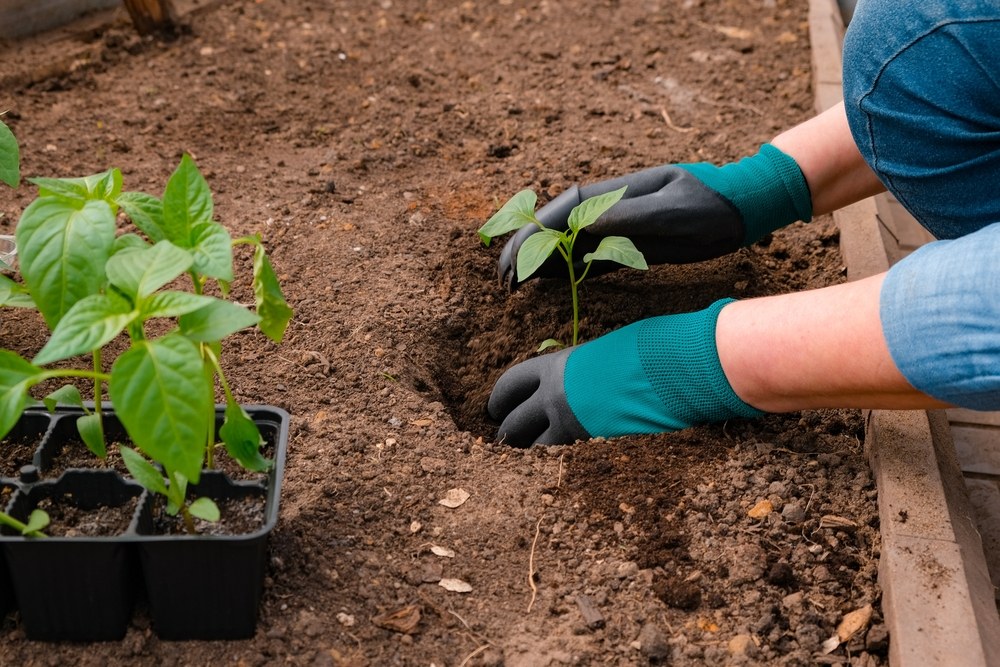
Transplant after frost danger has passed, the soil has warmed, and nights are reliably mild. A pepper can survive a cold night and still lose weeks of momentum. In eastern North Carolina, warm days arrive before the soil and night pattern are always settled. Wait for the root zone, not merely the first shirt-sleeve afternoon.
Plant in full sun with well-drained soil. Eighteen inches between plants is common for compact peppers; larger C. chinense and C. baccatum plants may need more. Give enough row space to walk, harvest, and move air through the canopy. Install stakes at transplanting for tall or heavy-fruited varieties.
Water deeply enough to wet the active root zone, then let the surface breathe. Mulch after the soil is warm to reduce splash and moisture swings. Too much nitrogen produces a handsome green plant with fewer peppers. The crop should look alive, not overfed.
Flowers, fruit set, ripeness, and heat
Pepper flowers are generally self-fertile, but heat, cold, drought, excessive humidity, and nitrogen imbalance can interrupt fruit set. When flowers drop, do not assume pollination is the only cause. Look at the weather pattern, new growth, moisture, and the condition of the roots.
Harvest stage changes flavor. Green fruit is usually firmer and more vegetal. Fully colored fruit is sweeter and often more aromatic, though it takes longer to reach that point and exposes the plant to weather and pests. Hot peppers can also change heat perception as they ripen. Harvest some at both stages and keep notes.
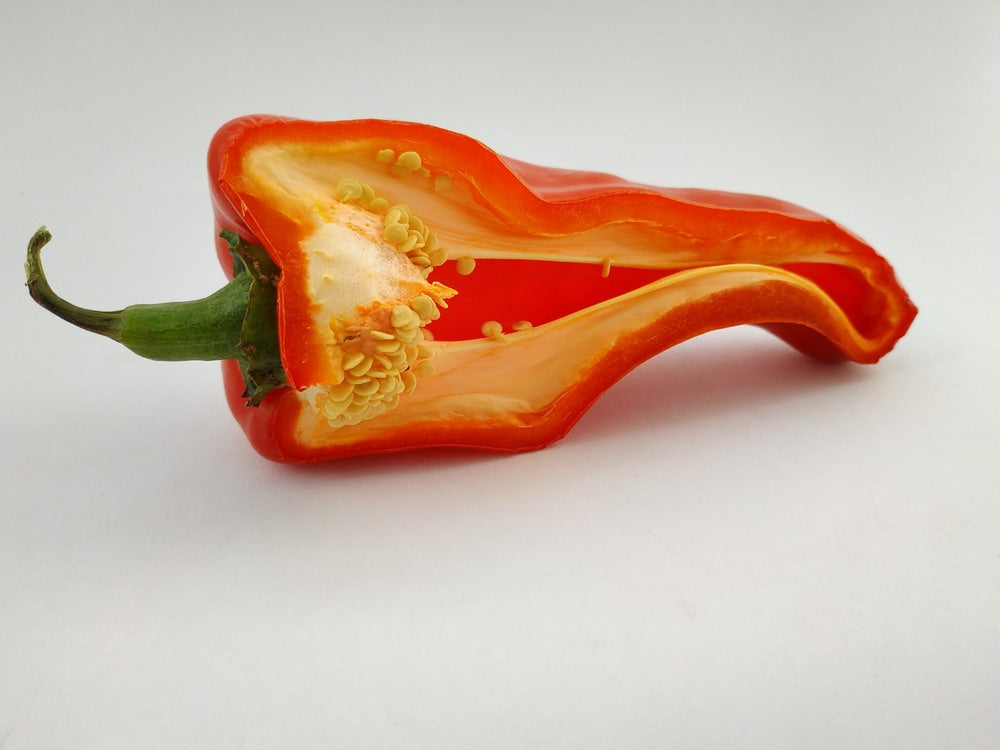
Wear gloves with very hot fruit, avoid touching eyes and skin, and keep cutting boards and tools away from children. Capsaicin is concentrated in the placental tissue around the seeds, not created by the seeds themselves. The seed may carry surface oils during cutting, which is why it can still burn.
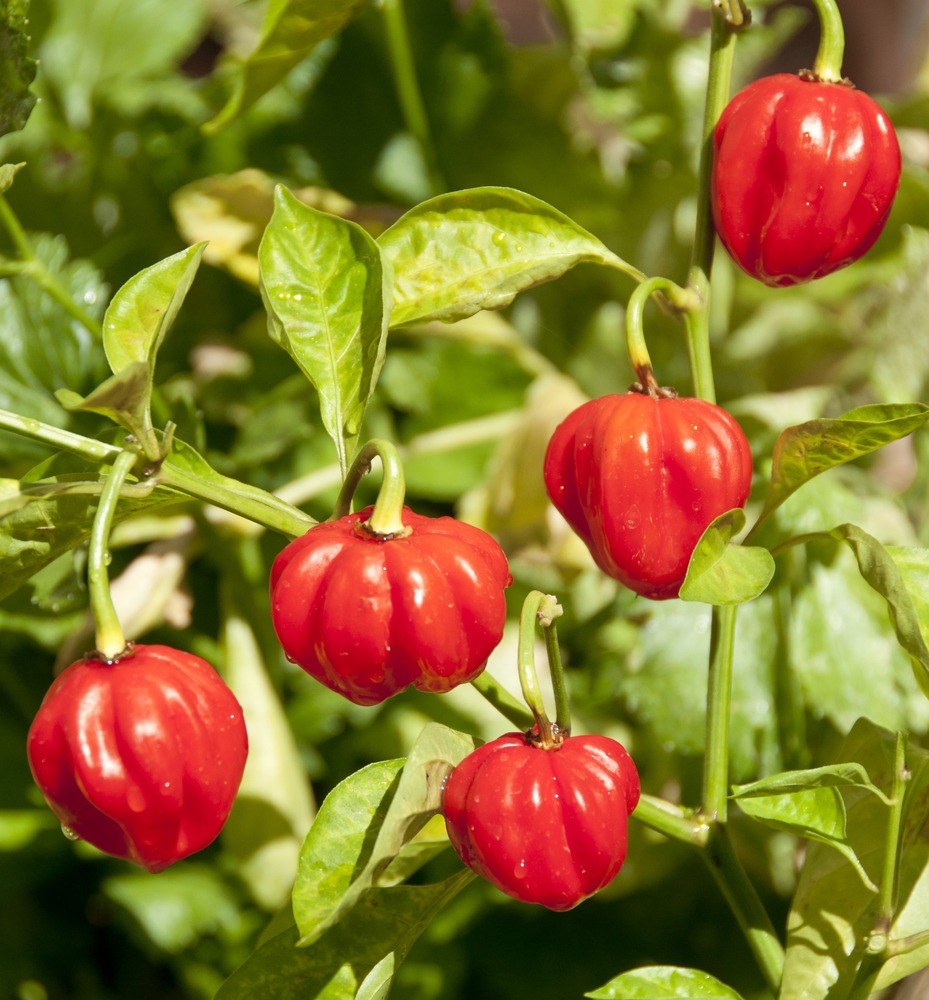
| Problem | What to inspect first | Practical response |
|---|---|---|
| Seed does not emerge | Seed-zone temperature, depth, saturation, age, full germination window | Warm the root zone, improve drainage, verify with a paper test, and do not repeatedly flood the tray |
| Seedlings are thin | Light intensity and distance | Move under stronger light and provide gentle airflow |
| Leaves yellow in trays | Root crowding, overwatering, fertility, pH, cold mix | Correct the cause before increasing fertilizer |
| Flowers fall | High heat, cold nights, drought, saturated soil, excess nitrogen | Stabilize moisture and wait for a better weather window |
| Blossom-end rot | Moisture swings and root stress | Keep water even; add calcium only when soil evidence supports it |
| Fruit develops pale patches | Sun exposure after leaf loss or pruning | Preserve enough canopy and use shade protection in extreme heat |
| Leaves show spots or wilt | Pattern, weather, watering, plant family rotation | Remove affected debris, avoid splash, rotate, and identify before treating |
Saving pepper seed without losing the variety
Seed saving begins before fruit ripens. Mark the healthiest, most true-to-type plants while their habit, flowering, and fruit load can still be judged. Do not save only from the final pepper left after the best fruit has gone to the kitchen.
Peppers are primarily self-pollinating, but insects can cross varieties. Isolation recommendations vary with species, pollinator pressure, and the level of purity required. Home gardeners can use distance, blossom bags, cages, or staggered flowering. Commercial or preservation work needs a deliberate plan and a meaningful population.
Let selected fruit reach full biological maturity. Remove seed, spread it thinly in shade with airflow, and dry until it breaks rather than bends. Label species, variety, year, selection notes, plant count, and isolation method. A packet name without a record is a rumor waiting for another generation.
Turn the seed-starting lesson into a useful pepper garden
Use the pepper seed collection to choose by species, season length, wall thickness, harvest color, heat, and kitchen use. A first pepper garden does not need a parade of novelty. It needs plants that can finish in the available season and produce food the household will actually use.
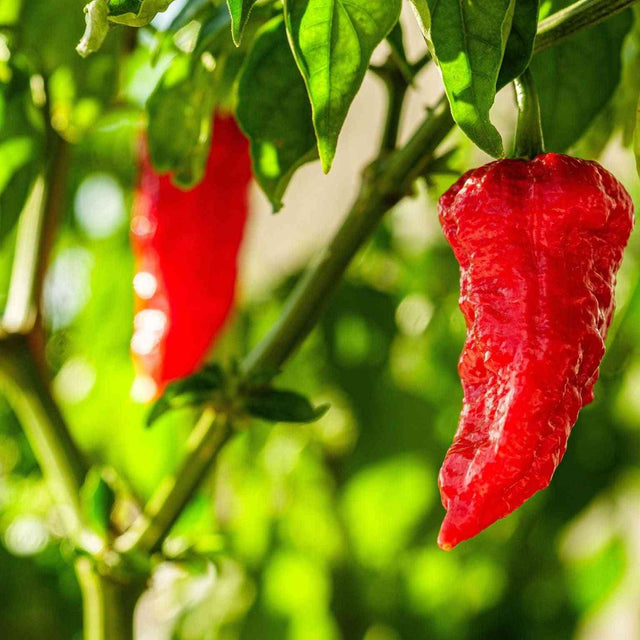
For sweet peppers, compare California Wonder, Purple Beauty, and Jimmy Nardello. For a practical heat range, one jalapeño or serrano, one distinctive seasoning pepper such as Fish Pepper, and only as many superhots as the kitchen has a real plan to use.
Plant enough of each variety to judge more than one individual. Two plants of twelve varieties create a tasting collection. Six to ten plants of three or four varieties create a trial worth recording. At season’s end, compare emergence, transplant strength, first flower, first ripe fruit, total useful harvest, flavor, disease, and seed quality. The next catalog decision should be earned in the garden.
Mid-Atlantic and Upper South field notes
In the humid Mid-Atlantic and Upper South, peppers often begin with a cool spring and finish in heavy summer air. Start with warmth indoors, but do not rush transplants into cold soil. Once summer arrives, preserve airflow, water at the root zone, and avoid pruning away so much canopy that fruit burns.
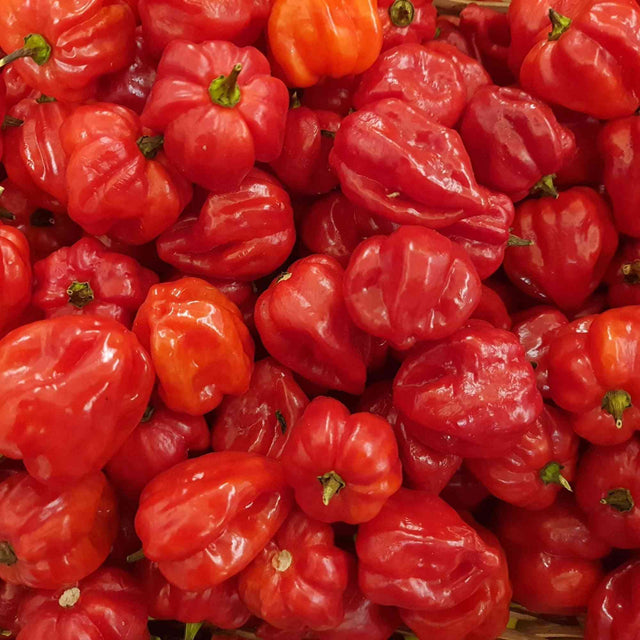
Long-season habaneros, Scotch Bonnets, ají peppers, and some superhots need the earliest reasonable start. Shorter-season bells, jalapeños, shishitos, and frying peppers are more forgiving. Near the coast, hurricane rain and saturated soil can do more damage than drought; in mountain gardens, the first fall cold can arrive before slow fruit colors. Choose varieties with the season you actually have.
Reading a pepper seedling tray before blaming the seed
A tray is a set of clues. Uneven emergence across every variety usually points to temperature, watering, depth, or mix. One slow variety in an otherwise even tray may reflect species, lot age, or a genuinely longer germination window. Seedlings collapsing at the soil line suggest damping-off conditions. Purple or dull leaves can follow cold roots as easily as a missing nutrient. Long pale stems point toward weak light.
Separate the symptom from the story. Measure the root-zone temperature. Lift the tray to judge moisture. Check whether the first cells sit over the warm center of the mat while the edge cells remain cold. Compare the sowing depth. Run a paper test when viability is in question. Good troubleshooting reduces the number of remedies, because most seedling problems become worse when every possible treatment is applied at once.
| What you see | First checks | What not to do |
|---|---|---|
| No emergence anywhere | Seed-zone temperature, saturation, depth, date, and a germination test | Do not keep adding water to already wet mix |
| Edges lag behind center | Heat-mat coverage and tray contact | Do not assume the edge cells received the same temperature |
| Thin, leaning seedlings | Light intensity, lamp distance, and duration | Do not bury weak stems and leave the light unchanged |
| Seedlings fall at soil line | Airflow, drainage, sanitation, and surface moisture | Do not seal the tray under a wet dome after emergence |
At scale, records matter because memory edits the season. A seed company cannot learn from “most of them came up.” Record the count, date, conditions, and abnormal cells. The gardener at home deserves the same advantage, even if the entire trial fits on a windowsill.
Frequently asked questions
Should pepper seeds be soaked before planting?
Usually no. Fresh seed germinates well with warmth and even moisture. A brief soak may help very old seed take up water, but soaking does not replace correct temperature and can increase handling damage.
How long do pepper seeds take to germinate?
Many emerge in 7–21 days under good conditions, but species, variety, lot age, and root-zone temperature matter. Keep the full recorded window before reseeding.
Do pepper seeds need light to germinate?
They are normally covered shallowly and do not require light before emergence. Strong light becomes urgent as soon as the seedling rises.
Why did only one variety germinate slowly?
Different pepper species and varieties can respond differently even in the same tray. Check the actual seed-zone temperature, not only room temperature, and compare with a paper germination test.
Can I start peppers in a sunny window?
Sometimes, but most windows provide less light and colder root zones than they appear to. Supplemental light and controlled bottom warmth produce more reliable seedlings.
When should I transplant peppers outdoors?
After frost danger, when soil is warm and nights are consistently mild. Hardening off and warm roots matter more than a single warm afternoon.
Can sweet and hot peppers cross?
Yes. Many belong to compatible Capsicum species, and insects can move pollen. The fruit you eat this year remains true to the mother plant; crossing affects the seed-grown generation.
For more information and guidance
Explore the cited resources below for additional technical detail and background.