Variety field guide
What to expect from Jack Be Little Pumpkin / winter squash Seeds
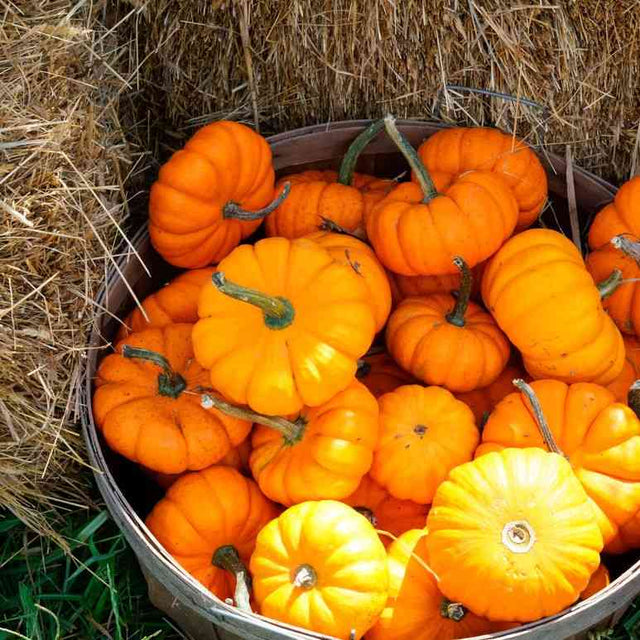
Jack Be Little Pumpkin / winter squash seeds produce orange pumpkin / winter squash, about 3-4 in across, on vining/climbing plants.
Open the complete descriptionHide the complete descriptionVariety traits, flavor, garden use, and the complete description
Jack Be Little Pumpkin / winter squash seeds produce orange pumpkin / winter squash, about 3-4 in across, on vining/climbing plants. It is best suited to miniature pumpkin harvests, table decorations, crafts, baking whole, stuffing, and family gardens. mild sweet pumpkin flesh suited to baking whole or stuffing Harvest palm-sized orange pumpkins for table displays, crafts, miniature jack-o-lanterns, stuffing, and baking whole.
Minimum seeds per packet: 20 seeds.
About Jack Be Little
Jack Be Little is an annual pumpkin / winter squash with orange color, 97–120 in mature height or spread, and a vining/climbing habit. Harvest form or size: about 3-4 in across. Botanically it is Cucurbita pepo L. Maturity or first bloom: 90-99 Days; germination: 7-10 Days at 75–90 °F. Best for miniature pumpkin harvests, table decorations, crafts, baking whole, stuffing, and family gardens. Mild sweet pumpkin flesh suited to baking whole or stuffing.
History and provenance
Jack Be Little is a modern open-pollinated miniature pumpkin maintained for tiny uniform fruit, deep ribs, orange color, and dual decorative and culinary use. Botanical record: Cucurbita pepo var. pepo. The broader crop history is kept separate from the documented history of the named variety. Where an exact breeder, introduction date, family story, or cultural attribution cannot be supported by a credible record, repeated claims are not presented as certain. Jack Be Little pumpkin seeds produce miniature bright orange, deeply ribbed pumpkins. The defining kitchen quality is mild sweet pumpkin flesh suited to baking whole or stuffing. Jack Be Little pumpkin seeds are warm-season seed. Give runners a planned direction so leaves receive air and fruit can rest on a dry surface.
Growing facts
| Scientific name | Cucurbita pepo L. |
|---|---|
| Life cycle | Annual |
| Maturity / first bloom | 90-99 Days |
| Germination | 7-10 Days at 75–90 °F |
| Seed depth | 1 in |
| Plant height / spread | 97–120 in |
| Growth habit | Vining/Climbing |
| Spacing | 48 in between plants; 96 in between rows |
| Sunlight | Full sun |
| Soil | Loamy; pH 6.0–6.5 |
| Water | Moderate |
| Support | No-Support |
Starting Jack Be Little from seed
How to grow Jack Be Little Pumpkin / winter squash
Botanical identity: Cucurbita pepo L. Life cycle: Annual.
Sow 1 in and use a seed-zone temperature near 75–90 °F. Expected emergence: 7-10 Days. No stratification; direct sow into warm soil or start briefly in biodegradable cells and transplant young
Plant during Late Spring. Space plants 48 in apart with 96 in between rows or planting bands.
Provide Full sun, moderate water, and loamy near pH 6.0–6.5. Support: No-Support.
Garden performance and care
Give Jack Be Little enough room for its vining/climbing growth. Direct irrigation to the soil, keep developing fruit on dry mulch or boards where rot is common, and leave seed-saving fruit on the plant beyond the eating stage. Expected emergence is 7-10 Days; the listed maturity or bloom timing is 90-99 Days.
Harvest, bloom, and uses
Jack Be Little is best for miniature pumpkin harvests, table decorations, crafts, baking whole, stuffing, and family gardens. Harvest form or size: about 3-4 in across. Color at the principal harvest or mature stage: Orange. Mild sweet pumpkin flesh suited to baking whole or stuffing.
Saving seed
Seed saving for Jack Be Little Select several healthy, true-to-type plants so the saved lot represents the variety rather than one unusually early or large individual. Squash and gourds are insect-pollinated and cross readily with other varieties of the same species. Confirm the species identified for this crop, then isolate by distance or controlled hand pollination. Mark seed fruit and let it reach full biological maturity; summer squash must become large and hard, winter squash must develop full rind color, and luffa or hard-shell gourds must mature well beyond the edible stage. Cure sound fruit before extraction when the crop benefits from curing. Remove, wash, and dry seed to a hard, storage-ready condition. Maintain several representative plants and record species, population, isolation, fruit selection, curing, cleaning, and test date.
Common problems
Watch Jack Be Little for cucumber beetles, squash bugs where applicable, aphids, powdery or downy mildew, bacterial wilt, crown rot, poor pollination, and fruit damage on wet soil. Rotate cucurbit crops, provide airflow, water at the root zone, protect young plants before flowering, and remove covers when blossoms need pollinators. Do not work wet vines.
Frequently asked questions
When is Jack Be Little ready?
90-99 Days from warm direct sowing or equivalent established transplant
How long does germination take?
Expect 7-10 Days near 75–90 °F; actual emergence changes with moisture, seed condition, and soil temperature.
How large does it grow?
About 97–120 in with a vining/climbing habit. Support: No-Support.
Can it grow in a container?
Can be grown in a large container with room for vigorous vines or a sturdy trellis. Keep moisture and fertility steady and allow insect pollination; miniature pumpkins do not mean miniature vines.
How is it used?
Primary uses: miniature pumpkin harvests, table decorations, crafts, baking whole, stuffing, and family gardens. Mild sweet pumpkin flesh suited to baking whole or stuffing.
Can I save seed?
Yes where the crop biology allows, but keep compatible varieties isolated, use several healthy plants, wait for full seed maturity, dry thoroughly, and label the lot.