Mulch is a roof laid over the soil. A good roof softens rain, slows evaporation, and keeps weeds from taking the first light. A bad roof leaks weeds, traps water against stems, and gives slugs a cool corridor straight to the crop.
The right depth depends on the material and season. Two inches of fine compost and two inches of loose straw are not the same physical layer.
Cold spring soil may need sun before it needs cover. Hot summer soil may need protection immediately. The calendar does not decide alone; soil temperature, moisture, crop size, and pest pressure do.
Understand what vegetable garden mulch can and cannot do
Organic mulch reduces evaporation, moderates temperature, protects structure, and adds residue as it decomposes. Synthetic mulches can warm soil or suppress weeds but require different installation and disposal.
Mulch does not fix compacted, waterlogged, or nutrient-poor soil. It changes the surface environment.
- Coarse materials allow more air.
- Fine materials mat and hold more moisture.
- Fresh wood chips belong mainly on paths and perennial areas, not mixed deeply into annual beds.
Choose the method by the constraint that actually matters
Choose by crop and season. Warm-season transplants benefit after the soil has warmed. Direct-seeded rows need an open strip until seedlings are established.
In slug-prone beds, pull mulch back from tender stems and watch the damp edge after rain.
| Situation | Best starting choice | Why |
|---|---|---|
| Clean straw | Annual vegetable beds and paths | Check for weed seed and matting |
| Shredded leaves | Fall beds and established plants | Avoid thick wet mats around seedlings |
| Compost | Thin surface layer and soil feeding | Not a complete weed barrier by itself |
| Wood chips | Paths and perennial plantings | Do not bury annual crop roots in fresh chips |
| Black plastic | Warm-season soil warming and weeds | Requires irrigation underneath and end-of-season removal |
Set the system up in the right order
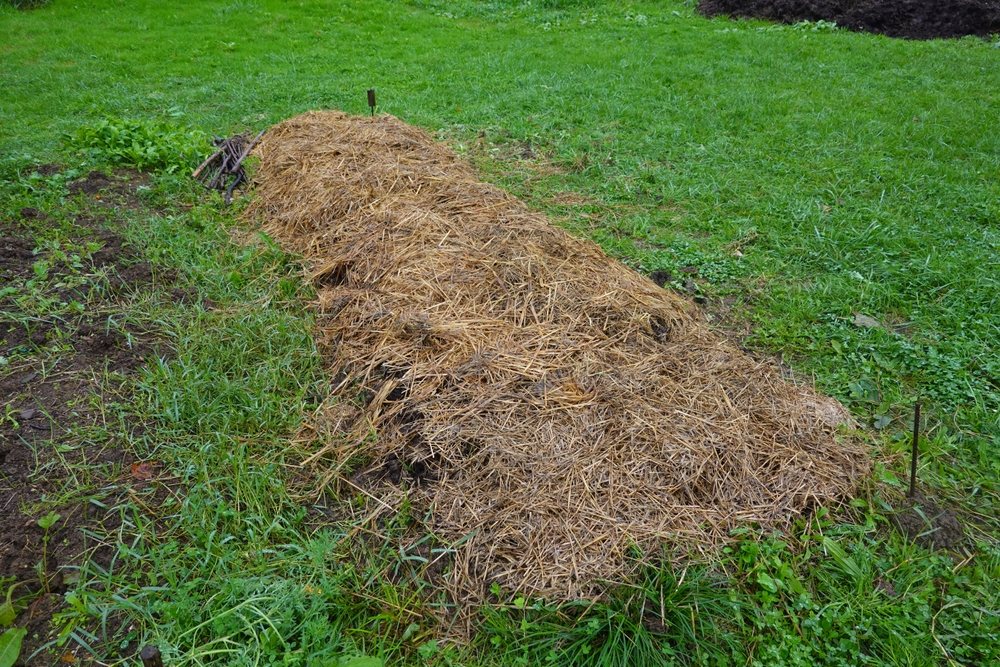
Weed and water before mulching.
- Apply a loose, even layer rather than a packed mat.
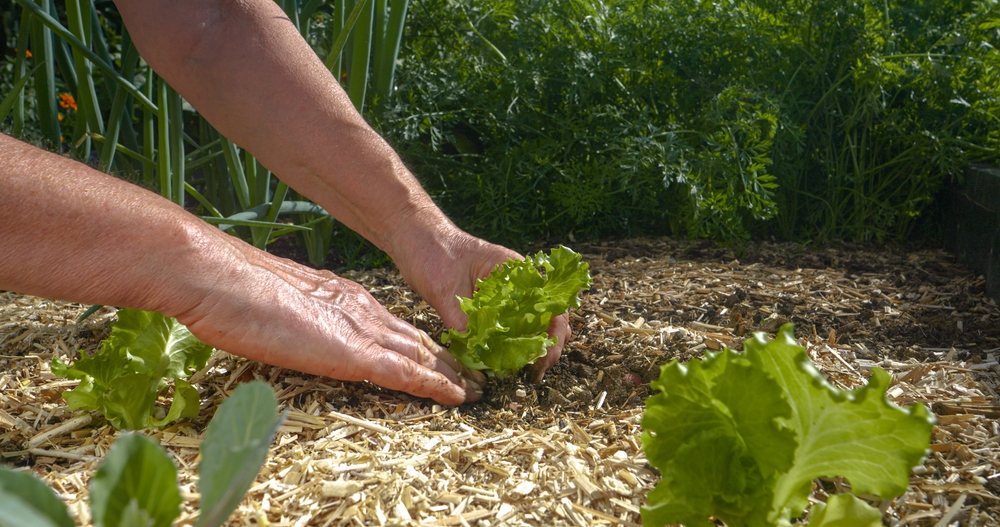
- Keep mulch away from crowns and stems.
- Leave direct-sown rows visible until emergence.
- Replenish only when the existing layer has thinned.
Watch for the failure points
Mulch can hide rodents, slugs, irrigation leaks, and saturated soil. It can also delay spring warming and keep rain from reaching soil when a dry, hydrophobic mat forms.
The cure for weeds is not always a deeper layer. Seedlings emerging through mulch may be coming from the mulch itself.
- Do not pile mulch against tomato stems or tree trunks.
- Do not use herbicide-contaminated hay or manure without source confidence.
- Do not till woody mulch deeply into a nitrogen-hungry annual bed.
Adjust for North Carolina, Virginia, and the Mid-Atlantic
In eastern North Carolina, summer mulch is valuable for moisture and soil-temperature moderation, but humid nights increase slug and disease considerations. Sandy soils may need more frequent inspection under mulch because water moves quickly downward.
Mountain gardens may delay spring mulch until soil warms, then use it to buffer dry summer periods.
Keep records that make the next season easier
Mark irrigation lines before covering them. Record material, depth, date, slug activity, and whether the soil stayed too wet or too dry.
Lift the mulch in several places rather than trusting one inspection point.
Mulch should make the garden easier to read, not cover every sign until the crop is already failing.
Put this guide to work in a real garden
Put Mulching a Vegetable Garden: Materials, Depth, Timing, and Hidden Risks into a one-season plan before buying more inputs. Choose the variety or material, mark the bed or container, write the sowing or planting date, and decide what success will look like: first harvest, stem length, fruit set, bloom, survival, or control of spread.
Inspect on a schedule. Early problems are usually easier to correct because the crop has more season left and the cause has not been buried under secondary damage. Water, fertility, airflow, support, and harvest timing should be adjusted from the plant’s response rather than from a rigid weekly ritual.
At the end of the crop, keep the record honest. Note what performed, what merely survived, what required too much labor, and what deserves a larger planting next year. Experience becomes expertise only when it is remembered accurately.
- Choose the variety and define the intended use.
- Prepare soil, container, support, or irrigation before planting.
- Set a weekly inspection date.
- Harvest or prune at the stage described in the guide.
- Write a short end-of-season verdict.
Use a 30-day checkpoint instead of guesswork
Before planting
Choose the variety, site, support, soil preparation, and irrigation method while the bed is still easy to change.
First two weeks
Protect establishment. Watch moisture, light, wind, transplant shock, and early pest pressure.
At rapid growth
Adjust spacing, support, pruning, and fertility before the plant becomes difficult to handle.
At first harvest or bloom
Record quality, timing, labor, and the plant’s response. Use that evidence to guide the rest of the season.
A guide provides a sound starting system, not a guarantee. Cultivar, weather, soil history, and management interact, and the correct response may change as the plant moves from establishment to harvest.
Keep a one-season record
The record does not need to be elaborate. A notebook page, spreadsheet row, or labeled photograph is enough when it captures the variables that matter.
- Variety and source
- Planting date and location
- Water, fertility, and major weather events
- First harvest or bloom and total season length
- Problems, corrections, and next-year decision
Write enough that another grower—or you, one year later—could understand what was planted, what happened, and why the next decision changed.
Questions gardeners ask
How deep should vegetable garden mulch be?
A loose layer of roughly two to four inches is a common range, but fine compost may be thinner and coarse straw may settle. Keep it away from stems and adjust for drainage and pests.
Can I use grass clippings?
Yes, in thin dry layers from an untreated lawn. Thick fresh layers can mat, heat, smell, and exclude air.
Do wood chips steal nitrogen?
Wood chips mainly tie up nitrogen where they contact soil as they decompose. Used on the surface, especially in paths, the effect on crop roots is usually limited.
When should I mulch tomatoes?
After the soil has warmed and transplants are established. Water first, then mulch without burying the stem.
Does mulch attract slugs?
Mulch can create cool, damp shelter. It does not create slugs, but it can increase survival and travel near vulnerable plants.
Mulch is not decoration. It is climate control at soil level. Lay it with purpose, and leave enough of the garden uncovered to know what is happening underneath.