
The useful question is not “Do serious gardeners use heat mats?” It is “What temperature is the seed-starting mix, what crop am I starting, and how will I remove the extra heat after germination?” This guide is built around that decision.
I like tools that solve a measurable problem. A seedling heat mat can do that when the growing medium is colder than the seed needs. It cannot replace strong light, clean mix, moisture control, airflow, or attention.
A heat mat should solve a measured temperature problem—not become one more piece of equipment a frightened gardener is told to buy.
What a seedling heat mat actually does
A seedling heat mat is a water-resistant electric mat designed to warm trays from below. It raises the temperature of the seed-starting mix—the root-zone environment where the seed is absorbing water and beginning metabolic activity.
The key distinction
Air temperature and soil temperature are not the same. A room can feel comfortable while a tray sitting on a cold windowsill, concrete floor, metal shelf, or unheated surface remains several degrees cooler.
Bottom heat can make emergence faster and more uniform when a warmth-loving crop is sitting in mix that is colder than its preferred germination range. It cannot correct poor seed viability, sowing too deeply, saturated media, dried-out trays, weak light, or contaminated equipment.
Which seeds benefit from bottom heat
Warm-season vegetables and herbs are the clearest candidates. Extension guidance commonly recommends warm media for tomatoes, peppers, and eggplants, with peppers often needing more heat than tomatoes. Cucumbers, melons, and squash also germinate best in warm conditions, although they are usually started only a few weeks before transplanting because they grow quickly and dislike becoming root-bound.
Crop-by-crop starting point
- Peppers: Often one of the strongest reasons to use a mat. Pepper seed may emerge slowly and unevenly in a cool house.
- Eggplants: Benefit from consistently warm mix and bright light after emergence.
- Tomatoes: Usually respond well to bottom heat during germination, especially in cool indoor spaces.
- Cucumbers, squash, and melons: Appreciate warm media, but start them close enough to transplanting that they do not outgrow their cells.
- Basil and other warm-season herbs: Can germinate more evenly with gentle bottom heat when the room is cool.
The product instructions still matter. A crop group gives you a starting range, but the individual species, variety, seed age, coating, and propagation method can change the best approach.
When a heat mat is unnecessary—or counterproductive
Cool-season crops do not automatically need extra heat. Lettuce, peas, many brassicas, spinach, and several hardy greens germinate at lower temperatures than peppers or eggplants. Heating them to tropical-crop temperatures can speed them past the sturdy seedling stage, dry the mix too quickly, or reduce germination in heat-sensitive species.
University of Minnesota Extension specifically notes that cabbage seedlings generally do well at ordinary room temperatures around 60–70°F and do not need the same heat treatment used for warm-season crops. The same principle applies broadly: do not warm a tray simply because a heat mat is available.
Skip or reduce bottom heat when
- The packet recommends cool germination.
- The room is already warm enough for the crop.
- The tray is drying faster than you can monitor it.
- Most seedlings have emerged and now need stronger light more than warmer roots.
- You are starting a mixed tray with crops that prefer very different temperatures.
How to choose and set up a heat mat
A basic mat can work, but a thermostat makes the system more precise. Without a thermostat, the actual mix temperature depends on the room, the shelf, the tray material, the thickness of the mix, airflow, and whether the tray is covered.
- Match the mat to the tray footprint. Do not fold or overlap a mat unless the manufacturer explicitly allows it.
- Use a thermostat when possible. Place the probe in the growing medium or exactly as the thermostat manufacturer directs—not dangling in open air.
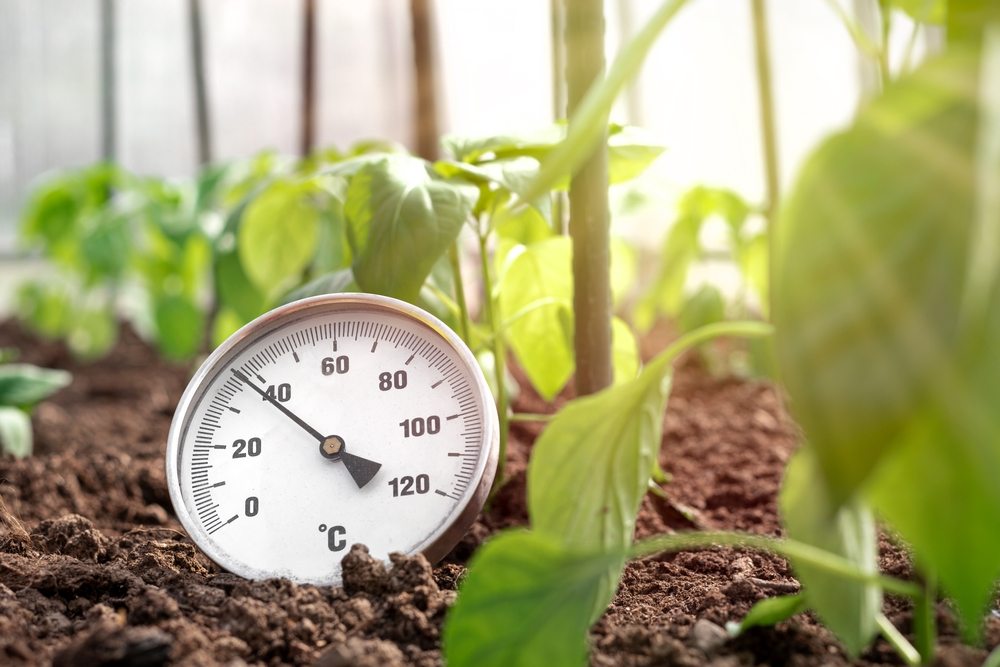
- Measure the mix, not your impression of the room. A simple soil thermometer can reveal whether the tray is actually cold.
- Keep electrical connections dry. Follow the manufacturer’s water and placement instructions.
- Separate crops by temperature need. Peppers and lettuce should not be forced into the same heat plan.
AONSK field note
Our own history has repeatedly taught us that infrastructure matters only when it solves the real bottleneck. A heat mat is useful when cold media is delaying germination. It becomes clutter when the real problem is low light, stale seed, overwatering, or poor timing.
Temperature, moisture, and light work together
Heat changes the water balance in a tray. Warm media loses moisture faster, especially in small cells. That makes a heat mat useful and risky at the same time.
Damping off is associated with conditions that slow or weaken seedlings, including cool wet media, poor drainage, low light, and overwatering. A correctly used heat mat can support faster emergence, but a constantly wet covered tray can still create disease problems.
A tray near a sunny window can be warm at noon and cold by dawn. In older buildings, sheds, and seed rooms, the media temperature may lag far behind the air. Measure the root zone itself; the plant is germinating in the tray, not in the thermostat mounted on the wall.
What to do after seedlings emerge
Most heat-mat mistakes happen after germination. Once the majority of a tray has emerged, the goal changes from triggering germination to growing sturdy transplants.
- Remove humidity domes or increase ventilation as seedlings emerge.
- Move seedlings under bright overhead lights.
- Reduce or remove bottom heat unless the crop-specific instructions call for continued warmth.
- Monitor moisture daily; tiny cells can dry quickly on a heated mat.
- Do not leave seedlings on heat simply because a few late seeds have not emerged. Consider moving the late cells to a separate tray.
Warm roots combined with weak light can produce fast, stretched growth. The strongest seedlings are not always the tallest. They are compact, well lit, evenly watered, and hardened gradually before transplanting.
Troubleshooting common heat-mat problems
| What you see | Likely issue | What to check |
|---|---|---|
| No germination | Wrong temperature, old seed, sowing depth, or moisture problem | Measure the mix, review the packet, and confirm the seed has not dried out or rotted. |
| One edge germinates first | Uneven tray contact or temperature | Level the tray and confirm the mat covers the full growing area. |
| White fuzzy growth | Excess moisture and limited airflow | Reduce humidity, improve air movement, and remove decaying material. |
| Seedlings fall at soil line | Damping-off disease | Use clean trays and mix, improve drainage and airflow, and avoid saturated media. |
| Seedlings are tall and pale | Not enough light | Move lights closer according to the fixture instructions and provide a longer light period. |
| Mix dries every day | Too much heat or cells too small | Lower the thermostat, bottom-water carefully, or move the tray off the mat after emergence. |
A heat mat is only one part of the germination system
During the 2020 seed surge, first-time growers were starting food crops on kitchen counters, in spare rooms, beside windows, and under improvised lights. The photographs customers later shared—seedlings, children planting, and food growing during a frightening year—are part of why we resist one-tool answers. A mat can help, but the tray still needs a complete system.
If one link is missing, more heat may make the problem worse. Saturated mix plus warmth can favor damping-off organisms. Warm seedlings without strong light stretch quickly. A tray on a mat without a thermostat may become much warmer than the room suggests.
Ask this before buying or turning on a mat
- Is the seed-starting mix actually colder than the crop’s preferred germination range?
- Can you measure the temperature in the mix rather than guessing from room air?
- Will you be available to check moisture more often?
- Is strong light ready for the moment seedlings emerge?
- Can the mat be reduced or removed after emergence?
Crop-by-crop heat-mat guide
These categories are practical starting points, not replacements for the packet or product page.
Mixed trays are where many growers run into trouble. A pepper and lettuce tray may look convenient, but the crops do not want the same conditions. Group seeds by germination needs instead of by the day you happen to sow them.
Thermostats, probes, and actual tray temperature
A thermostat does not make a heat mat automatic; it makes the system measurable. Place the probe where it reflects the root-zone temperature of the tray, not against a cold window or directly on the bare mat. Secure it so watering and tray movement do not pull it away.
Set up with fewer surprises
- Put the mat on a dry, stable, heat-safe surface according to the manufacturer’s directions.
- Place the tray on the mat and the probe in the growing medium or where the thermostat manufacturer specifies.
- Check the temperature with a separate soil thermometer during the first day.
- Measure more than one spot on a large mat; edges and centers may differ.
- Recheck after adding a humidity dome, moving the tray, or changing room temperature.
- Never submerge electrical connections or use damaged cords.
Large mats can hold several trays, but that does not mean every tray should share one set point. Separate warm-season seeds from cool-season seeds and remove emerged trays rather than leaving them on the mat because other crops are still waiting.
Three common home seed-starting setups
Example 1 — a cold basement
Peppers sit on a shelf where the air is comfortable enough for people but the mix remains cold. A thermostat-controlled mat can solve a real bottleneck. Strong lights must be ready immediately after emergence.
Example 2 — a warm kitchen
Tomato trays already hold a suitable root-zone temperature. Adding a mat may speed drying without improving germination. Measure first; the best decision may be to use no mat.
Example 3 — a mixed crop tray
Lettuce, peppers, onions, and basil share cells because they were sown on the same day. The crops want different temperatures and emerge at different speeds. The better fix is to regroup the trays, not compromise every crop around one setting.
These are planning examples, not records of a controlled AONSK trial. They illustrate how the same tool can be useful, unnecessary, or counterproductive depending on the room and crop.
Frequently asked questions
Do all seeds germinate faster on a heat mat?
No. Warm-season crops may emerge faster in cold rooms, but cool-season crops can germinate well without extra heat and some seeds perform poorly when kept too warm.
Do I need a thermostat?
A mat can work without one, but a thermostat gives much better control. It helps prevent overheating when room temperature changes or when the mat is used on an insulating surface.
Should I leave tomato and pepper seedlings on the mat after they sprout?
Usually the mat is most valuable during germination. After emergence, prioritize bright light, airflow, and appropriate growing temperatures. Keep bottom heat only when crop-specific guidance or your room conditions justify it.
Can I put a heat mat under a humidity dome?
Yes, if the equipment is designed for that setup, but heat and a dome together can raise humidity and dry small cells unevenly. Monitor moisture and remove or vent the dome after emergence.
Can a household heating pad replace a seedling mat?
Use equipment designed and rated for seed starting. Household pads may not be moisture-resistant or intended for continuous use around watering.
What if only part of the tray has germinated?
Move emerged seedlings into strong light. If practical, separate ungerminated cells so they can remain warm without overheating or stretching the seedlings that are already up.
How can I tell whether my seed-starting mix is too cold?
Measure the mix at seed depth with a soil thermometer at different times of day. Room temperature alone can hide cold windowsills, floors, shelves, and nighttime drops.
Can one thermostat control several trays?
Yes when the trays contain crops with similar temperature needs and the mat heats evenly. Verify more than one location and remove trays as soon as their seedlings emerge.
Why are my seedlings tall and pale after using a heat mat?
The heat probably accelerated emergence before the seedlings received enough light. Move them under strong light immediately, reduce or remove bottom heat, and avoid overwatering.
Does a heat mat replace a humidity dome?
No. They manage different variables. A dome slows moisture loss; a mat warms the root zone. Either can create problems if kept in place after it is no longer needed.
Editorial note: Temperature ranges vary by crop and source. Use the individual packet or product instructions as the primary guide, and treat home conditions as a system of temperature, moisture, light, airflow, and timing—not a single-number problem.


