Free U.S. seed shipping $25+. Seeds ship free at the threshold. Storefront goods, pantry finds, books & local goods are being added.

New seeds, Main Street specials, and storefront finds update as the market grows.

Bunching - Crimson Forest

Scientific name Allium cepa, Allium fistulosum, or Allium ampeloprasum

Seed packet & garden essentials

What to know before you plant

View complete growing & care facts
250 minimum seeds per packet
  • Maturity60-69 Days · First usable harvest varies by crop and season; see packet and field notes
  • Growth habitClumping/Tufted · Perennial · 13–18 in tall
  • Best usescallions, repeated green harvest, containers, and close spacing
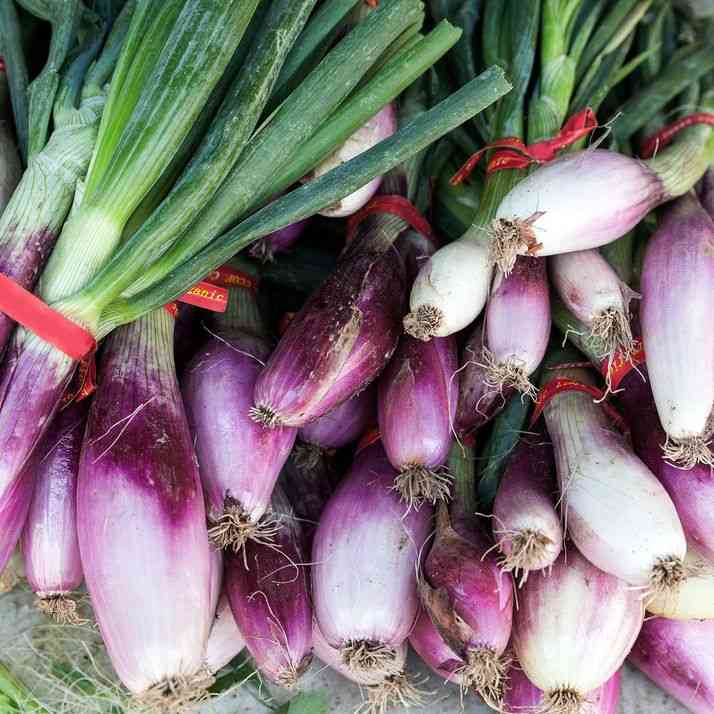
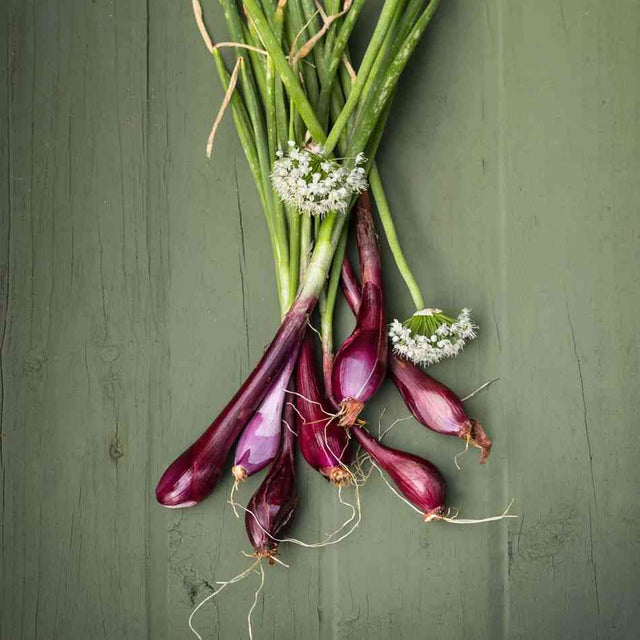
  • Flavor & characterfresh onion flavor without a storage bulb · Red
  • Germination7-14 Days days · 55–70 °F
  • Seed preparationUse fresh seed; onions lose vigor faster than many crops
  • SunFull sun
  • Support & spacingNo-Support · space 3 in · rows 12 in
  • Container fitGood with drainage and adequate soil volume
  • Water needsModerate
  • SoilLoamy · pH 6.0–6.5
  • Planting seasonSpring/Fall · blooms Spring · Hardy
$200 USD

Pickup available at Bertie County Seeds

Usually ready in 2-4 days

Secure checkout Details
Generic
Triple-tested seed qualityRegular quality and germination checks support every packet.

We regularly test seed quality and germination as lots move through storage and packing. We stand behind the seed we send and want customers to contact us when a packet does not perform as reasonably expected.

1-year seed warrantyCoverage begins on the date of purchase.

When properly stored, planted, and cared for, we guarantee reasonable germination and true-to-type growth for one year from the date of purchase. Conditions outside our control—including extreme weather, pests, unsuitable storage, and gardener error—are excluded. Contact us when something is not right so we can review the situation and work toward a replacement, refund, or another fair resolution.

Non-GMO / BE seed policyWe do not buy or sell genetically engineered or bioengineered seed.

Every seed variety we sell is non-GMO.

USDA’s National Bioengineered Food Disclosure Standard defines bioengineered foods as containing detectable genetic material modified through in vitro recombinant DNA methods in ways not achievable through conventional breeding or found in nature.

  • Hybrid means parent lines were conventionally crossed; hybrid does not mean GMO.
  • Heirloom and open-pollinated describe how a variety is maintained and reproduced.
  • Organic certification is separate and is shown only when verified for the individual product.
Packed in Colerain, North CarolinaPrepared in our seed room for gardens across the country.

Seeds are packed and shipped from Colerain, North Carolina. Our packets use forestry-certified paper, and we use recyclable paper mailers where appropriate. AONSK is also a 1% for the Planet partner while continuing to reduce waste in packing and fulfillment.

Seed success profile

Rules-based · no AI
Gardener experience Beginner to Intermediate
Germination difficulty Moderate
Preparation before sowing
Use fresh seed; onions lose vigor faster than many crops
Germination speed
Typical — usually 7–21 days
Growing complexity
Moderate
Patience and timing
Varies by crop, cultivar, and season
Is this seed a good match for your experience?
Expected germination
7-14 Days
Germination temperature
55–70 °F
Stratification
None
Scarification
None
Pre-soaking
None
Light during germination
Cover lightly
Germination pattern
Reliable with fresh seed and early timing
Transplant sensitivity
Transplants well while slender and young
Starting method
Cataloged for indoor starting or transplanting; follow the hardening-off guidance.
Best chance of success
Use fresh seed; onions lose vigor faster than many crops
What to expect

Expect 7-14 days near 55-75°F. Cover lightly. Reliable with fresh seed and early timing.

Slow germination is not automatically failed germination.

Maintain the listed temperature, moisture, light, and treatment conditions for the full expected window. Some seed lots emerge gradually rather than all at once.

1 Beginner-friendly 2 One extra step 3 Some experience helpful 4 Patient growers 5 Advanced propagation

This deterministic profile uses recorded product facts; it is not Artificial Intelligence and is not a guarantee. Seed age, storage, sowing depth, moisture, temperature, light, local conditions, and aftercare can all affect results. Last reviewed July 2026.

Build a garden-fit plan

Check this seed against your real growing conditions

Compare timing, germination preparation, sunlight, soil, water, space, support, intended use, and your preferred level of seed-starting complexity.

Open the detailed garden-fit planner Deterministic rules · no Artificial Intelligence · no live weather service

Complete product description

Bunching - Crimson Forest

Bunching - Crimson Forest seeds belong in a garden plan built around timing, soil, and the way the harvest will actually be used. Bunching - Crimson Forest is best suited to scallions, repeated green harvest, containers, and close spacing. Its defining kitchen character is fresh onion flavor without a storage bulb.

In our seed room, we do not treat a packet as a decoration or a promise detached from conditions. We look at the lot, the germination window, the crop family, the plant habit, and the point at which the harvest is at its best. For Bunching - Crimson Forest, that means sowing 1/4 inch deep, maintaining consistent moisture; shallow roots dry quickly, and giving plants enough room to express the form named on the packet.

Bunching onions are selected for long edible shanks and repeated green harvest rather than dry bulb storage. Named cultivars are compared by color, shaft length, uniformity, and season.

Start with fresh seed, write down the sowing date, and judge the crop across the whole planting rather than one exceptional plant. A reliable variety is not one that survives neglect by accident. It is one that answers good care with a useful harvest, then gives the seedkeeper enough honest information to decide whether it deserves another season.

Minimum Seed Count: 250 seeds

Additional variety notes

Variety overview

Bunching - Crimson Forest seeds belong in a garden plan built around timing, soil, and the way the harvest will actually be used. Bunching - Crimson Forest is best suited to scallions, repeated green harvest, containers, and close spacing. Its defining kitchen character is fresh onion flavor without a storage bulb. In our seed room, we do not treat a packet as a decoration or a promise detached from conditions. We look at the lot, the germination window, the crop family, the plant habit, and the point at which the harvest is at its best. For Bunching - Crimson Forest, that means sowing 1/4 inch deep, maintaining consistent moisture; shallow roots dry quickly, and giving plants enough room to express the form named on the packet. Bunching onions are selected for long edible shanks and repeated green harvest rather than dry bulb storage. Named cultivars are compared by color, shaft length, uniformity, and season. Start with fresh seed, write down the sowing date, and judge the crop across the whole planting rather than one exceptional plant. A reliable variety is not one that survives neglect by accident. It is one that answers good care with a useful harvest, then gives the seedkeeper enough honest information to decide whether it deserves another season.

Every recorded growing detail

Complete growing & care facts

Continue to the garden-fit planner

Plant identity

Minimum seed count 250 seeds
Seed product profile Root allium
Scientific name Allium cepa, Allium fistulosum, or Allium ampeloprasum
Also known as Onion, Onion Seeds - Bunching - Crimson Forest
Color Red
Life cycle Perennial
Botanical family Amaryllidaceae
Reproductive type Open-Pollinated (OP)
Heritage qualifiers Non-GMO
Native to the United States Domesticated Plant
Domestication note Mediterranean Basin

Seed success and gardener experience

Gardener experience Beginner to IntermediateLevel 2 of 5
Germination difficulty ModerateLevel 2 of 5
Preparation before sowing Use fresh seed; onions lose vigor faster than many crops
Stratification None
Scarification None
Pre-soaking None
Light during germination Cover lightly
Germination pattern Reliable with fresh seed and early timing
Growing complexity Moderate
Transplant sensitivity Transplants well while slender and young
First harvest or bloom Varies by crop, cultivar, and season
Best chance of success Use fresh seed; onions lose vigor faster than many crops

Timing and climate

Days to maturity 60-69 Days
Germination 7-14 Days
Germination temperature 55–70 °F
Planting season Spring/Fall
Bloom season Spring
Frost tolerance Hardy
Sunlight Full sun
Water needs Moderate

Site, soil, and space

Soil type Loamy
Preferred soil pH 6.0–6.5
Seed depth 1/4 in
Plant spacing 3 in
Row spacing 12 in
Mature height 13–18 in
Growth habit Clumping/Tufted
Support needed No-Support
Suitable growing locations In-ground bed, Raised bed, Greenhouse, High Tunnel, Containers, Community garden, Hydroponic

Crop-specific details

Flavor profile fresh onion flavor without a storage bulb

Garden-fit planning for this variety

Will Bunching - Crimson Forest fit your garden?

Check soil depth, texture, direct-sowing conditions, moisture, thinning, and season timing.

Rules-based · no AI
Questions for this root or allium seed
Seed-starting fit and patience
Recorded product profileBeginner to IntermediateModerateRead why
Soil test, pH, drainage, and amendment calculator Have a laboratory soil report? Enter pH, nutrients, texture, bed size, and site observations here. Open soil tools
Recorded soil typeLoamy
Recorded pH range6.0–6.5
Water needsModerate
LightFull sun

Use a current laboratory soil test

Soil-test interpreter

Compare your report with this product's listed pH target: 6.0–6.5.

This tool interprets values you enter; it does not replace laboratory or Cooperative Extension amendment rates. Soil test methods and nutrient recommendations vary by region.

The full variety record

Sowing, care, harvest, troubleshooting, and history

How to start Bunching - Crimson Forest from seedPreparation, timing, depth, germination, transplanting, spacing, and early care

Variety-specific germination notes

Expect 7-14 days near 55-75°F. Cover lightly. Reliable with fresh seed and early timing.

Complete sowing and planting guidance

Sow 1/4 inch deep during start early; transplant or direct sow according to type. Space plants 1-6 inches by harvest type apart with 12-18 inches between rows. Germination commonly begins in 7-14 days near 55-75°F. Provide full sun and consistent moisture; shallow roots dry quickly.
How to grow this specific varietyLight, water, fertility, support, spacing, airflow, crop behavior, and season-long care

Variety-specific growing notes

Use a fine, well-drained seed-starting mix or a carefully prepared garden bed. Use fresh seed; onions lose vigor faster than many crops. Sow 1/4 inch deep and follow this light rule: Cover lightly. Keep the seed zone moist but never airless. After emergence, provide bright light and circulation so stems remain sturdy. Thin or transplant to 1-6 inches by harvest type, leaving 12-18 inches between rows. The plant habit is upright shallow-rooted allium, generally reaching 12-30 inches. Water according to the root zone rather than the surface appearance. Harvest regularly where leaf production is the goal, but reserve clearly labeled plants when you intend to save seed.

Complete growing guide

Use a fine, well-drained seed-starting mix or a carefully prepared garden bed. Use fresh seed; onions lose vigor faster than many crops. Sow 1/4 inch deep and follow this light rule: Cover lightly. Keep the seed zone moist but never airless. After emergence, provide bright light and circulation so stems remain sturdy. Thin or transplant to 1-6 inches by harvest type, leaving 12-18 inches between rows. The plant habit is upright shallow-rooted allium, generally reaching 12-30 inches. Water according to the root zone rather than the surface appearance. Harvest regularly where leaf production is the goal, but reserve clearly labeled plants when you intend to save seed.
Practical field and garden tipsExtra techniques, timing adjustments, and observations that improve success
Keep a written record of sowing date, soil temperature, first emergence, thinning, first harvest, flowering, and seed maturity. Herbs are often judged only by aroma, but plant architecture, bolt timing, winter survival, disease tolerance, and labor at harvest decide whether a variety belongs in a working garden. Do not fertilize aromatic herbs into soft, watery growth. Feed the soil according to a test and let the plant keep its character.
Harvest, storage, uses, and benefitsWhen and how to harvest, ways to use the crop, storage, culinary value, habitat value, and garden roles

Harvest and use notes

Harvest for scallions, repeated green harvest, containers, and close spacing. Use the crop at its intended stage, and reserve only healthy true-to-type plants for seed. Onions, leeks, and related alliums are insect-pollinated biennials. Overwinter selected plants, isolate compatible flowering varieties, and save from a broad population.

Uses and benefits

Best for scallions, repeated green harvest, containers, and close spacing. Flavor and aroma: fresh onion flavor without a storage bulb. Flowers may support pollinators when the crop is allowed to bloom; harvest use depends on the species and cultivar.
Seed saving and carrying the variety forwardPollination, isolation, selection, harvest, cleaning, drying, and storage
Onions, leeks, and related alliums are insect-pollinated biennials. Overwinter selected plants, isolate compatible flowering varieties, and save from a broad population.
Common pests, diseases, and growing problemsIdentification, prevention, crop-safe response, and when intervention is justified

Variety troubleshooting summary

Q: When should I sow Bunching - Crimson Forest?
A: Start early; transplant or direct sow according to type. Match the crop to soil temperature and night temperature rather than relying only on a calendar date.

Q: How long does germination take?
A: Usually 7-14 days near 55-75°F, though seed age, moisture, depth, and species matter.

Q: Can it grow in a container?
A: Yes when the container has drainage and enough soil volume. Compact basil, parsley, chives, chamomile, thyme, and many onions are especially useful in containers; tall dill, fennel, and leeks need more depth and space.

Q: Can I save seed?
A: Yes. Onions, leeks, and related alliums are insect-pollinated biennials. Overwinter selected plants, isolate compatible flowering varieties, and save from a broad population.

Q: Is this page medical advice?
A: No. Traditional or herbal uses are presented as cultural and garden context. Use qualified medical guidance for health decisions.

Complete pest and problem guide

The most common failures are cultural: buried tiny seed, stale seed, waterlogged mix, weak light, crowded seedlings, root disturbance in taprooted herbs, or a climate mismatch. Aphids, spider mites, caterpillars, leaf spots, damping-off, and root rots may occur. Identify the organism or condition before treating. Improve airflow, irrigate the soil instead of the foliage, sanitize containers, and avoid keeping woody Mediterranean herbs continuously wet.
Questions gardeners ask about this seedProduct-specific answers for sowing, care, harvest, use, and seed saving
Q: When should I sow Bunching - Crimson Forest?
A: Start early; transplant or direct sow according to type. Match the crop to soil temperature and night temperature rather than relying only on a calendar date.

Q: How long does germination take?
A: Usually 7-14 days near 55-75°F, though seed age, moisture, depth, and species matter.

Q: Can it grow in a container?
A: Yes when the container has drainage and enough soil volume. Compact basil, parsley, chives, chamomile, thyme, and many onions are especially useful in containers; tall dill, fennel, and leeks need more depth and space.

Q: Can I save seed?
A: Yes. Onions, leeks, and related alliums are insect-pollinated biennials. Overwinter selected plants, isolate compatible flowering varieties, and save from a broad population.

Q: Is this page medical advice?
A: No. Traditional or herbal uses are presented as cultural and garden context. Use qualified medical guidance for health decisions.
History, provenance, and cultural contextWhat is documented, what is reported, what remains uncertain, and how the variety reached gardeners

Scientific name: Allium cepa, Allium fistulosum, or Allium ampeloprasum

Provenance summary

Bunching onions are selected for long edible shanks and repeated green harvest rather than dry bulb storage. Named cultivars are compared by color, shaft length, uniformity, and season.

Plant and variety history

Bunching onions are selected for long edible shanks and repeated green harvest rather than dry bulb storage. Named cultivars are compared by color, shaft length, uniformity, and season.

Source and record notes

https://extension.umn.edu/vegetables/growing-onions
https://extension.umn.edu/vegetables/growing-leeks
https://extension.umn.edu/vegetables/growing-scallions-home-gardens
https://extension.oregonstate.edu/catalog/pnw-548-winter-vegetable-production-small-farms-gardens-west-cascades

Continue planning

Related seeds, collections, and growing guides

Explore the full collection
Heirloom Onion Seeds for Storage and Fresh UseExplore the full collection →
Short - Barletta

Short - Barletta

Short - Barletta: fresh bulbs, pickling, grilling, and climate-matched onion production

Red Cipollini Onion Seeds

Red Cipollini Onion Seeds

Flattened Italian heirloom onion with deep red skin and rich, sweet flavor ideal for roasting or caramelizing.

Customer experience

Reviews for Bunching - Crimson Forest

Customer Reviews

Be the first to write a review
0%
(0)
0%
(0)
0%
(0)
0%
(0)
0%
(0)