Free U.S. seed shipping $25+. Seeds ship free at the threshold. Storefront goods, pantry finds, books & local goods are being added.

New seeds, Main Street specials, and storefront finds update as the market grows.

Dill's Atlantic Giant Pumpkin Seeds

Scientific name Cucurbita maxima

Seed packet & garden essentials

What to know before you plant

View complete growing & care facts
20 minimum seeds per packet
  • Maturity120-129 Days · 120-129 Days
  • Growth habitVining/Climbing · Annual · 120 in+ tall
  • Best useproductive warm-season beds, trellises or sprawling vines, kitchen use, and seed saving
  • Color & characterOrange
  • Germination7-10 Days days · 80–95 °F
  • Seed preparationUse clean seed-starting conditions, the listed sowing depth and temperature, and steady moisture without saturation
  • SunFull sun
  • Support & spacingNo-Support · space 48 in · rows 96 in
  • Container fitPossible in a properly sized container with reliable drainage, moisture, and room for the mature plant
  • Water needsHigh
  • SoilSandy loam · pH 6.5–7.0
  • Planting seasonLate Spring · blooms Summer · Tender
$200 USD

Pickup available at Bertie County Seeds

Usually ready in 2-4 days

Secure checkout Details
Generic
Triple-tested seed qualityRegular quality and germination checks support every packet.

We regularly test seed quality and germination as lots move through storage and packing. We stand behind the seed we send and want customers to contact us when a packet does not perform as reasonably expected.

1-year seed warrantyCoverage begins on the date of purchase.

When properly stored, planted, and cared for, we guarantee reasonable germination and true-to-type growth for one year from the date of purchase. Conditions outside our control—including extreme weather, pests, unsuitable storage, and gardener error—are excluded. Contact us when something is not right so we can review the situation and work toward a replacement, refund, or another fair resolution.

Non-GMO / BE seed policyWe do not buy or sell genetically engineered or bioengineered seed.

Every seed variety we sell is non-GMO.

USDA’s National Bioengineered Food Disclosure Standard defines bioengineered foods as containing detectable genetic material modified through in vitro recombinant DNA methods in ways not achievable through conventional breeding or found in nature.

  • Hybrid means parent lines were conventionally crossed; hybrid does not mean GMO.
  • Heirloom and open-pollinated describe how a variety is maintained and reproduced.
  • Organic certification is separate and is shown only when verified for the individual product.
Packed in Colerain, North CarolinaPrepared in our seed room for gardens across the country.

Seeds are packed and shipped from Colerain, North Carolina. Our packets use forestry-certified paper, and we use recyclable paper mailers where appropriate. AONSK is also a 1% for the Planet partner while continuing to reduce waste in packing and fulfillment.

Seed success profile

Rules-based · no AI
Gardener experience Some experience is helpful
Germination difficulty Straightforward
Preparation before sowing
Use clean seed-starting conditions, the listed sowing depth and temperature, and steady moisture without saturation
Germination speed
Typical — usually 7–21 days
Growing complexity
Warm-season vine or bush requiring root room, pollination, and protection from crown and vine pests
Patience and timing
120-129 Days
Is this seed a good match for your experience?
Expected germination
7-10 Days
Germination temperature
80–95 °F
Stratification
Not normally required by the current record
Scarification
Not normally required by the current record
Pre-soaking
Not normally required by the current record
Light during germination
Cover to the recorded depth; provide strong light immediately after emergence
Germination pattern
Usually reliable when seed is stored well and temperature, depth, moisture, and preparation match the recorded requirements
Transplant sensitivity
Often sensitive to root disturbance; direct sow or transplant young
Starting method
Cataloged as suitable for direct sowing; follow the product-specific timing and depth.
Best chance of success
For Dill's Atlantic Giant Pumpkin Seeds, control temperature and moisture at sowing, label the start date, and compare emergence with the complete recorded germination window before reseeding.
What to expect

Preparation: Use clean seed-starting conditions, the listed sowing depth and temperature, and steady moisture without saturation. Germination light: Cover to the recorded depth; provide strong light immediately after emergence. Expected emergence: 7-10 Days. Temperature: 80-95 °F.

Slow germination is not automatically failed germination.

Maintain the listed temperature, moisture, light, and treatment conditions for the full expected window. Some seed lots emerge gradually rather than all at once.

1 Beginner-friendly 2 One extra step 3 Some experience helpful 4 Patient growers 5 Advanced propagation

This deterministic profile uses recorded product facts; it is not Artificial Intelligence and is not a guarantee. Seed age, storage, sowing depth, moisture, temperature, light, local conditions, and aftercare can all affect results. Last reviewed July 2026.

Build a garden-fit plan

Check this seed against your real growing conditions

Compare timing, germination preparation, sunlight, soil, water, space, support, intended use, and your preferred level of seed-starting complexity.

Open the detailed garden-fit planner Deterministic rules · no Artificial Intelligence · no live weather service

Complete product description

Dill's Atlantic Giant Pumpkin Seeds

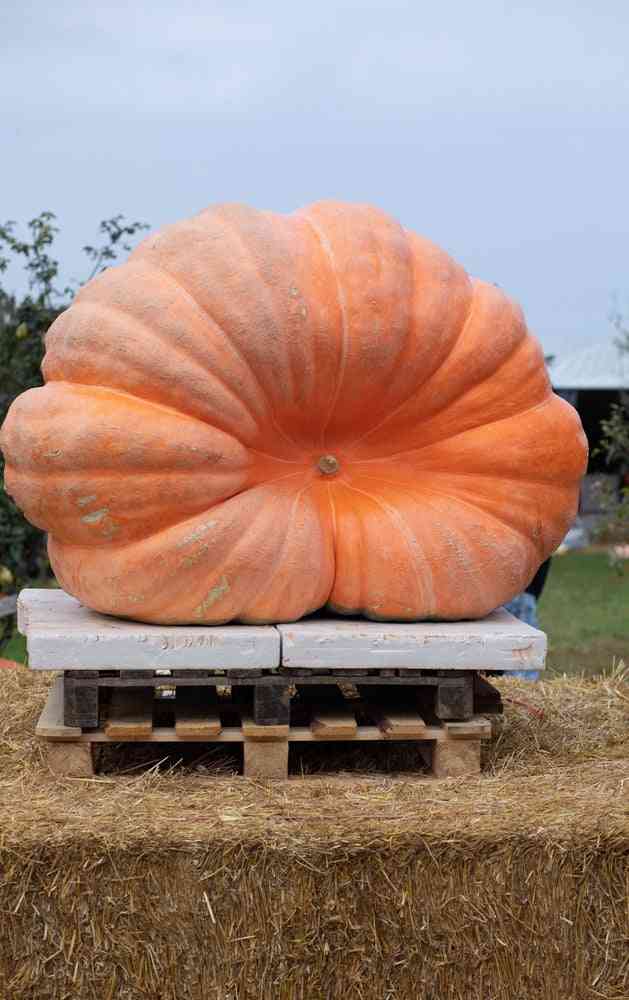
Dill’s Atlantic Giant pumpkin seeds produce the legendary giant pumpkin strain developed by Howard Dill, the name behind the modern giant-pumpkin world and the variety that dominates serious weigh-off culture. Gardeners choose Dill’s Atlantic Giant pumpkin seeds for explosive vine vigor, massive fruit potential, and unmatched giant-growing pedigree: this is the strain behind today’s record-class pumpkins, including the current world record Atlantic Giant at 2,819 lb 4 oz and a long line of Great Pumpkin Commonwealth champions. Dill’s Atlantic Giant pumpkin seeds are ideal for growers who want true competition heritage, spectacular fair-winning fruit, and the thrill of raising a pumpkin that can range from huge showpiece display size to genuine giant-contest scale when given space, rich soil, steady moisture, and careful fruit selection.

Every recorded growing detail

Complete growing & care facts

Continue to the garden-fit planner

Plant identity

Minimum seed count 20 seeds
Seed product profile Cucurbit
Scientific name Cucurbita maxima
Also known as Pumpkin, Pumpkin Seeds - Dill's Atlantic Giant
Color Orange
Life cycle Annual
Botanical family Cucurbitaceae
Reproductive type Open-Pollinated (OP)
Heritage qualifiers Non-GMO
Native to the United States Domesticated Plant
Domestication note Andean South America

Seed success and gardener experience

Gardener experience Some experience is helpfulLevel 3 of 5
Germination difficulty StraightforwardLevel 2 of 5
Preparation before sowing Use clean seed-starting conditions, the listed sowing depth and temperature, and steady moisture without saturation
Stratification Not normally required by the current record
Scarification Not normally required by the current record
Pre-soaking Not normally required by the current record
Light during germination Cover to the recorded depth; provide strong light immediately after emergence
Germination pattern Usually reliable when seed is stored well and temperature, depth, moisture, and preparation match the recorded requirements
Growing complexity Warm-season vine or bush requiring root room, pollination, and protection from crown and vine pests
Transplant sensitivity Often sensitive to root disturbance; direct sow or transplant young
First harvest or bloom 120-129 Days
Best chance of success For Dill's Atlantic Giant Pumpkin Seeds, control temperature and moisture at sowing, label the start date, and compare emergence with the complete recorded germination window before reseeding.

Timing and climate

Days to maturity 120-129 Days
Germination 7-10 Days
Germination temperature 80–95 °F
Planting season Late Spring
Bloom season Summer
Frost tolerance Tender
Sunlight Full sun
Water needs High

Site, soil, and space

Soil type Sandy loam
Preferred soil pH 6.5–7.0
Seed depth 1 in
Plant spacing 48 in
Row spacing 96 in
Mature height 120 in+
Growth habit Vining/Climbing
Support needed No-Support
Suitable growing locations In-ground bed, Raised bed, Containers, High Tunnel

Crop-specific details

Fruit size 819 lb

Garden-fit planning for this variety

Will Dill's Atlantic Giant Pumpkin Seeds fit your garden?

Check vine space, warmth, pollination, water, support, and harvest use.

Rules-based · no AI
Questions for this vining crop seed
Seed-starting fit and patience
Recorded product profileSome experience is helpfulStraightforwardRead why
Soil test, pH, drainage, and amendment calculator Have a laboratory soil report? Enter pH, nutrients, texture, bed size, and site observations here. Open soil tools
Recorded soil typeSandy loam
Recorded pH range6.5–7.0
Water needsHigh
LightFull sun

Soil Readiness

for Cucumber (Cucumis sativus)

Where to get a soil test

Best option: your state’s Cooperative Extension soil testing lab.

Tip: Arid or alkaline regions often use Olsen for phosphorus interpretation.
Adjusts P ppm target and interpretation.
Target 6.2-7.0
Ideal 4-8%
Target 30-60 ppm (Mehlich-3)
Target 150-250 ppm
Ok ≥ 1000 ppm
Ok ≥ 120 ppm
Used for pH adjustment size
For shopping list amounts
Interprets P by extractant, assumes ppm. Results are approximate.
Enter at least one value above, then Calculate.

The full variety record

Sowing, care, harvest, troubleshooting, and history

How to start Dill's Atlantic Giant Pumpkin Seeds from seedPreparation, timing, depth, germination, transplanting, spacing, and early care

Variety-specific germination notes

Preparation: Use clean seed-starting conditions, the listed sowing depth and temperature, and steady moisture without saturation. Germination light: Cover to the recorded depth; provide strong light immediately after emergence. Expected emergence: 7-10 Days. Temperature: 80-95 °F.

Complete sowing and planting guidance

Dill’s Atlantic Giant requires a deliberate and well-timed planting approach because early establishment directly affects final pumpkin size. Unlike smaller crops, this variety needs a long, uninterrupted growing season, so planting should only begin once soil temperatures are consistently warm and there is no risk of cold stress. The soil should be deeply prepared, loose, and rich in organic matter, as this plant depends on strong root development from the very beginning. Many growers form wide planting mounds or hills to improve drainage, warm the soil more quickly, and give the roots a well-aerated environment to expand.

Seeds should be sown about 1 inch deep, placed carefully into moist, workable soil. Plant multiple seeds per mound or designated planting area, spacing them slightly apart so that the strongest seedlings can be selected later. After sowing, gently firm the soil to ensure good contact between seed and soil without compacting it. Water thoroughly after planting to settle the soil and provide the moisture needed for germination. From this point forward, the goal is to keep the soil consistently moist but never saturated, as both drought and waterlogging can slow or damage early growth.

As seedlings emerge, select the strongest plants and remove weaker ones to avoid overcrowding. This step is important because Atlantic Giant needs space and resources to build a powerful vine system. Crowded plants compete for light, nutrients, and airflow, which can reduce overall vigor. Typically, one strong plant is left per planting area so it can fully expand without restriction. Early thinning may feel aggressive, but it is essential for maximizing long-term performance.

Transplanting can be done but must be handled carefully. If seeds are started in containers, they should be grown in large, biodegradable pots to minimize root disturbance. Transplants should be moved into the ground while still young, before roots become restricted or stressed. When transplanting, place the entire root mass gently into prepared soil without breaking it apart, and water immediately to help the plant settle. However, direct sowing is often preferred because it allows the plant to establish naturally without any transplant shock, which can delay growth and reduce overall size potential.

Early protection can make a significant difference. Row covers or similar protection may be used to shield young plants from cool conditions, wind, and early insect pressure. This helps the seedlings establish faster and build strength before being exposed to full outdoor conditions. Once flowering begins, any covers must be removed to allow pollinators access, which is essential for fruit set.

Spacing is critical from the start. Dill’s Atlantic Giant vines will spread extensively, and planting areas must be planned with that final size in mind. Giving the plant ample room from the beginning prevents the need for later adjustments that can damage vines or limit growth. A well-planned planting layout supports airflow, reduces disease risk, and allows the grower to move through the patch for maintenance and observation.

The planting stage sets the foundation for the entire season. A strong, uninterrupted start leads to a vigorous vine capable of supporting massive fruit later. Warm soil, proper depth, careful spacing, consistent moisture, and minimal root disturbance are the keys to success. With the right start, Dill’s Atlantic Giant can quickly transition from seedling to a powerful growing system ready to produce the legendary pumpkins it is known for.
How to grow this specific varietyLight, water, fertility, support, spacing, airflow, crop behavior, and season-long care

Complete growing guide

Dill’s Atlantic Giant is grown very differently from an ordinary pumpkin because the plant is often being managed not just for fruit, but for maximum fruit size. Once established, the entire season becomes a balance between building a massive healthy vine system and directing that energy into one truly promising pumpkin. This variety needs full sun, rich soil, steady moisture, and enough uninterrupted growing time to build enormous leaf area before the selected fruit begins its major weight gain. The vine is the engine, and the pumpkin is the result of how well that engine is maintained. Growers who succeed with Atlantic Giant focus first on overall plant vigor, because a weak vine can never support a serious giant.

During the vegetative stage, the goal is vigorous, uninterrupted expansion. Atlantic Giant should be allowed to build a broad healthy patch of leaves and runners before too much emphasis is placed on fruit. The plant performs best in deep, fertile soil with strong organic matter and good structure, because it needs both moisture-holding capacity and excellent root performance over a long season. Steady watering is essential, but soggy soil is not. Roots should have access to consistent moisture and oxygen, not cycles of flooding and stress. Mulch is especially helpful once the weather warms and the plant begins to spread, because it moderates soil moisture, suppresses weeds, and creates a more stable root environment. A giant pumpkin plant benefits from consistency more than from dramatic corrections.

Nutrient management should support steady power rather than excessive softness. This is a heavy-feeding crop, but the best results come from balanced growth, not from forcing lush weak tissue. A vine that is too soft or overly pushed may look impressive but become more vulnerable to stress, disease, or irregular development later. The healthiest Atlantic Giant plants usually show strong leaves, thick vigorous runners, and even forward movement without obvious stalls. Good growers aim to keep the plant active and balanced rather than simply huge-looking. The difference matters once fruit set begins and the pumpkin starts demanding extraordinary resources.

Pollination and fruit selection are major turning points in the season. Atlantic Giant may set several pumpkins, but growers aiming for serious size usually choose one main fruit and direct the plant’s energy there. The chosen pumpkin is ideally well shaped, growing strongly, and positioned on a healthy section of vine where it can expand without stressing the stem excessively. Not every set fruit is worth carrying forward. Some may be poorly shaped, poorly placed, or simply not as vigorous as another option. Once a strong candidate is selected, competing fruits are often removed so the vine can concentrate its resources rather than dividing them across multiple heavy sinks. That decision is one of the defining differences between ordinary pumpkin growing and giant pumpkin growing.

After selection, the focus shifts toward protecting both the fruit and the vine system supporting it. Atlantic Giant pumpkins can gain weight rapidly, so consistency becomes even more important. Watering should remain deep and even, because sharp moisture swings can increase the risk of stress, cracking, or erratic growth. The fruit should rest on a dry, supportive surface, and its position must be watched carefully as it enlarges. If the pumpkin begins pushing at an awkward angle against the vine, the stem area can become strained as weight increases. Gentle early adjustment is much easier than trying to correct a structural problem once the fruit is massive. Many serious growers also protect the pumpkin from overheating and excess surface stress while keeping the canopy itself fully exposed to sunlight.

Patch management remains critical through the entire season. The leaves must stay healthy as long as possible because they are what drive weight gain. If mildew, insect pressure, weed competition, or broken vine sections are allowed to reduce the canopy too early, the pumpkin’s growth usually slows. A giant pumpkin is not built by the fruit alone. It is built by a functioning network of roots, leaves, and runners that must remain productive deep into the season. For that reason, the patch should stay accessible enough to inspect regularly, and the main vine and major runners should be protected from accidental damage. Discipline around the whole planting often matters more than any single feeding or watering event.

As the season advances, patience becomes one of the biggest skills. Atlantic Giant is not a crop to rush. A competition-worthy fruit needs time to gain, time to mature, and careful monitoring so that problems are caught before they become disasters. The goal is to keep the plant moving forward without interruption while allowing the selected pumpkin to gain as steadily as possible. With deep fertile soil, full sun, strong early vine growth, careful fruit selection, balanced feeding, steady water, and relentless attention to vine health, Dill’s Atlantic Giant can produce the kind of huge pumpkins that made the variety legendary.
Practical field and garden tipsExtra techniques, timing adjustments, and observations that improve success
Dill’s Atlantic Giant rewards growers who approach it as a season-long project rather than just another pumpkin patch. One of the most important lessons in giant growing is that the pumpkin does not become enormous by accident. It becomes enormous because the entire plant stays healthy, balanced, and aggressively growing for as long as possible. That means the real focus should be on building and protecting the vine system. Leaves are what power weight gain, roots are what support that engine, and every setback matters more with Atlantic Giant than with ordinary pumpkins. A plant that stalls early from cold soil, weed pressure, insects, disease, or erratic watering may still grow a big pumpkin, but it usually will not grow a true competition-class one. The best growers think in terms of preserving momentum from the earliest stages onward.

One of the most valuable tricks is fruit selection. Atlantic Giant vines often set more than one pumpkin, but serious size almost always comes from choosing one strong candidate and directing the plant’s energy there. The ideal fruit is usually well-shaped, strongly growing, and positioned on a healthy section of vine where it can expand without putting too much strain on the stem. A poorly placed pumpkin may look promising early but become a structural problem later as it gains weight. That is why experienced growers often watch young fruit closely before deciding which one will be the keeper. Once a strong candidate is chosen, removing competing fruit helps the vine focus its resources instead of dividing them across too many pumpkins.

Another critical tip is to maintain absolutely steady growth. Atlantic Giant is far less forgiving of growth swings than ordinary pumpkins because the fruit can gain weight extremely fast under good conditions, and that speed can become dangerous if the plant is stressed. Long dry periods followed by heavy soaking can contribute to cracking, stalling, or irregular growth. Deep, even watering is far better than shallow or inconsistent irrigation, and soil that holds moisture well without becoming waterlogged is a major advantage. Mulch helps stabilize the root zone, suppress weeds, and reduce moisture swings, which is especially important once the selected fruit begins putting on serious weight. Consistency is one of the hidden foundations of giant size.

Fruit care itself becomes a major part of success. A developing Atlantic Giant should be placed on a dry, clean, supportive surface rather than directly on wet soil. As the pumpkin expands, growers need to watch the stem angle carefully. If the fruit begins pressing awkwardly against the vine, the stem area can become strained and split as the pumpkin gains weight. Gentle early repositioning is much safer than trying to fix the problem once the fruit is massive. Some growers also shade the pumpkin lightly during the most intense sun so the skin does not overheat or become excessively stressed. These may sound like small details, but with a giant pumpkin, small details often determine whether the fruit keeps growing cleanly or develops major problems.

Vine management matters almost as much as the fruit itself. Atlantic Giant vines can become large, dense, and difficult to work around, but a patch that becomes chaotic is much harder to monitor for disease, insect pressure, and structural vine issues. Good growers keep the patch manageable enough that they can inspect it regularly. Healthy leaves should be preserved as long as possible, broken or badly diseased growth dealt with quickly, and the main vine protected from unnecessary damage. Walking carelessly through a giant patch or letting weeds and side growth turn it into a jungle can cost the plant strength when it matters most. Think of the whole vine as a support system for one extraordinary fruit.

Nutrition should support steady power, not wild excess. Atlantic Giant needs fertile soil and a long season of strong feeding, but overpushing lush growth without balance can make the plant more vulnerable to trouble. The best giant plants are vigorous, deep-rooted, and continuously productive, not just leafy. That is why experienced growers pay attention to the whole picture: strong early root development, clean vines, healthy leaves, and a fruit that keeps gaining without obvious stress. A patch that looks impressive but is unbalanced may never translate that visual vigor into final weight.

Pollination timing is another place where serious growers gain an advantage. Not every female flower deserves to become the season’s pumpkin. The best fruit usually comes from a strong flower opening at a good point in the vine’s development, when the plant is ready to support explosive growth afterward. Hand-pollination is often used by dedicated growers so they know exactly when the fruit was set and can track growth from that point forward. This also gives them more confidence in the chosen fruit’s start date and development. In competition growing, those details matter because timing helps shape the whole season.

A very practical tip is to think ahead about moving the pumpkin long before harvest. An Atlantic Giant that reaches serious size becomes a handling problem as much as a gardening triumph. Growers who wait until the last moment to figure out how to move it often damage the fruit or find themselves unprepared. A competition pumpkin may need lifting tarps, equipment, or several people just to move safely. Planning for transport while the fruit is still growing is part of growing it successfully. A beautiful giant can be ruined at the finish by poor handling after months of careful work.

The biggest beginner mistakes with Dill’s Atlantic Giant are usually letting the plant set too many fruit, watering unevenly, losing control of the patch, underestimating the importance of leaf health, and waiting too long to solve fruit-position or stem-angle problems. The biggest success habits are rich well-prepared soil, relentless consistency, early fruit selection, constant observation, and treating the vine like a championship engine instead of just a pumpkin plant. When grown with that mindset, Dill’s Atlantic Giant becomes far more than a novelty crop. It becomes one of the most exciting challenges a gardener can take on.
Harvest, storage, uses, and benefitsWhen and how to harvest, ways to use the crop, storage, culinary value, habitat value, and garden roles

Uses and benefits

Dill’s Atlantic Giant is grown primarily for one reason: unmatched size potential and the ability to participate in the world of giant pumpkin growing. This variety is the foundation of competitive giant pumpkins, making it the top choice for growers interested in weigh-offs, records, and pushing the limits of what can be grown in a garden. Its greatest benefit is not just that it grows large pumpkins, but that it carries the genetic potential for truly extraordinary size, including the lineage behind world-record-breaking fruit. For growers who want to compete or simply test their skill against nature, this is the defining variety.

Beyond competition, Dill’s Atlantic Giant offers incredible visual impact. Even when not grown to record-breaking size, it produces massive pumpkins that command attention in any setting. These pumpkins become centerpieces for fall displays, festivals, agritourism events, and farm stands. Their sheer scale creates a sense of spectacle that few other crops can match. For growers selling pumpkins or creating seasonal experiences, this variety offers a level of attraction that draws people in and creates memorable impressions.

Another key benefit is the challenge and skill-building aspect. Growing Dill’s Atlantic Giant is not just planting and harvesting—it is an ongoing process of observation, adjustment, and refinement. Growers learn about soil building, water management, plant structure, pollination timing, and long-term crop planning. This makes it one of the most educational crops in the garden. It rewards attention to detail and teaches advanced growing techniques that can improve overall gardening ability. For many growers, the process itself becomes as rewarding as the final pumpkin.

Dill’s Atlantic Giant also plays a major role in community and tradition. Giant pumpkin growing has developed into a global network of growers who share techniques, seeds, and results. Local fairs, regional weigh-offs, and international competitions all revolve around this variety and its descendants. Growing it connects gardeners to that larger culture, whether they are entering competitions or simply enjoying the experience. It is one of the few crops where the social and community aspect is as strong as the agricultural one.

From a practical standpoint, while it is not primarily grown for eating, Dill’s Atlantic Giant can still produce usable flesh for cooking or processing, especially from smaller or non-competition fruit. However, its main value lies in size, spectacle, and experience rather than culinary excellence. It is a crop grown for impact rather than efficiency, and that is part of its unique appeal.

The variety also offers long-term value through seed saving and breeding potential. Because it is open-pollinated, growers can save seed and begin selecting for their own conditions or goals. Over time, this can lead to improved performance in a specific garden or even the development of personalized giant-growing lines. For serious growers, this transforms the plant from a one-season crop into an ongoing project that evolves year after year.

Dill’s Atlantic Giant stands out because it combines genetics, history, competition, and spectacle into a single crop. It is not just a pumpkin—it is a challenge, a tradition, and an opportunity to grow something truly extraordinary. For gardeners who want more than just a harvest and are looking for excitement, scale, and the possibility of achieving something remarkable, this variety offers a level of engagement that few other plants can match.
Seed saving and carrying the variety forwardPollination, isolation, selection, harvest, cleaning, drying, and storage
Saving seed from Dill’s Atlantic Giant requires more intention than most garden crops because this variety sits at the center of the giant-pumpkin world, where genetics and pollination matter significantly. While it is possible to casually save seed from any mature pumpkin, growers who want to preserve size potential or maintain quality should approach the process with care. The first step is always selection. Choose a pumpkin from a vigorous, healthy vine that showed strong growth, good leaf retention, and steady fruit development throughout the season. The best seed fruit is not just large, but well-shaped, free from major defects, and produced by a plant that performed consistently rather than struggling or declining early.

Pollination control is one of the most important differences between casual and serious seed saving with Atlantic Giant. Pumpkins are insect-pollinated and will readily cross with other compatible pumpkins if left open to bees. That means seed from an open-pollinated fruit may not grow true to type. For growers who want to maintain Atlantic Giant characteristics or improve their line, controlled pollination is strongly recommended. This involves selecting a female flower before it opens, protecting it from insects, and manually pollinating it with a chosen male flower from the same variety. The flower is then closed or secured so no additional pollen is introduced. This step ensures that the resulting seed has known parentage rather than being an unknown cross.

Selection should continue even after fruit set. Not every pumpkin on the vine is worth saving seed from. The best candidates are those that show strong early growth, good shape, and stable development without cracking, rotting, or stalling. In giant-growing culture, many growers choose one primary pumpkin to carry the season, and that fruit often becomes the seed source. Observing how the fruit performs over time—how steadily it gains size, how well the plant supports it, and how the vine holds up—provides valuable information about seed quality. A slightly smaller but well-formed, healthy pumpkin is often a better seed source than a larger fruit with structural or disease issues.

Harvest timing is critical. Seed should only be saved from a fully mature pumpkin that has been allowed to finish properly on the vine. Immature pumpkins may contain seeds that look developed but lack full viability. Once harvested, the pumpkin should be opened and the seeds removed carefully. Separate the seeds from pulp and stringy material, then wash them thoroughly. Clean seed is easier to dry and less likely to develop mold during curing.

Drying is one of the most important steps. Spread the seeds in a single layer in a well-ventilated area out of direct harsh sunlight. Turn them occasionally so they dry evenly. Seeds should be completely dry before storage, not just surface dry. Any retained moisture can reduce viability or lead to mold in storage. Well-dried Atlantic Giant seeds should feel firm and dry, not soft or flexible.

Sorting improves long-term results. Keep the largest, fullest, best-formed seeds and discard any that are flat, damaged, or immature. Good seed selection at this stage increases the chances of strong germination and vigorous plants in the next season. Once dried and sorted, store seeds in a cool, dark, dry place with clear labeling. For Atlantic Giant, labeling should include not just the variety name, but also the year, any known parentage, and notes about the fruit’s performance. In the giant-pumpkin world, that information becomes part of the seed’s value.

Over time, careful seed saving allows growers to build or maintain a strong Atlantic Giant line. The biggest mistakes are saving seed from uncontrolled pollination without realizing it may be crossed, choosing seed from fruit that performed poorly even if it was large, and storing seed before it is fully dry. With proper selection, controlled pollination, careful cleaning, and good record keeping, saving seed from Dill’s Atlantic Giant turns one season’s pumpkin into the foundation for future growing success.
Common pests, diseases, and growing problemsIdentification, prevention, crop-safe response, and when intervention is justified

Complete pest and problem guide

Dill’s Atlantic Giant pumpkins face all the usual cucurbit problems, but the stakes are much higher because this variety is often grown for extreme size and competition potential. A standard pumpkin patch can still produce decent fruit after moderate stress, but a giant-pumpkin vine that loses momentum from pests, disease, or uneven growing conditions may never recover enough to produce a top-weight fruit. The most common problems are cucumber beetles, squash bugs, vine borers in affected regions, aphids, spider mites, powdery mildew, downy mildew, bacterial wilt, fruit rot, vine stress, and cracking caused by uneven growth. The best overall solution is prevention: build healthy soil, give the plant massive space, keep weeds down, scout constantly, and protect the vine so it stays active and feeding the pumpkin for as long as possible.

Cucumber beetles are one of the earliest and most dangerous pests because they feed on seedlings, leaves, flowers, and stems, and they can also spread bacterial wilt. Young Atlantic Giant plants that are chewed back early often lose precious time and never develop the vine size needed for giant fruit. Squash bugs are another major problem, especially later in the season, and they weaken the plant by sucking sap from leaves and stems, causing stippling, yellowing, wilting, and gradual vine decline. Aphids may cluster on tender growth and behind leaves, causing curling and sticky residue, while spider mites can build rapidly during hot dry weather and cause bronzing, speckling, and early foliage collapse. In regions where squash vine borer is present, larvae can burrow into stems and suddenly weaken or kill major runners. The best solutions are row cover while plants are young and before flowering, close inspection of stems and leaf undersides, hand-removal of egg masses, strong water sprays for small aphid populations, and immediate response before pests become established. Once flowering begins, row covers must come off so pollinators can work, which means the grower must switch to vigilant scouting and fast intervention.

Disease pressure is one of the most serious threats to Atlantic Giant because giant pumpkins need a very long season of healthy active leaves to drive weight gain. Powdery mildew is one of the most common problems and often appears as a white dusty coating on leaves later in the season. Even when it does not kill the plant quickly, it weakens the canopy and reduces the vine’s ability to support continued fruit growth. Downy mildew is often more destructive, causing yellow angular lesions and rapid leaf collapse under humid conditions. Bacterial wilt, often spread by cucumber beetles, can cause sudden irreversible vine failure. Other issues such as anthracnose, gummy stem blight, plectosporium, and fruit rots may also appear, especially where airflow is poor or vines stay wet for long periods. The best solutions are wide spacing, careful watering that avoids prolonged leaf wetness, crop rotation, aggressive removal of badly infected tissue when appropriate, and maintaining the healthiest canopy possible through the entire growing season. On a competition plant, losing foliage early is not just cosmetic damage. It directly limits final fruit size.

Fruit problems are especially important with Dill’s Atlantic Giant because the pumpkin itself becomes vulnerable as it enlarges. One of the biggest risks is cracking, which can happen when growth is too rapid, moisture swings are too extreme, or the skin and internal pressure get out of balance. A pumpkin can be gaining beautifully and then split, ending its competition future almost immediately. Soft spots, rot, and underside breakdown can also develop if the fruit sits on wet ground or in poorly drained areas. The solution is to keep growth as steady as possible with even irrigation, avoid major drought-to-soak swings, place the pumpkin on a dry well-supported surface, and monitor the fruit constantly as it gains size. Some growers also protect the fruit from excess heat and weather stress so the rind is not pushed beyond what it can handle.

Environmental and cultural problems can be just as damaging as insects and disease. Atlantic Giant needs tremendous vine health, and anything that interrupts that momentum matters. If the plant is overcrowded, underfed, or planted in weak soil, the fruit may set but never size aggressively. If the vine is allowed to carry too many pumpkins, no single fruit may reach true giant potential. If pollination happens at a poor location on the vine, or the chosen fruit develops on a compromised stem angle, future growth may be limited no matter how healthy the plant looks. Uneven watering can cause stalled growth, stress, or cracking. Heat stress may reduce pollination success, while cold stress early in the season can slow the plant so badly that the competitive window is lost. The best solutions are careful site preparation, selecting one strong fruit to carry the season, preserving a balanced vine structure, keeping moisture and nutrition consistent, and avoiding any major growth interruption once the plant starts building momentum.

Pollination and early fruit set are another point where things often go wrong. It is normal for early male flowers to drop, but if female flowers fail repeatedly, the grower can lose valuable time. Poor pollinator activity, unstable weather, weak vine growth, or stress at the wrong moment may result in aborted fruit or badly shaped pumpkins that are not worth carrying forward. Since competition growers often focus on one chosen pumpkin, losing several early candidates can dramatically reduce the season’s potential. The best solution is to keep the plant healthy before flowering, encourage strong pollinator presence or hand-pollinate if desired, and only commit the vine to a fruit that is well placed, well formed, and growing strongly.

Another major issue is simple late-season vine decline. Even without a dramatic pest outbreak, Atlantic Giant can lose ground if the canopy is neglected. Weeds can steal moisture and nutrients. Compacted soil can weaken rooting. Damaged leaves left in place can increase disease pressure. Broken vines, poorly managed secondary growth, or careless movement around the plant can all reduce the strength of the system feeding the pumpkin. A giant pumpkin is not really grown by the fruit alone. It is grown by the health of the entire vine network. The solution is disciplined patch management: keep the planting clean, preserve healthy leaf area, avoid injuring main runners, and treat the whole vine as the engine that builds the fruit.

Harvest and handling create one last category of problems. A giant pumpkin that reaches maturity can still be ruined by rough lifting, stem breakage, or hidden softening underneath. Competition fruit must often be moved for weigh-offs, and poor handling can damage a pumpkin that took months to build. The best solution is to monitor maturity and fruit condition closely, keep the pumpkin dry and sound, and plan movement well in advance with enough support and equipment. Long-term success with Dill’s Atlantic Giant comes from understanding that every problem matters more on a competition pumpkin. Prevention, consistency, and constant observation are what turn a giant vine into a giant result.
Questions gardeners ask about this seedProduct-specific answers for sowing, care, harvest, use, and seed saving
Q: What makes Dill’s Atlantic Giant different from other pumpkins?

A: Dill’s Atlantic Giant is the legendary giant pumpkin variety bred specifically for massive size and serious competition potential. Unlike standard field pumpkins or even large decorative types, this is the variety associated with weigh-offs, giant-growing clubs, elite seed pedigrees, and the modern pursuit of record-breaking pumpkins. It is not just large by garden standards. It is the genetic foundation of the giant-pumpkin world.

Q: Is Dill’s Atlantic Giant the variety used for giant pumpkin competitions?

A: Yes, this is the variety people think of first when they think of competition giant pumpkins. Dill’s Atlantic Giant is the historic giant strain behind the modern weigh-off culture and remains the core genetic base of most serious giant-pumpkin growing. Even when growers work with highly selected competition lines, those lines usually trace back to Atlantic Giant heritage. For competition-minded growers, that legacy is a major reason to grow it.

Q: Has Dill’s Atlantic Giant produced world-record pumpkins?

A: Yes, Dill’s Atlantic Giant is the variety line behind the world-record era of giant pumpkins. Modern record-breaking pumpkins weighing well over a ton have come out of Atlantic Giant breeding and selection. The variety’s history includes an extraordinary climb in record weights over time, from giant pumpkins once measured in hundreds of pounds to modern fruits reaching well beyond 2,000 pounds and into the upper 2,000-pound range. That record history is exactly why growers buy it for competition.

Q: Who developed Dill’s Atlantic Giant?

A: Dill’s Atlantic Giant was developed by Howard Dill of Windsor, Nova Scotia. Howard Dill became one of the most famous names in pumpkin history because his breeding work transformed giant pumpkins from a novelty into a serious horticultural pursuit. His name remains permanently attached to the variety because Atlantic Giant is not just a pumpkin type, but his enduring breeding legacy. For giant growers, Howard Dill is one of the most important figures in the history of the crop.

Q: Why do competition growers choose Dill’s Atlantic Giant instead of a regular large pumpkin?

A: Competition growers choose Dill’s Atlantic Giant because it has the genetics for extreme size. A regular large pumpkin might produce impressive fruit for a porch or fair display, but Atlantic Giant is the strain associated with true giant-growing potential. It responds to specialized culture, careful fruit selection, and high-level growing methods in a way ordinary pumpkins do not. When the goal is to chase weight, pedigree matters, and Atlantic Giant is the pedigree growers trust.

Q: How big can Dill’s Atlantic Giant pumpkins get?

A: Under ordinary garden conditions, Dill’s Atlantic Giant can still produce very large display pumpkins, but under serious giant-growing conditions it is capable of astonishing size. Elite growers use the variety and its advanced descendants to push fruit into truly massive weights far beyond standard pumpkin expectations. This is the variety associated with pumpkins weighing over a ton, and that alone separates it from nearly every other garden pumpkin. Its true size potential is why it dominates giant-growing conversations.

Q: Is Dill’s Atlantic Giant only for experts?

A: No, beginners can grow it too, but expectations should be realistic. A beginner may grow a very large and exciting pumpkin without using the advanced techniques that competitive growers rely on. However, to reach truly elite weights, the crop usually requires extensive management, rich soil, careful watering, fruit selection, vine training, and close observation through the season. In that sense, it is accessible to beginners for fun and spectacle, but it rewards expertise at the highest levels.

Q: Can I grow Dill’s Atlantic Giant just for fun and still get a huge pumpkin?

A: Yes, many gardeners grow it simply for the thrill of raising an enormous pumpkin. Even without competition-level methods, the variety often produces dramatically oversized fruit compared with ordinary pumpkins. It is one of the most exciting novelty crops a home gardener can grow. The full competition pedigree is there, but you do not have to enter a weigh-off to enjoy its giant presence.

Q: How much space does Dill’s Atlantic Giant need?

A: It needs a great deal of space. This is a vigorous giant pumpkin vine that performs best when it has room to spread widely and capture as much sun and energy as possible. Crowding limits air movement, increases disease pressure, and reduces the plant’s ability to support very large fruit. Growers interested in serious size usually give it far more room than a standard pumpkin planting.

Q: Does Dill’s Atlantic Giant need full sun?

A: Yes, full sun is essential. Giant pumpkins need strong direct light to support vigorous vine growth, flowering, fruit development, and the enormous energy demand of a growing giant pumpkin. Too little sun weakens the plant, delays development, and reduces final weight potential. For a crop grown specifically for mass and vine strength, sunlight is one of the most important inputs.

Q: What kind of soil does Dill’s Atlantic Giant prefer?

A: It performs best in rich, well-prepared soil with excellent organic content, strong structure, and reliable moisture-holding ability without waterlogging. Serious growers often invest heavily in soil preparation because the plant’s performance depends on sustained root health and nutrient access over a long season. A giant pumpkin is built from the ground up, and weak or poorly prepared soil usually shows up later in the form of limited vine vigor and smaller fruit. Rich, deep, biologically active soil is one of the foundations of success.

Q: How often should I water Dill’s Atlantic Giant?

A: It needs steady, even moisture throughout the growing season, especially once the vines are established and a selected fruit begins sizing rapidly. Large fluctuations between drought and soaking can stress the plant, reduce growth, and increase the risk of fruit cracking or stalled development. Deep, consistent watering is far better than irregular shallow watering. Giant growers often pay very close attention to moisture because steady growth is critical when trying to build extreme size.

Q: How many pumpkins should I leave on each plant?

A: If your goal is maximum size, growers usually allow the plant to focus on one main pumpkin, sometimes with only limited additional fruit or none at all. The reason is simple: one vine has only so much energy, and concentrating that energy into one chosen fruit gives the best chance at exceptional size. If your goal is simply to enjoy several large pumpkins, you can leave more fruit. The choice depends on whether the priority is total number or top-end size.

Q: How do serious growers choose the pumpkin they keep?

A: Serious growers often select the most promising fruit based on shape, position on the vine, early growth rate, and overall plant timing. Once a strong candidate is chosen, the grower may remove competing fruit so the vine can concentrate resources into that one pumpkin. Placement matters too, because the fruit must sit where the vine can support it well and where the grower can manage it safely as it expands. This kind of deliberate fruit selection is one of the key differences between casual and competitive giant growing.

Q: Why is my Atlantic Giant vine huge but not setting good fruit?

A: Excessive vine growth with poor fruit set can result from pollination issues, weather stress, nutrient imbalance, or timing problems between male and female flowering. A giant pumpkin plant can produce enormous vegetative growth before everything aligns well for a successful fruit. If the growing season is unstable or pollination is weak, the vine may look impressive without translating that growth into a well-positioned giant pumpkin. Good pollinator activity and healthy balanced growth are both essential.

Q: Does Dill’s Atlantic Giant need pollinators?

A: Yes, like other pumpkins it depends on pollinators to move pollen between male and female flowers. Without successful pollination, the young pumpkin will not develop properly. In competitive growing, pollination is especially important because the chosen fruit may become the entire focus of the season. Strong early pollination sets the foundation for everything that follows.

Q: Can I hand-pollinate Dill’s Atlantic Giant?

A: Yes, many serious growers hand-pollinate to ensure controlled, reliable fruit set. This helps the grower know exactly when pollination occurred and can also help manage breeding decisions if seed lineage matters. Hand-pollination is common in the giant-growing world because it gives more control at the crucial fruit-setting stage. For competition growers, that level of control is often part of the process.

Q: What pests are most likely to attack Dill’s Atlantic Giant?

A: Common pumpkin pests include squash bugs, cucumber beetles, vine borers in affected regions, aphids, and spider mites during hot dry periods. These pests matter even more on Atlantic Giant because leaf health is directly tied to fruit growth. If the vine loses too much functional foliage, the selected pumpkin may stop gaining weight the way growers want. Protecting vine vigor is one of the central challenges in giant growing.

Q: What diseases should I watch for?

A: Powdery mildew, downy mildew, bacterial wilt, and fruit rot are among the major concerns. Disease is especially serious on giant pumpkins because the plant needs a long season of active healthy leaves to support steady fruit growth. Once the canopy declines, the pumpkin’s weight gain often slows dramatically. Preserving vine health as long as possible is one of the main goals of the grower.

Q: Why do giant pumpkins sometimes crack?

A: Cracking usually happens when rapid fruit expansion, water fluctuations, or skin stress exceed what the pumpkin can handle. Giant pumpkins are under extraordinary physical pressure as they expand, and sudden changes in water uptake can make the problem worse. This is one reason competition growers try to maintain as much consistency as possible. A cracked giant can still be impressive, but it is usually devastating in a weigh-off context.

Q: Does the pumpkin need shade while growing?

A: Many serious growers do provide some protection from intense sun, especially once a selected fruit is rapidly enlarging. The goal is to reduce surface stress and help manage temperature around the fruit. Shading is part of the larger strategy of protecting the pumpkin while allowing the plant itself to remain vigorous in full sun. This is a specialized practice, but it is common in serious giant-growing circles.

Q: Can I eat Dill’s Atlantic Giant pumpkins?

A: They are technically edible, but that is not the main reason people grow them. The variety is primarily valued for size, spectacle, and competition potential rather than for culinary excellence. Most growers choose it for giant-growing fun, fair displays, and weigh-offs rather than kitchen use. Its real fame comes from mass, not flavor.

Q: Is Dill’s Atlantic Giant good for county fairs and weigh-offs?

A: Yes, this is exactly the kind of pumpkin people grow for those events. Even if a grower does not reach elite competition weights, Atlantic Giant still produces spectacular fair-worthy fruit. It is a natural choice for anyone who wants to enter a giant-pumpkin class or simply grow something dramatic enough to draw attention. The variety’s identity is deeply tied to that public exhibition culture.

Q: How do I know when to harvest Dill’s Atlantic Giant?

A: Harvest timing depends on the season, the maturity of the fruit, rind development, and the grower’s purpose. If a weigh-off or display event is involved, timing often revolves around that target date. The pumpkin should be well matured, with a hardened exterior and a finished look, but growers also want to avoid weather damage or frost risk. Handling timing carefully matters because these fruits can be extremely difficult to move safely.

Q: How do I move a giant pumpkin without damaging it?

A: Very carefully, and usually with planning and help. Giant pumpkins are heavy enough that improper lifting can damage both the fruit and the people moving it. Growers often use lifting tarps, equipment, or multiple people to move the pumpkin while supporting its weight evenly. Movement is a serious part of giant-pumpkin growing and should never be improvised at the last minute.

Q: Can I save seed from Dill’s Atlantic Giant?

A: Yes, and seed saving is a major part of giant-pumpkin culture. However, serious growers pay close attention to pollination and lineage because pedigree matters so much in competition circles. Saved seed can absolutely be worthwhile, especially if it comes from a healthy, well-grown fruit, but growers interested in competitive performance often track the parentage carefully. In the giant-growing world, seed is not just seed. It is part of a performance history.

Q: Is Dill’s Atlantic Giant worth growing if I never plan to compete?

A: Yes, because it is still one of the most dramatic and memorable plants a gardener can grow. It offers spectacle, excitement, and the satisfaction of raising a truly enormous pumpkin, even without competition ambitions. For many people, the joy is simply in watching the vine run and the fruit swell to astonishing size. Competition is part of its legacy, but wonder is part of its appeal.
History, provenance, and cultural contextWhat is documented, what is reported, what remains uncertain, and how the variety reached gardeners

Scientific name: Cucurbita maxima

Plant and variety history

Dill’s Atlantic Giant is one of the most famous and influential vegetable varieties ever developed because it did not simply produce a large pumpkin, it created the modern giant-pumpkin world. The variety was bred by Howard Dill of Windsor, Nova Scotia, a grower whose name became inseparable from giant pumpkin history. Giant pumpkins had appeared at fairs and harvest exhibitions long before Dill’s work, but Howard Dill changed the scale, seriousness, and reputation of giant growing by developing a strain specifically selected for truly extraordinary size. When Dill’s Atlantic Giant was formally introduced in the late twentieth century, it gave growers something they had never really had before: a named giant pumpkin with a breeder, a pedigree, and the ability to keep pushing records higher.

That history matters because competitive giant pumpkin growing today is built on Atlantic Giant genetics. Before Atlantic Giant, oversized pumpkins were impressive curiosities. After Atlantic Giant, giant growing became a specialized pursuit with serious seed selection, weigh-offs, and a worldwide community of growers trying to push the limits of what a pumpkin could become. Howard Dill’s work turned giant pumpkins from a novelty into a discipline. Growers began to think in terms of genetics, parentage, fruit selection, soil building, vine management, and competition strategy. In many ways, Atlantic Giant is not just a variety within the giant pumpkin world. It is the foundation of the giant pumpkin world as people now know it.

Howard Dill himself became known as the “Pumpkin King,” and that title reflects the scale of his influence. He did not merely raise a large pumpkin once. He established the line that would dominate giant growing for decades. The official Dill family legacy has long described Atlantic Giant as the world’s largest pumpkin strain, and for growers that claim has real meaning. The variety became the standard by which giant pumpkins were judged, and nearly every serious giant pumpkin grower has worked with Atlantic Giant bloodlines in one form or another. Even when modern competitive seed lines are highly refined and trace through many growers, the heritage still leads back to Howard Dill and Atlantic Giant.

Its record history is exactly why most people buy it. Dill’s Atlantic Giant is the variety associated with weigh-offs, giant-growing contests, and world-record pumpkins. The current world record pumpkin, grown in 2025 by Ian and Stuart Paton in England, reached 2,819 lb 4 oz, and it stands in the long Atlantic Giant tradition of pushing giant pumpkins into once-unthinkable sizes. Earlier world records in the same giant-growing lineage climbed through milestones such as 2,009 pounds, 2,323.7 pounds, 2,624.6 pounds, 2,702.9 pounds, and 2,749 pounds before the present record pushed beyond 2,800. That progression is a huge part of Atlantic Giant’s history. It is not merely that the variety has been competitive once or twice. It has defined the record book era itself.

Dill’s Atlantic Giant also shaped the culture around giant pumpkins. Modern competition growers often devote entire seasons to a single selected fruit, managing soil fertility, water, vine structure, shading, and pruning with extraordinary care. The methods are intense because the genetics are capable of such dramatic results. That entire culture of specialized giant growing grew out of the possibilities Atlantic Giant made real. Howard Dill’s strain gave growers permission to think bigger, and then bigger again, until giant pumpkin growing became one of the most dramatic and visible forms of competitive vegetable gardening in the world.

There is also a powerful place-based history behind the variety. Windsor, Nova Scotia became permanently associated with giant pumpkin heritage because of Howard Dill’s breeding work, and the Dill family name remains part of the story every time Atlantic Giant seed is planted. Few varieties in gardening history are so closely tied to one breeder, one place, and one continuing legacy. Atlantic Giant is one of those rare exceptions. It is both a vegetable variety and a horticultural legend.

Today, Dill’s Atlantic Giant still matters because it remains the variety people think of first when the goal is true giant size. For some growers it is the dream of a massive porch display or a fairground showpiece. For others, it is a serious competition pumpkin with real record-making pedigree. That is what makes its history so remarkable: Dill’s Atlantic Giant is not just large. It is the variety that changed what growers believed a pumpkin could be.

Continue planning

Related seeds, collections, and growing guides

Explore the full collection
Heirloom Pumpkin Seeds for Home GardensExplore the full collection →
Big Max Pumpkin Seeds

Big Max Pumpkin Seeds

Big Max grows huge, bright orange pumpkins with classic fall appeal, giving you giant size, bold color, and unforgettable display power.

Musquee De Provence Pumpkin Seeds

Musquee De Provence Pumpkin Seeds

Grow a true heirloom masterpiece, Musquée de Provence produces massive, deeply ribbed “fairytale” pumpkins with intensely sweet, velvety flesh...

Jarrahdale Pumpkin Seeds

Jarrahdale Pumpkin Seeds

Jarrahdale Blue is the blue-skinned heirloom that turns heads at the porch and wins in the kitchen, with thick, sweet, velvety orange flesh th...

Customer experience

Reviews for Dill's Atlantic Giant Pumpkin Seeds

Customer Reviews

Be the first to write a review
0%
(0)
0%
(0)
0%
(0)
0%
(0)
0%
(0)