Variety field guide
What to expect from Golden Helios Radish
Golden Helios is an annual radish selection grown for fast roots, greens, succession planting, storage types, and seed saving.
Open the complete descriptionHide the complete descriptionVariety traits, flavor, garden use, and the complete description
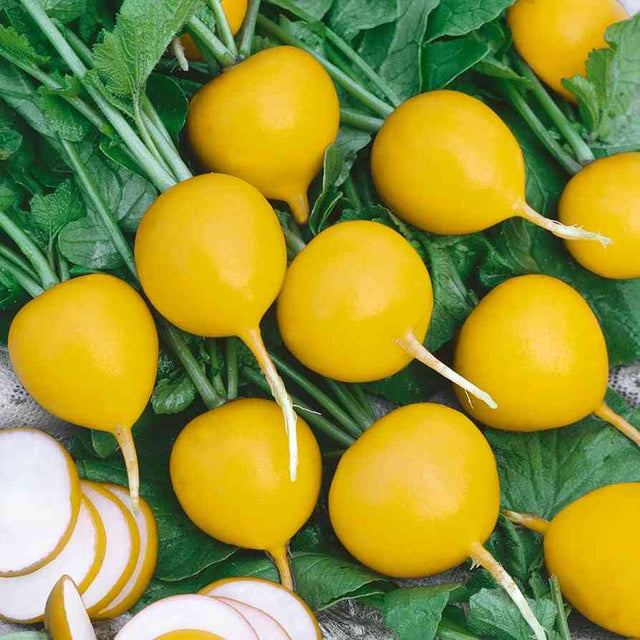
Introducing the radiant Golden Helios radish seeds, a unique cultivar that promises both beauty and flavor in your garden. These radishes are known for their striking golden skin that conceals a crisp, white interior. With a mild, slightly sweet flavor, Golden Helios radishes are perfect for adding a splash of color and a gentle crunch to salads and garnishes.
About Golden Helios
Golden Helios is an annual selection of radish, with a rosette habit and an expected height or spread of 7–12 in. It is best suited to fast roots, greens, succession planting, storage types, and seed saving. Notable traits include yellow coloring; harvest roots before pithiness and use tender greens where appropriate; crisp and mild when young, becoming stronger with age or stress.
When growing Golden Helios, judge the whole planting for trueness to type instead of selecting conclusions from one unusually large or early plant.
History and provenance
These root crops were selected in Eurasian farming traditions for rapid growth, root form, storage, greens, and cold-season use. Small salad radishes, long daikon types, turnips, and rutabagas differ in species or crop group and should not share one generic maturity or harvest description. Golden Helios, the radiant radish variety, emerges from the fertile and sun-drenched fields of the Mediterranean, where its golden hue reflects the warmth and vitality of its origins. The name itself is imbued with significance: Helios, the Greek god of the sun, aptly describes the luminous yellow skin of this unique radish, while its vibrant color evokes the golden rays that nurture its growth.For centuries, radishes have been a staple in Mediterranean diets, valued not only for their crisp texture and peppery flavor but also for their health benefits and versatility. Local farmers would harvest these roots to add a refreshing crunch to salads, sandwiches, and pickles, often to balance the rich flavors of olive oil and herbs.
Growing facts
| Scientific name | Raphanus sativus L. |
|---|---|
| Life cycle | Annual |
| Maturity | 30-39 Days |
| Germination | 3-7 Days at 45–60 °F |
| Seed depth | 1/2 in |
| Plant height / spread | 7–12 in |
| Growth habit | Rosette |
| Spacing | 2 in between plants; 12 in between rows |
| Sunlight | Full sun |
| Soil | Sandy loam; pH 6.0–6.5 |
| Water | Moderate |
| Support | No-Support |
Starting Golden Helios from seed
Sow 1/2 in deep and keep the seed zone evenly moist. Expect emergence in 3-7 Days when the seed-zone temperature is near 45–60 °F. Germination preparation: Direct sow into a prepared, weed-free seedbed; avoid disturbing developing roots or dense stands. Light requirement: Cover evenly to 1/2 in. Soaking: None required. Stratification: None required. Scarification: None required.
Planting and care
Plant during spring and provide full sun. Space plants 2 in apart with 12 in between rows. Use sandy loam with a pH near 6.0–6.5, and follow a moderate watering plan. Support requirement: No-Support. Frost response: Hardy. Good container fit with drainage, even moisture, and the listed spacing
Harvest and use
Approximately 30-39 Days, from direct sowing to market-size roots. Weather, soil temperature, and planting method can shift the actual harvest date. Harvest: Harvest roots before pithiness and use tender greens where appropriate. Uses: Fast roots, greens, succession planting, storage types, and seed saving. Flavor: crisp and mild when young, becoming stronger with age or stress. Seed saving: Insect-pollinated radish. Best uses include fast roots, greens, succession planting, storage types, and seed saving. Flavor and eating quality: crisp and mild when young, becoming stronger with age or stress.
Saving seed
Select several healthy, true-to-type Golden Helios plants that match the expected rosette habit and overall plant form. Avoid saving seed only from the earliest or largest individual unless that is your deliberate selection goal. Pollination system: Insect-pollinated radish. Radish cultivars can cross through insect-carried pollen. Separate compatible varieties that may flower together, or use cages, barriers, hand pollination, or another documented control appropriate to the crop. Allow selected plants to pass the eating stage and reach full botanical seed maturity. Harvest only when seed heads, pods, or fruits have matured enough for sound seed development. Clean the seed carefully, dry it thoroughly away from direct heat, label the lot with variety and year, and store it cool, dark, and dry. Test germination before an important planting or distribution season.
Common problems
Common concerns: Flea beetles, imported cabbageworm, cabbage loopers, aphids, slugs, root maggots, and clubroot risk where the pathogen is present. Management: Use rotation, insect netting before pests arrive, regular leaf inspection, sanitation, and well-drained soil. Do not plant the same brassica family repeatedly in one bed. Diagnosis note: Similar symptoms can have different causes. Compare plants of the same age, record weather and irrigation, and use local Extension or diagnostic support before applying a control.
Frequently asked questions
Frequently Asked Questions - Golden Helios
When is Golden Helios ready? Use 30-39 Days. Approximately 30-39 Days, from direct sowing to market-size roots. Weather, soil temperature, and planting method can shift the actual harvest date.
How long does germination take? Expect 3-7 Days at about 45–60 °F. Cooler, hotter, crusted, saturated, or dry seedbeds can slow emergence.
How large does it grow? Expect about 7–12 in with a rosette habit. Space plants 2 in apart and rows 12 in apart. Support: No-Support.
Can it grow in a container? Good container fit with drainage, even moisture, and the listed spacing Use a container with drainage and enough volume to maintain the listed spacing and steady moisture.
Can I save seed? Insect-pollinated radish. Keep compatible varieties isolated and allow selected plants to reach full seed maturity.