Fungus gnats are a watering problem with wings. The adults are an annoyance, but the important stage is the translucent larva living in damp organic media. In a mature houseplant, a few may matter little. In a tray of slow, tender seedlings, root feeding and disease-friendly conditions deserve attention.
The cure is not to let seedlings wilt. It is to remove the permanently wet habitat while keeping roots evenly supplied.
Yellow cards tell you adults are present. They do not remove larvae from the potting mix. The durable work happens in watering rhythm, drainage, clean media, tray sanitation, and targeted biological control.
Confirm fungus gnats before treating
Adult fungus gnats are small, dark, long-legged flies that run across media or hover weakly around seedlings. They are often mistaken for fruit flies, which are stockier and usually gather around fermenting food.
Larvae are slender and translucent with a distinct black head capsule. They live in the upper moist layer of media and feed on fungi, decaying matter, and tender roots.
- Use yellow sticky cards to monitor adults.
- Place a raw potato slice on the media overnight to check for larvae.
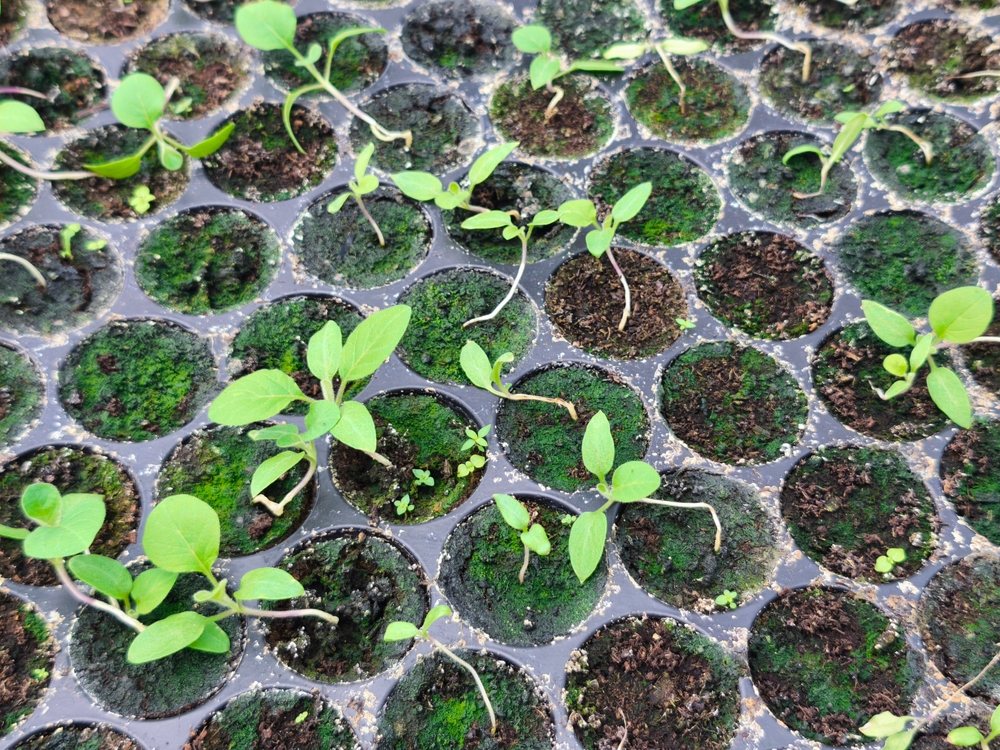
- Inspect trays with algae, moss, poor drainage, or constant capillary moisture first.
Read the pattern, not one damaged leaf
The population grows when media remains continuously moist, old roots and organic debris accumulate, and air movement is weak. Bottom-watering can still create the problem if trays sit in water.
Seedling collapse may also involve damping-off pathogens, salt injury, cold media, or overwatering without gnats. Confirm larvae before assigning every weak seedling to the insects.
| What you see | What it suggests | What to check next |
|---|---|---|
| Small dark flies rise from media | Fungus gnat adults likely | Use sticky cards and inspect larvae |
| Tan flies around fruit or drains | Fruit flies or drain flies possible | Remove the food or plumbing source |
| Seedlings collapse at soil line | Damping-off possible | Inspect stems and review sanitation and temperature |
| Green algae or moss on mix | Surface staying too wet | Change watering frequency, drainage, and airflow |
Start with the least disruptive correction
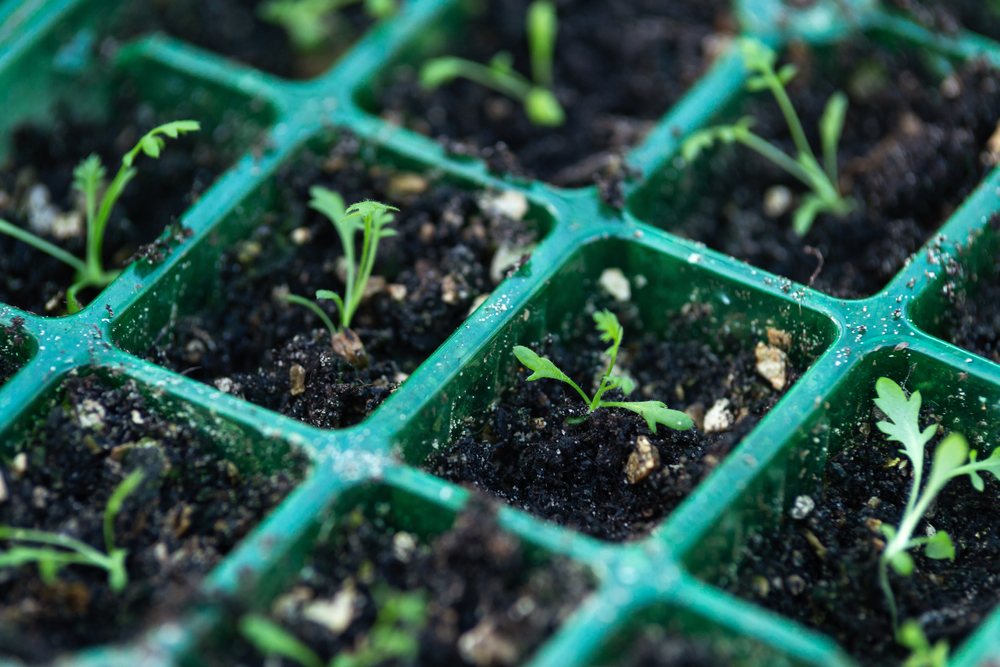
Allow the surface layer to approach dryness while protecting the root zone. Empty standing water and increase drainage and airflow.
- Discard badly infested unused media.
- Clean trays and benches between crops.
- Use fresh, well-drained seed-starting mix.
- Apply Bacillus thuringiensis israelensis or beneficial nematodes only according to product directions and the intended site.
Protect the crop while the garden recovers
Sticky cards are useful, but they can create false confidence. Adults caught today may have already laid eggs, and larvae continue below.
The other failure is “drying the tray” so hard that seedlings wilt, then flooding it again. That swing harms roots and may still leave wet pockets.
- Do not cover the media with a thick layer that traps moisture.
- Do not bring infested houseplants into a clean propagation area.
- Do not reuse dirty cell trays without washing and sanitizing them.
Use weather and season as part of the diagnosis
Winter seed starting in heated buildings can favor gnats because evaporation is slow and trays are crowded. Warm coastal climates may also keep greenhouse populations active year-round.
Use moisture by crop stage: germination requires consistency, but established seedlings can usually tolerate more surface drying and air movement.
Know when the problem needs a different answer
If seedlings continue to decline after the gnat population drops, investigate damping-off, fertilizer salts, root rot, low light, and temperature.
Commercial propagation operations should use a structured monitoring threshold and rotate approved biological or chemical tools with sanitation.
Pesticides aimed only at flying adults rarely solve larvae in media. Treat the life stage and habitat that sustain the population.
Put this guide to work in a real garden
Use Fungus Gnats in Seedlings: Identification, Prevention, and Control as a repeatable trial rather than a single sowing. Label the crop, variety, lot, sowing date, depth, medium, and temperature. When several variables change at once, the result becomes a story instead of evidence. A small second tray or short row, handled slightly differently, often teaches more than a large sowing with no comparison.
Check the seed zone itself. Room temperature is not soil temperature, and a damp surface does not prove the root zone has the correct moisture. Light, airflow, and depth begin influencing the crop as soon as the radicle emerges. The work is to keep every stage inside a useful range without overcorrecting.
When the result is weak, do not immediately blame the seed. Review storage, age, treatment, temperature, oxygen, water, and planting depth in order. Then run a controlled germination check with enough seed to make the result meaningful.
- Write the seed lot and source on the label.
- Measure actual medium or soil temperature.
- Record sowing depth and moisture method.
- Count emergence on more than one day.
- Photograph seedlings before thinning or transplanting.
Use a 30-day checkpoint instead of guesswork
Day 0: establish the baseline
Photograph the whole plant and the closest clear symptom. Count how many plants are affected and mark the edge of the problem.
Day 3: look for direction
Check new growth rather than staring only at old damage. Note whether pests, spores, wilting, or discoloration are expanding.
Day 7: judge the correction
Compare treated and untreated areas when practical. A successful correction slows new injury even though damaged tissue may remain.
Day 14: decide the next level
Continue, stop, or escalate based on evidence. Do not repeat a pesticide simply because the calendar says another application is possible.
This guide cannot identify every disease, insect, nutrient disorder, or herbicide injury from a photograph. When symptoms are severe, unusual, rapidly spreading, or tied to a valuable perennial crop, use a local extension diagnostic service or qualified laboratory.
Keep a one-season record
The record does not need to be elaborate. A notebook page, spreadsheet row, or labeled photograph is enough when it captures the variables that matter.
- Lot or packet identity
- Sowing and emergence dates
- Temperature range
- Number sown and number emerged
- Seedling quality, losses, and likely cause
Write enough that another grower—or you, one year later—could understand what was planted, what happened, and why the next decision changed.
Questions gardeners ask
Are fungus gnats the same as fruit flies?
No. Fungus gnats breed in moist media and have slender bodies and long legs. Fruit flies are attracted to fermenting food and have a stockier shape.
Will cinnamon kill fungus gnat larvae?
Cinnamon is not a reliable stand-alone control. Moisture management, sanitation, monitoring, and proven biological tools are more dependable.
Can fungus gnats kill seedlings?
Heavy larval feeding can damage tender roots, and persistently wet media also favors damping-off diseases. The combined stress can kill young seedlings.
Do yellow sticky traps solve fungus gnats?
They reduce and monitor adults but do not control larvae in the media. Use them as one part of the program.
How dry should seed-starting mix become?
Let the surface dry slightly between waterings without allowing the root zone or newly germinating seed to dry completely. The correct balance depends on cell size, crop, temperature, and airflow.
Fungus gnats thrive where the surface never gets a pause. Give the media a rhythm, keep the bench clean, and the population loses the ground it needs.