One August evening, I walked past an okra row and told myself I would pick it in the morning. By sunrise, several pods that had been tender were long, hard, and already thinking about seed. Okra does not negotiate with the calendar. It measures time in heat.
That is why choosing an okra variety is not mainly a question of red, green, or orange. It is a question of labor, access, pod shape, plant height, and how often somebody can walk the row with a knife or pair of pruners. A beautiful variety that outruns the picking schedule becomes a seed crop. A plain green variety that fits the household rhythm can feed people for weeks.

Choose the harvest schedule before the color
The most expensive part of an okra crop is not the seed. It is the picking rhythm. Clemson Extension recommends harvesting tender pods frequently, generally while they are still small, because large pods become fibrous and mature pods left on the plant can reduce continued production. In a hot Southern week, the useful window can be short.
Before choosing a variety, decide who will pick it, how often the row can be reached, and what the pods are for. Pickling needs small uniform pods. Slicing and freezing may favor a round-podded type that stays tender at a somewhat larger size. A seedkeeping row needs selected pods left to mature, but those pods should be marked so they are not mistaken for neglected harvest.
| Garden job | Useful traits | The real question |
|---|---|---|
| Frequent fresh harvest | Accessible plants, pods that are easy to see, dependable production | Can the row be picked every one to two days during peak heat? |
| Pickling | Uniform young pods and a manageable planting | Will enough pods reach jar size at the same time? |
| Slicing or freezing | Tender walls and a pod shape suited to clean cutting | How quickly does this variety become fibrous in your conditions? |
| Edible landscape | Strong stem, visible color, attractive flowers and pods | Will ornamental value still be matched by regular harvest? |
| Seed saving | Open-pollinated variety, representative population, marked seed pods | Can flowering varieties be isolated or controlled? |
Pod shape decides how forgiving the harvest can be
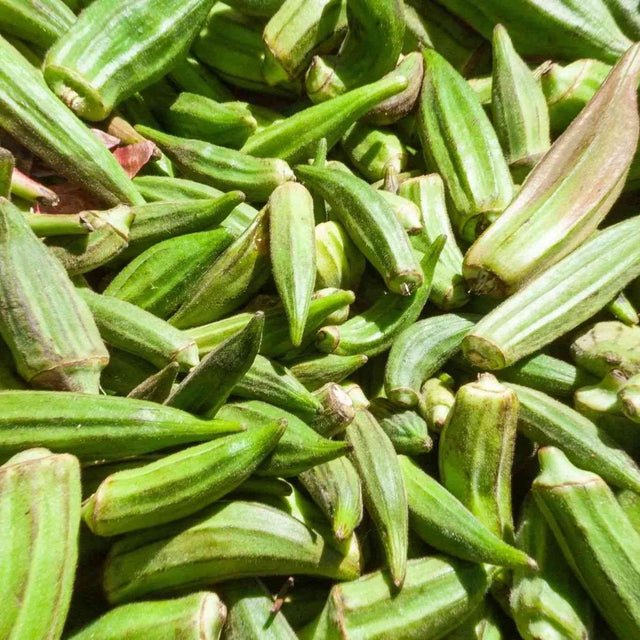
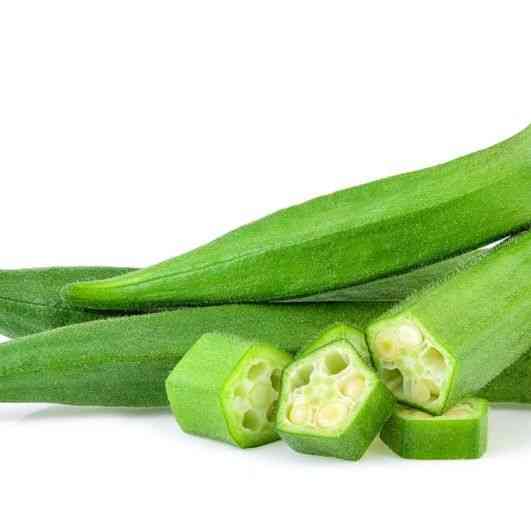
Strongly ridged pods have the angular cross-section many gardeners associate with classic Southern okra. They can be excellent for frying, stews, and gumbo, but many are best picked young. Round-podded types often remain tender at a larger size. Clemson specifically notes that round-podded okra can be useful for slicing and freezing because the harvest window may be more forgiving.
That does not mean every round pod stays tender forever, or every ridged pod turns woody at the same length. The cleanest test is physical. Cut one pod from the middle of the harvest range. If the knife meets a hard wall or the pod bends without cutting cleanly, the row is getting ahead of you. The variety name can guide the first harvest. The pod itself settles the argument.
Okra does not become tough because the gardener failed morally. It becomes tough because heat, genetics, and time kept moving after the picking stopped.


Long-pod okra is a separate harvest strategy
Long-pod okra should not be treated as a standard pod that was simply allowed to overgrow. The point of a named long-pod line is that the pod form and edible window may extend beyond what gardeners expect from many familiar ridged types. That does not create one universal safe length. A pod that cuts cleanly on Cow Horn may already be fibrous on another variety, and hot weather can shorten the useful window on all of them.
The correct field test is simple. Harvest several lengths from the same variety, cut them crosswise, and record where the wall becomes tough and the seed begins to harden. Keep the measurement with the variety name. Long-pod growers need a variety-specific harvest rule, not a generic instruction to pick everything at three or four inches.
| Long-pod type | Why it belongs in the trial | What to verify in your row |
|---|---|---|
| Cherokee Long Pod | Slim, elongated pods and a tall, bushy plant habit | The length where pods stop cutting cleanly in your heat and how often the row must be picked |
| Perkins Long Pod | Slender pods carried on a tall production plant | Whether the harvest height and picking interval fit the available labor and path access |
| Cow Horn | Curved, horn-shaped pods selected for a larger usable pod | How large the pods remain tender in your soil, weather, and kitchen use |
| Texas Hill Country Red | A substantial red-tinged elongated pod that can be compared with named long-pod lines | Whether thickness, texture, and harvest size suit frying, grilling, or stewing better than slimmer types |
These varieties should be compared side by side with a standard such as Clemson Spineless. The useful measurement is not maximum pod length. It is maximum tender length, along with the labor required to keep the row inside that window.
View Cherokee Long Pod, Perkins Long Pod, and Cow Horn as distinct long-pod options.

Plant height is really a labor and access decision
“Dwarf” okra is still okra. Mississippi State lists Burgundy as a dwarf type that can reach about four feet, which is shorter than many vigorous field types but hardly a windowsill plant. Most okra needs deep soil, full sun, and enough room for a person to reach the pods without breaking branches or brushing constantly against irritating leaf and stem hairs.
Tall varieties can carry a long harvest in a warm climate, but they need wider paths and a plan for wind. A row packed against a fence may look efficient in May and become nearly impossible to pick in July. Mississippi State also notes that tall plants can be cut back to encourage branching and easier harvest. That can be useful in a long Southern season, but it should be done deliberately, with water and fertility managed so the regrowth has enough season to matter.
For a small garden, access often matters more than maximum plant size. A slightly shorter plant that can be inspected and picked may outperform a taller variety hidden behind tomatoes, corn, or a narrow path.
Color is a field signal, not a tenderness guarantee
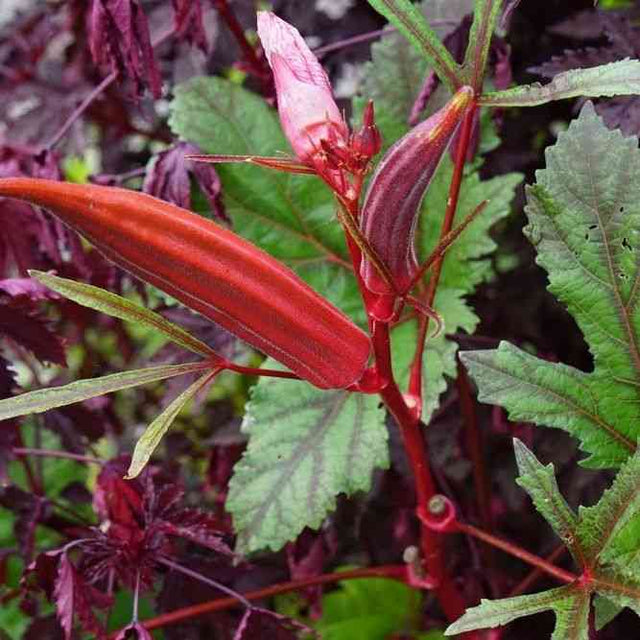
Red, burgundy, orange, and green pods can all belong to Abelmoschus esculentus. Color helps identify a row and can make missed pods easier to spot, but it does not tell you how tender the pod will be at five inches, how early the plant will bear, or how well it will handle root-knot nematodes.
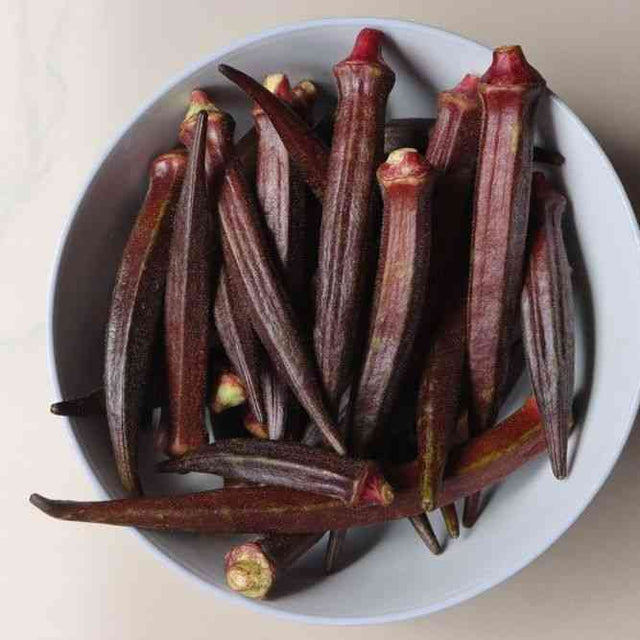
Red and burgundy pigments may soften or turn greener during cooking. That is a normal change in appearance, not proof that the seed was mislabeled. Photograph the raw pod, the cooked pod, and the mature seed separately when keeping variety records. A good seed record describes what the plant actually did, not what the catalog photograph promised.


Four familiar Alliance varieties, four different jobs
The varieties below are useful as a decision set, not as a ranking. Each should be judged in the field for tenderness, plant habit, first harvest, and the amount of labor needed to keep it picked.
| Variety | Primary reason to choose it | What to watch |
|---|---|---|
| Clemson Spineless | A familiar green, ridged Southern standard with a long history in home gardens | “Spineless” describes reduced pod spines, not a guarantee that leaves and stems will not irritate skin |
| Red Burgundy | Burgundy stems and pods that combine food production with strong garden color | Pick young and expect much of the red color to change during cooking |
| Jade | A green comparison line for gardeners who want to judge uniformity, pod quality, and production in their own soil | Do not assume the catalog length is the tender harvest length in every climate |
| Jing Orange | Warm orange-red pod color and a distinct visual row for a diverse okra planting | Use pod age and texture, not color alone, to decide when to harvest |
One practical trial is to plant short side-by-side sections rather than four full rows. Record first harvest, average picking interval, plant height, pod size at tenderness, storm damage, and late-season recovery. That gives the next seed order a reason beyond novelty.


Match the variety to the season and the row
Okra is a hot-weather crop, but “heat loving” does not mean indifferent to cold, saturated soil. Mississippi State warns that seedlings are sensitive to cool, wet conditions. In eastern North Carolina, an early planting can sit still or fail while a later sowing in warm soil moves quickly. Planting first is not the same thing as harvesting first.
Where the warm season is long, a second sowing can extend tender production after the first row becomes tall, woody, or difficult to manage. Where the season is short, earlier maturity matters more. In both cases, leave room to harvest. Two rows planted too close together can become a green hallway with no exit.
What failure looks like before the harvest
| Symptom | Likely question | Best next move |
|---|---|---|
| Seed swells and rots | Was the soil cold, wet, or crusted? | Wait for warmer drained soil, improve seedbed structure, and avoid repeatedly watering a cold row |
| Large plants with few pods | Is the row shaded, overfed with nitrogen, or stressed during flowering? | Check sunlight, soil test history, spacing, and moisture before adding more fertilizer |
| Plants wilt despite water | Are roots galled or damaged by root-knot nematodes? | Pull one affected plant, inspect roots, rotate crops, and use local Extension guidance |
| Pods turn woody almost overnight | Is the picking interval too long for the variety and weather? | Harvest more often, shorten the row, or choose a more forgiving pod type next season |
| Branches lodge or break | Is the row exposed to wind or too crowded to support itself? | Widen spacing, reduce wind exposure, and avoid letting oversized pods add unnecessary weight |
The important thing is to diagnose the system, not blame the seed for every failure. Okra can be remarkably dependable once the soil is warm, but it still charges interest on cold planting, poor access, and missed harvest.
Save seed from a population, not a curiosity
Save seed only from open-pollinated varieties. Allow selected pods near the end of the season to mature fully and dry on healthy plants. Iowa State advises letting mature pods dry before shelling the seed. Keep food harvest and seed harvest separate by marking seed pods early.
Okra flowers are self-fertile, but insects can move pollen between varieties. UF/IFAS lists okra as pollinated by both selfing and insects and recommends substantial isolation for formal seed purity. A home seedkeeper can grow one variety, separate flowering times, use distance, or bag and hand-pollinate selected blooms. The more important principle is not to trust a normal-looking pod as proof of pure seed. Crossing shows in the next generation.
Select several representative plants. Keep notes on plant height, pod shape, tenderness, production through heat, disease or nematode injury, and seed maturity. One unusual plant may be interesting. It is not automatically the variety.
A simple decision path
- Choose Clemson Spineless or another standard ridged type when you want a familiar all-purpose row and can pick it often.
- Choose a round-podded type when slicing, freezing, or a slightly wider harvest window matters.
- Choose Cherokee Long Pod, Perkins Long Pod, or Cow Horn when you want to trial a longer usable pod, then record the tender length instead of trusting the variety name alone.
- Choose Red Burgundy or Jing Orange when color is part of the garden plan, while still judging tenderness by age and texture.
- Choose a compact type when path access and harvest height matter more than maximum plant size.
- Grow a small comparison block when you are deciding what deserves a larger row next season.
Okra is generous, but not sentimental. Give it warm soil, a reachable row, and a picking schedule that matches the variety. It will tell you the rest.