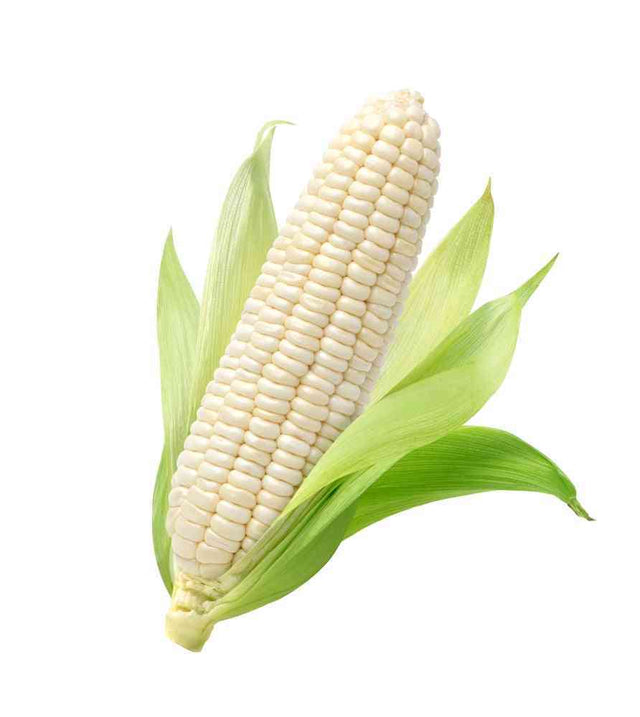
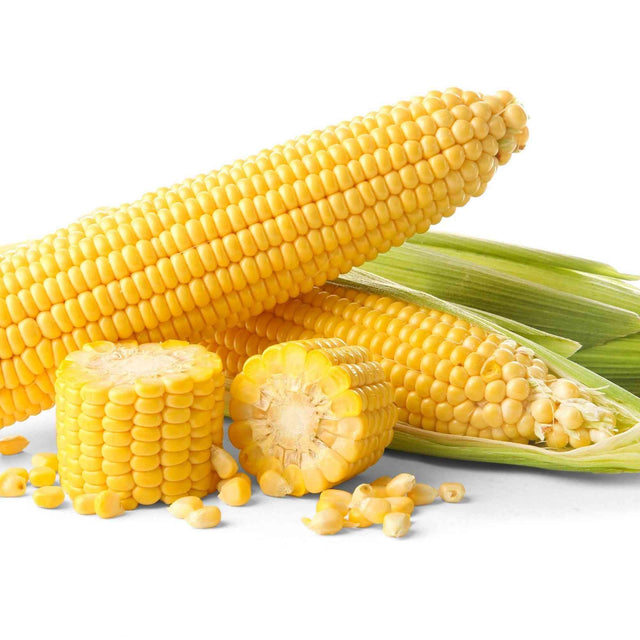
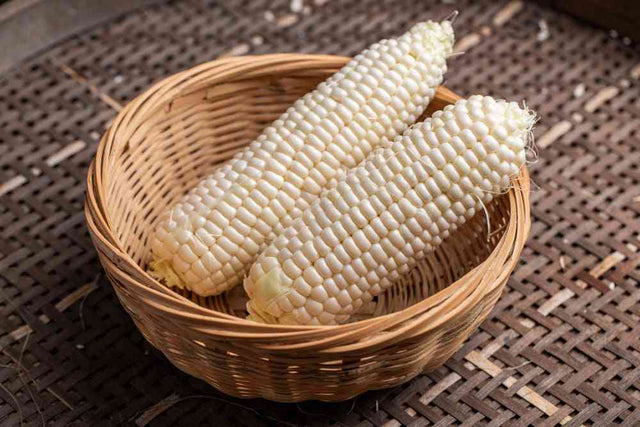
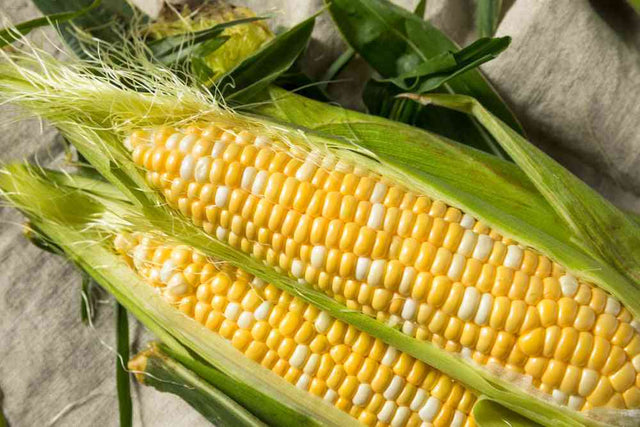
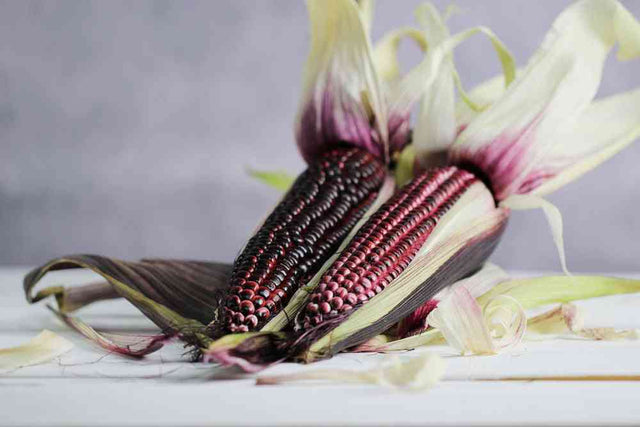
Country Gentleman is a late, white, open-pollinated sweet corn known for its narrow shoepeg kernels, which are packed irregularly instead of forming the straight rows seen on most corn ears. The unusual ear is not a defect. It is the variety’s defining structure and one of the reasons the corn has remained recognizable for more than a century.
Country Gentleman is a normal-sugary, or su, sweet corn. Like Silver Queen and other standard sweet corns, it is grown for the milk stage and is best when harvested and cooled promptly. Unlike Silver Queen, it is open-pollinated. A gardener can save Country Gentleman seed, but only by growing enough plants, preventing unwanted crossing, selecting carefully, and keeping records across seasons.
This guide covers the variety’s historical record, shoepeg ear form, long season, planting and pollination, harvest, kitchen quality, and seed stewardship. It also explains why “open-pollinated” does not mean genetically frozen. Country Gentleman stays Country Gentleman because growers keep choosing a population that expresses the crop’s characteristic ear, flavor, maturity, vigor, and regional usefulness.
Recognize the shoepeg ear
Most corn kernels are arranged in visible rows because the ovules develop in paired ranks along the cob. Country Gentleman has narrow, peg-like kernels that crowd together irregularly, creating the “shoepeg” pattern. The name refers to the small wooden pegs once used in shoemaking. On a mature fresh ear, the kernels may look as though they were fitted together without a ruler.
| Trait | Country Gentleman expression |
|---|---|
| Crop class | White normal-sugary sweet corn |
| Reproductive type | Open-pollinated |
| Ear structure | Narrow shoepeg kernels arranged irregularly rather than in straight rows |
| Season | Late; commonly listed near 88 to 92 days under favorable conditions |
| Harvest stage | Milk stage for fresh eating, freezing, cream-style corn, or other tested preservation |
| Seed stage | Full physiological maturity followed by careful drying |
Do not reject a Country Gentleman ear because the rows look disorganized. Instead, evaluate whether the ear is well filled, the kernels are narrow and shoepeg-like, the flavor and tenderness meet the population standard, and the plant performs well in the local season.
Follow the variety through the catalog record
Country Gentleman circulated in the American seed trade by the 1890s. A transcribed 1903 Iowa Seed Company catalog described it as an improvement on the older Shoe Peg sweet corn and advertised multiple ears per stalk. The National Agricultural Library’s Henry G. Gilbert Nursery and Seed Trade Catalog Collection preserves this larger commercial record, allowing researchers to trace how named varieties moved through catalogs, prices, and regional markets.
Historical catalog language should be read as evidence and advertising at the same time. Claims such as three to five ears per stalk describe what sellers wanted customers to expect, not a guarantee in every soil and climate. Modern growers should measure the actual population they receive: stalk height, ear count, kernel form, days to silk, flavor, and susceptibility to local pressure.
The important point is not that Country Gentleman is old enough to deserve automatic praise. The important point is that it has remained distinct enough for generations of growers to recognize and maintain. Its shoepeg structure, late white ears, and fresh-eating quality give the name something concrete to mean.
Understand what open-pollinated really requires
Country Gentleman can reproduce true to its population when it is grown in adequate numbers, isolated from other corn, and selected with discipline. That does not mean every stalk or ear will be identical. Open-pollinated corn is a population. Healthy variation is part of the crop, and genetic drift begins when too few plants contribute pollen or seed.
A packet planted in one short row may produce fresh ears, but it is usually not enough to maintain the population responsibly. For seed saving, use a larger block, allow pollen to move broadly, and save seed from many sound plants. Do not select only the longest ear, the whitest ear, or the first ear ready. Those single-trait shortcuts can change maturity, plant strength, ear placement, flavor, and adaptation over time.
| Seed-saving term | Practical meaning |
|---|---|
| Open-pollinated | The population can reproduce predictably when maintained well |
| Population size | Enough unrelated plants must contribute to reduce inbreeding and drift |
| Isolation | Other corn pollen must be excluded by distance, timing, or controlled pollination |
| Selection | Choose whole plants and ears for a balanced set of traits |
| Record keeping | Document source, field, flowering, harvest, and selection decisions |
Give a late sweet corn enough season
Country Gentleman is not the best first corn for a garden with a short frost-free season. It needs warm soil to emerge, a long vegetative period, time to flower, and enough weather after pollination for the ears to reach the milk stage. Build a margin around the maturity estimate rather than planting on the last possible date.
In the Southeast and lower Mid-Atlantic, the season is usually long enough, but heat and insects can become the limiting factors. Planting earlier can place silking before the worst heat and earworm pressure. In cooler regions, use the warmest well-drained site, avoid cold wet planting, and consider whether an earlier open-pollinated sweet corn is a safer choice.
| Site factor | What Country Gentleman needs |
|---|---|
| Light | Full sun for strong stalks and ear fill |
| Soil | Fertile, well-drained soil with a pH and nutrient plan based on testing |
| Temperature | Warm soil, generally 60°F or higher at planting depth |
| Season | A reliable late-summer window for milk-stage harvest |
| Airflow | Enough space to dry foliage while keeping plants close enough for pollination |
| Access | Room to walk the block, inspect ears, and harvest without breaking stalks |
Build the block around pollination and access
Direct sow after frost danger has passed and the soil has warmed. Plant about one inch deep in typical soil, using slightly greater depth where the surface dries quickly. Thin to roughly 8 to 12 inches between plants, with rows around 30 to 36 inches apart unless you are using a carefully managed intensive block.
At least four short rows are better than one long row. In a seed crop, broader is generally better because the interior plants receive pollen from more directions. Leave enough path access to inspect silks, hand-pollinate selected ears if needed, and harvest without crushing neighboring plants.
| Layout question | Better choice |
|---|---|
| One long fence row or a square block? | Square or rectangular block |
| Keep two seedlings in every station? | Thin to one vigorous plant |
| Fill gaps three weeks later? | Usually no; late plants may not flower with the block |
| Plant beside another corn variety? | Only with a real isolation plan |
| Use the whole packet as one seed crop? | Only if the resulting population is large enough; otherwise grow for food and increase seed later |
Support tall growth without forcing weak stalks
Country Gentleman can be tall and late, which makes balanced fertility important. Excess nitrogen without adequate potassium, root space, or water can create lush plants that lodge in storms. Too little nitrogen limits leaf area and ear size. Use soil-test recommendations and split nitrogen so that the crop is supported during rapid growth rather than flooded with fertilizer at planting.
Keep weeds controlled early. Corn roots spread near the soil surface, so deep cultivation after the crop is established can damage the root system. Mulch can conserve moisture after the soil has warmed, but do not bury small seedlings in cool wet material.
The most sensitive water period begins before tasseling and continues through silking and early kernel fill. The shoepeg pattern still depends on every silk receiving pollen. When the plant is dry, silks can emerge late or desiccate, and developing kernels can abort.
Keep shoepeg ears from crossing with the rest of the corn patch
Country Gentleman is wind pollinated. Pollen from yellow sweet corn, supersweet corn, popcorn, flour corn, dent corn, or ornamental corn can fertilize its ovules. Because the endosperm develops from fertilization, the current ear can show changes in kernel color, starchiness, or sweetness. A seed crop crossed by another variety also carries those genetics into the next generation.
Use distance, time separation, or controlled pollination. Time isolation requires more than planting two weeks apart; the tassel and silk windows must actually miss each other. Record first tassel, peak pollen shed, first silk, and final fresh silk for every corn planting. In a small preservation plot, bagging ear shoots before silk emergence and applying known pollen is the most controlled method.
For ordinary fresh eating, perfect genetic purity may not be the goal, but compatible sweet-corn isolation still matters for eating quality. Keep Country Gentleman away from field corn and many supersweet types when you want the characteristic tender su ear.
Read an irregular ear at the milk stage
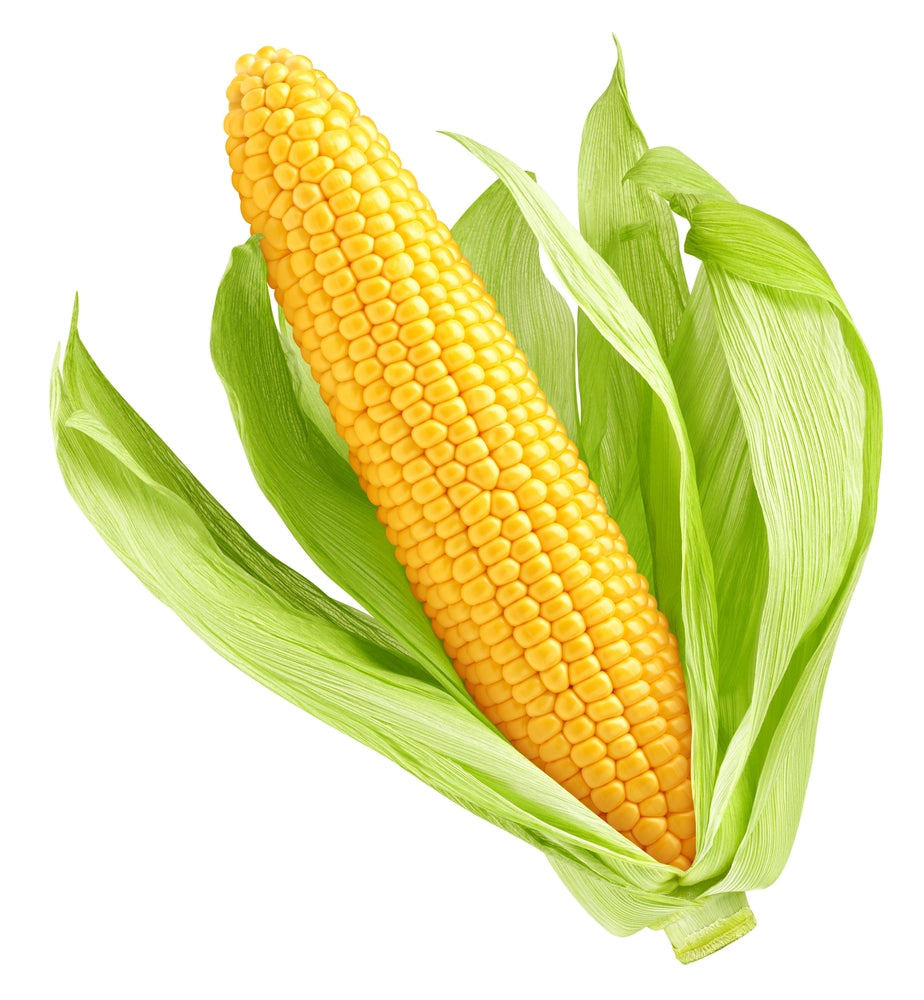
Country Gentleman’s kernels are not arranged in straight rows, so do not judge fullness by row alignment. Feel the whole ear through the husk. When the silks have browned and the ear feels plump, peel back a small section and press a kernel. Milky juice signals the fresh-eating stage. Clear juice is immature; thick dough indicates the ear has moved past peak tenderness.
| Observation | Meaning |
|---|---|
| Narrow kernels packed irregularly | Normal shoepeg structure |
| Ear full but not perfectly cylindrical | May still be typical of the population |
| Milky kernel contents | Fresh harvest window |
| Doughy kernel contents | Past prime for eating on the cob |
| Scattered blank spaces | Pollination problem |
| Dry husk and hard kernels | Seed or dry-grain maturity, not fresh sweet corn |
Check the block daily once the first ears are ready. Multiple ears on a stalk may not mature at the same time. Harvest the upper ear first when it is ready and leave a lower ear to fill. Cool immediately because standard sweet corn loses sugar quickly after harvest.
Use shoepeg kernels for more than one summer meal
Country Gentleman is valued for fresh eating, cream-style corn, whole-kernel freezing, succotash, chowders, casseroles, spoon bread, and other dishes where tender white kernels matter. The narrow kernels can create a different texture from broad modern sweet-corn kernels, especially when cut and scraped from the cob.
For cream-style corn, cut the tips of the milk-stage kernels and scrape the cob to collect the soft interior and juice. For freezing, use the National Center for Home Food Preservation’s tested blanching, cooling, packaging, and headspace recommendations. For canning, remember that corn is a low-acid food. Use a tested pressure-canning recipe or an acidified tested relish process; do not use boiling-water canning for plain corn.
| Kitchen use | Harvest and handling |
|---|---|
| Corn on the cob | Harvest at milk stage and cook promptly |
| Cream-style corn | Use tender ears; cut tips and scrape cobs |
| Whole-kernel freezing | Blanch, cool, cut, package, and freeze |
| Succotash or soup | Use fresh or properly frozen kernels |
| Seed saving | Leave selected ears until fully mature and dry |
Select the population, not just a pretty ear
When saving Country Gentleman, begin selection before harvest. Mark plants that emerged on time, stood well, resisted local disease, silked with the main population, and carried ears at a practical height. Reject seed from severely stunted, diseased, or broken plants even if one ear looks attractive.
At dry harvest, evaluate shoepeg expression, ear fill, kernel soundness, maturity, and plant performance together. Save from many ears. Equalize contributions when possible so one giant ear does not overwhelm the seed lot. If you are selecting toward earlier maturity, choose from several early families rather than one unusually early plant.
| Selection category | Questions to ask |
|---|---|
| Plant | Was it vigorous, stable, and healthy without excessive special treatment? |
| Flowering | Did tassel and silk timing overlap with the main block? |
| Ear | Was it well filled with characteristic narrow shoepeg kernels? |
| Eating quality | Did the family taste tender and flavorful at the milk stage? |
| Dry seed | Are kernels fully mature, sound, and free of mold or insect damage? |
| Population | Are enough different plants represented? |
Save Country Gentleman seed as a population
Reserve seed ears before the fresh harvest consumes the crop. Allow the selected ears to mature on the plant until the husks are dry and kernels are hard. If wet weather threatens, harvest physiologically mature ears and finish drying in a protected space with strong airflow. Do not shell damp corn into a bucket or sealed jar.
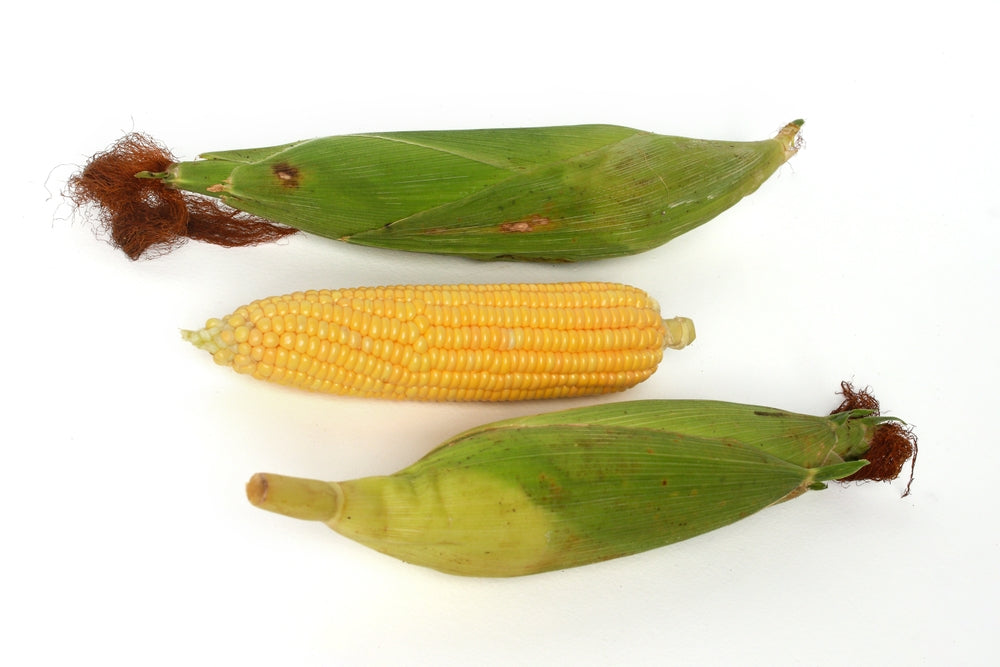
After the ears are thoroughly dry, shell each selected ear separately for a final inspection. Remove moldy, insect-damaged, shriveled, or immature kernels. Combine balanced amounts from many good ears, label the lot with source and year, and store it cool, dark, and dry. Run a germination test before the next planting season.
For stronger population maintenance, save from far more plants than the minimum needed to fill the next garden. Corn loses genetic breadth quickly when only a handful of ears contribute. Where space is limited, cooperate with trusted growers, alternate increase years, or use controlled pollination rather than pretending a tiny row is a full preservation population.
Troubleshoot late sweet corn without blaming the name
Poor ear fill usually points to pollination timing, drought, or a planting too narrow to create a useful pollen cloud. Small ears can result from crowding, low nitrogen, root damage, shade, or stress before ear initiation. Lodging can come from wind, rootworm injury, shallow roots, loose soil, or excessive top growth.
Corn earworm commonly enters through the silk channel and damages the tip. Harvest promptly, monitor local pressure, and use an integrated approach appropriate to your region. Common smut, leaf diseases, wildlife, and birds may also affect late corn. Rotate crop areas where possible, remove mature diseased residue, and keep a record of which problems appear repeatedly.
Because Country Gentleman is open-pollinated, a badly off-type population may also reflect poor seed maintenance or crossing in an earlier generation. Compare several plants and ears before deciding. One unusual ear is not enough to diagnose the whole seed lot.
Regional fit and adaptation
Country Gentleman has a strong history in eastern American gardens and can perform well through the Mid-Atlantic and Southeast when planted early enough to avoid severe flowering stress. Humid regions need careful disease scouting and rapid postharvest cooling. Coastal soils may require more frequent irrigation and split fertility than a deep loam.
In northern gardens, the variety needs a favorable late season. Choose the warmest site and avoid delaying planting once the soil is ready. In high-elevation or very short-season climates, an earlier open-pollinated sweet corn may be more dependable. In dry regions, the crop can perform with irrigation, but isolation from neighboring commercial corn must be considered.
A seed saver can gradually improve regional fit through careful multi-year selection, but adaptation is not an excuse to discard the variety’s identity. Keep the shoepeg kernel form, white sweet-corn use, and population records while selecting for practical local maturity, standability, and health.
Run a three-part Country Gentleman trial
A useful first-year trial should answer three different questions: Can the crop finish? Is the eating quality worth the space? Is the population suitable for seed saving? Those questions require different harvests and records.
- Field trial: Record emergence, stalk height, lodging, first tassel, first silk, and ear count on at least 20 representative plants.
- Kitchen trial: Harvest several ears at the same milk stage, cool them equally, and compare tenderness, sweetness, corn flavor, and cream-style texture.
- Seed trial: Reserve a broad group of plants, isolate them, dry the ears fully, evaluate shoepeg expression and seed soundness, then run a germination test.
Keep the food and seed evaluations linked. The best-looking dry ear may not have produced the best fresh eating quality. A population maintained only for appearance can drift away from the reason people kept it.
Why an open-pollinated sweet corn deserves records
A hybrid asks the gardener to reproduce a growing method. An open-pollinated corn asks the gardener to reproduce both the method and the population. That is a different responsibility. Country Gentleman can travel through generations because people do more than remember its name. They grow enough plants, protect the pollen, taste the crop, mark the seed ears, and pass forward a documented lot.
Our corn work has repeatedly shown us that a variety needs infrastructure around it: land, water, enough plants, labor at flowering, protected drying space, and time to record what happened. A seed packet can begin that work, but it cannot replace it.
The shoepeg ear is distinctive. The stewardship that keeps it distinctive is quieter, slower, and more important.
Handle a normal-sugary corn as a perishable crop
Sweet-corn quality continues changing after the ear leaves the stalk. Respiration and sugar-to-starch conversion accelerate while the ears remain warm. A basket left in a hot vehicle can lose more eating quality than an ear picked a day later and cooled immediately. Harvest logistics therefore belong in the growing plan, not as an afterthought.
Before harvest begins, clear refrigerator space, prepare clean containers, and decide which ears will be eaten fresh, frozen, or evaluated for seed. Keep eating ears separate from seed ears. Shade the harvest immediately and remove field heat quickly. Do not soak ears for hours; cool them without creating a warm wet environment around damaged kernels.
For a market or community harvest, record the time picked, time cooled, and time delivered. Country Gentleman’s reputation was built around tenderness and flavor, but the variety cannot carry poor handling. When customers compare it with a modern supersweet hybrid, they are comparing both genetics and the care between field and plate.
Keep a population record another grower could understand
A useful Country Gentleman record explains what happened before the packet was filled. Record the original seed source, lot year, number of seeds planted, final flowering population, isolation distance, neighboring corn, tassel and silk dates, number of ears selected, cull reasons, drying method, germination result, and any deliberate selection.
Photograph representative plants and ears, not only the largest. Include an ordinary well-filled shoepeg ear, a small secondary ear, and any recurring off-type. A future grower needs to see the population range. If you selected for earlier maturity, shorter plants, more ears per stalk, or stronger standability, state that openly so the next grower understands why the line may be shifting.
When seed is shared, send the record with it. A variety name without a grow-out history is a label. A variety name joined to population, place, season, and selection is a seedkeeping record. That distinction becomes more important with an open-pollinated corn that has moved through more than a century of regional maintenance.
Use emergence, flowering, and harvest dates to compare seed lots
Days-to-maturity numbers are useful for planning, but they can hide where two Country Gentleman seed lots actually differ. Record planting date, soil temperature, emergence, first tassel, fifty-percent tassel, first silk, fifty-percent silk, first milk-stage ear, and final acceptable harvest. Those dates separate slow emergence from late flowering and late flowering from a long grain-filling period.
Compare the number of days from emergence to silk rather than only sowing to harvest. A cold spring can delay every corn planted that week. If one lot emerges with the rest but flowers ten days later, the difference is more likely genetic or related to vigor. If the lot flowers on time but needs longer to reach the milk stage, ear development is the slower step.
Over several seasons, this calendar helps a grower select for local maturity without reducing the variety to one early ear. Save from many plants that flower and finish within the desired window, while continuing to track shoepeg kernel form, eating quality, standability, and yield.
Size the planting from the number of ears and parent plants you need
Start with the end use and work backward. A family expecting forty fresh ears should not plant exactly forty seeds. Germination loss, weak seedlings, barren plants, small secondary ears, insects, and wildlife all reduce usable harvest. For a fresh-eating block, planting fifty to sixty seeds may be a more realistic starting point, followed by thinning to a strong stand.
A seed crop requires a different calculation. Organic Seed Alliance recommends at least 200 plants for maintaining sweet-corn seed. At 10-inch spacing, 200 plants require about 167 row feet. Dividing that into eight rows produces a compact block a little over 20 feet long, before allowing paths and border plants. The calculation shows why serious corn seed saving takes more space than one decorative row.
Write the target plant count on the garden plan before sowing. Count the final stand after thinning. At harvest, compare the number of parent plants with the number of ears actually entering the seed mix. That chain of numbers makes the population visible and prevents a broad planting from becoming a narrow seed lot at the last step.
Frequently asked questions
What is shoepeg corn?
Shoepeg corn has narrow kernels packed irregularly on the cob rather than arranged in straight rows. Country Gentleman is the best-known open-pollinated shoepeg sweet corn.
Is Country Gentleman a hybrid?
No. It is an open-pollinated sweet corn and can be maintained through seed saving when grown in adequate numbers and properly isolated.
How long does Country Gentleman take to mature?
It is a late variety commonly listed around 88 to 92 days, but actual maturity depends on soil temperature, weather, fertility, and water.
Why do the kernels look disorganized?
The irregular arrangement is the characteristic shoepeg structure, not poor pollination by itself. Blank spaces or undeveloped kernels are different problems.
Can Country Gentleman cross with other corn?
Yes. Corn is wind pollinated, and nearby corn flowering at the same time can change current-ear eating quality and future seed genetics.
How many plants should I grow for seed?
Grow as many as your space and stewardship plan can support, with broad contributions from many sound plants. A tiny row is vulnerable to inbreeding and genetic drift.
Is Country Gentleman good for cream-style corn?
Yes. Its tender narrow kernels and milk-stage texture are well suited to cutting and scraping for cream-style corn.
Can plain corn be canned in a boiling-water canner?
No. Plain corn is a low-acid food and requires a tested pressure-canning process. Use a tested recipe from the National Center for Home Food Preservation.
Sources and further reading
- UGA Cooperative Extension: Variety Selection and Seed Saving for Organic Growers
- Iowa State University Library transcription: 1903 Iowa Seed Catalog featuring Country Gentleman
- USDA National Agricultural Library: Henry G. Gilbert Nursery and Seed Trade Catalog Collection
- Penn State Extension: Sweet Corn Production
- University of Minnesota Extension: Growing Sweet Corn in Home Gardens
- Iowa State University Extension: The Birds and Bees of Corn Pollination
- Organic Seed Alliance: Sweet Corn Seed Production Quick Reference
- Organic Seed Alliance: A Seed Saving Guide for Gardeners and Farmers
- National Center for Home Food Preservation: Freezing Corn
- National Center for Home Food Preservation: Corn, Cream Style