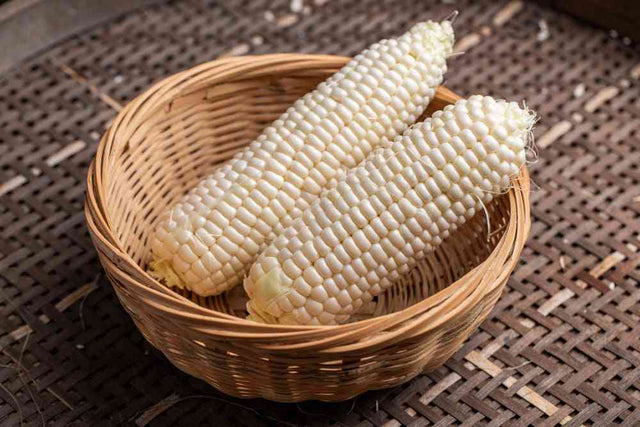
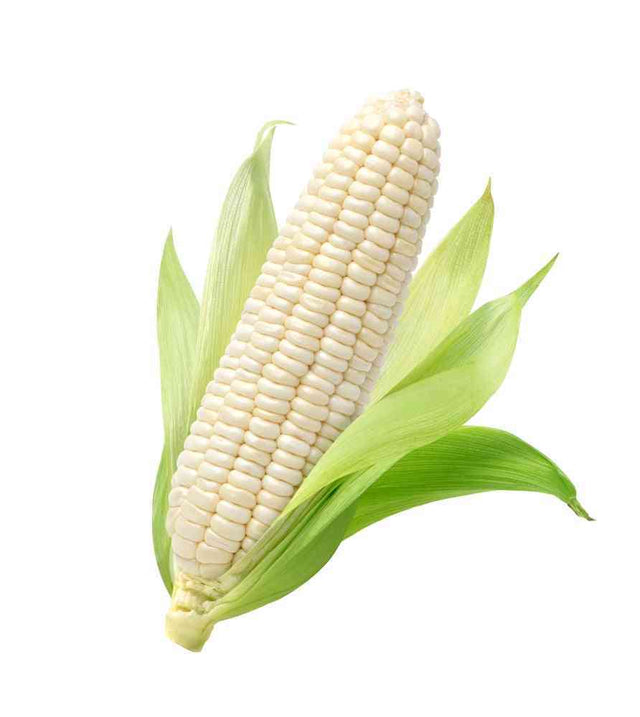
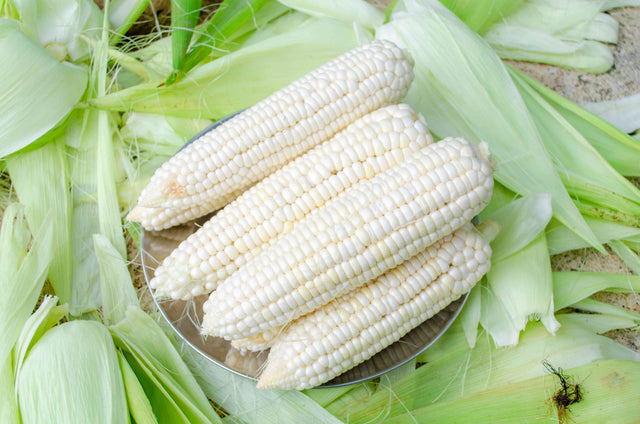
Silver Queen is a late white sweet corn hybrid grown for fresh ears at the milk stage. It belongs to the normal sugary, or su, class of sweet corn. That older sugar system gives the kernels the creamy tenderness and familiar corn flavor many Southern gardeners remember, but it also means the ears lose sweetness faster after harvest than newer sugary-enhanced and supersweet hybrids.
The name is so familiar that gardeners sometimes treat Silver Queen as a general term for white corn. It is not. Silver Queen is a particular conventional hybrid, and its identity matters when you plan planting dates, isolation, harvest, storage, and seed purchasing. It is also not an heirloom or open-pollinated seed-saving variety in the usual sense. Seed collected from the crop will segregate in the next generation instead of reproducing a uniform Silver Queen planting.
This guide explains what Silver Queen does well, where it can frustrate a grower, how to plant it for full ears, how to protect its short quality window, and how to decide whether this classic late sweet corn fits your garden. The goal is not nostalgia by itself. The goal is to grow the crop well enough that the name still means something at the table.
What Silver Queen is and is not
Silver Queen is a white su sweet corn hybrid. The su gene limits the conversion of sugar to starch while the kernels are developing, but it does not hold high sugar levels for long after the ear is picked. That is why freshly harvested Silver Queen can taste rich, tender, and deeply corn-flavored, while an ear left warm for a day may taste noticeably starchier.
| Trait | What it means in the garden |
|---|---|
| Crop class | White normal-sugary sweet corn harvested at the milk stage |
| Reproductive type | Conventional hybrid; not genetically engineered and not open-pollinated |
| Season | Late; many references place it around the high 80s to mid-90s in days to harvest |
| Eating quality | Creamy, tender kernels with traditional sweet-corn flavor |
| Postharvest behavior | Quality declines quickly unless ears are cooled promptly |
| Seed saving | Saved seed will not reproduce a uniform Silver Queen crop |
Hybrid does not mean GMO. A conventional hybrid is produced by crossing selected parent lines. The resulting first-generation seed can be uniform and vigorous, but the next generation reshuffles those parent traits. For a gardener, the practical consequence is simple: buy fresh Silver Queen seed when you want Silver Queen, and save seed from an open-pollinated sweet corn when you want a stable seed-saving project.
How Silver Queen became a Southern standard
Silver Queen rose to prominence in the twentieth-century sweet-corn market and became strongly associated with home gardens, roadside stands, church suppers, cookouts, freezing days, and late-summer tables across the eastern and southern United States. Its success was not only about sweetness. It arrived in a period when white sweet corn carried a powerful quality reputation in many regional markets, and it produced large, handsome ears with the creamy texture growers expected from standard sweet corn.
University extension publications still use Silver Queen as a familiar example of normal-sugary sweet corn. That continuing recognition is valuable, but it can also hide the crop’s tradeoffs. Silver Queen is late. Late ears encounter more accumulated heat, insect pressure, storms, and disease opportunity than an early crop. Its sugar system also rewards immediate use rather than long storage or slow shipping. What made it a beloved farm-stand corn is exactly what makes it less forgiving in a long supply chain.
A useful field guide should hold both truths at once: Silver Queen earned its reputation through flavor, texture, and cultural memory, and it must still be managed as a late conventional hybrid with a narrow postharvest window.
Compare Silver Queen with newer sweet-corn genetics
Sweet corn is often grouped by the genes that affect sugar level and kernel texture. Knowing the class helps explain why two white corns can behave very differently after harvest.
| Sweet-corn type | Common abbreviation | Typical behavior |
|---|---|---|
| Normal sugary | su | Creamy, tender texture; best eaten very soon after harvest |
| Sugary enhanced | se | Higher sugar and somewhat longer holding quality than standard su corn |
| Supersweet | sh2 | Very high sugar and longer storage potential; seed can be less vigorous in cold soil |
| Synergistic or augmented | multiple genes | Combines kernel types to balance tenderness, sweetness, and shelf life |
Silver Queen belongs in the first row. It can be the right choice when you value traditional flavor and can harvest directly into the kitchen. It may be the wrong choice when ears must travel, sit unrefrigerated, or wait several days before use. A newer white se or sh2 hybrid may hold sweetness longer, but it will not necessarily reproduce Silver Queen’s creamy eating texture or regional familiarity.
Choose the planting window before you buy the seed
Silver Queen needs enough frost-free time to reach the milk stage before cold weather ends the crop. The printed maturity number is a planning tool, not a promise. Cold soil, transplant shock, drought, nutrient stress, low light, and competition can delay the crop. Warm, fertile soil and steady growth can bring it in sooner. In much of the Southeast, the bigger concern is not whether the season is long enough but whether a late crop will pollinate during oppressive heat or mature during peak earworm pressure.
Wait until frost danger has passed and the soil at planting depth is at least about 60°F. Germination is faster and stand establishment is usually stronger when the soil is closer to 65°F or warmer. Planting too early can leave expensive hybrid seed sitting in cold, wet soil where it rots, emerges unevenly, or becomes easy prey for seed-feeding insects.
| Decision | Practical target |
|---|---|
| Sun | At least 8 hours of direct light; more is helpful |
| Soil | Deep, well-drained soil with good organic matter and a soil test |
| Soil temperature | About 60°F minimum; warmer soil gives faster emergence |
| Space | A block wide enough for wind-borne pollen to move among rows |
| Season length | Plan around roughly 90 days, then add a weather margin |
| Succession | Stagger plantings or use different maturities rather than planting one enormous block |
In hot-summer regions, earlier planting often gives better quality than waiting until late spring. The goal is to place tasseling and silking before the most persistent heat, not merely to plant after frost. In cooler regions, black plastic or row cover can warm the soil, but remove covers before plants become crowded or overheated.
Plant for an even stand and a useful pollen cloud
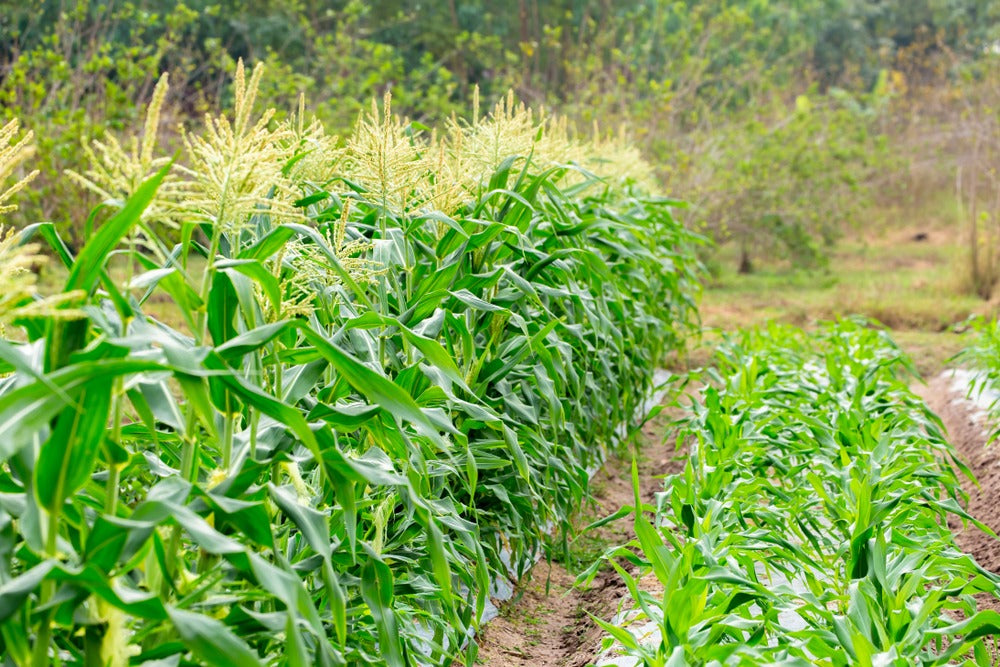
Corn does not need perfect geometry, but it does need enough neighboring plants flowering together. A square or rectangular block of four or more short rows usually pollinates better than one long decorative row. In a small garden, a bed with closely spaced rows can work well if the plants are not so crowded that they compete severely for water and nitrogen.
| Step | Recommendation |
|---|---|
| Seed depth | About 1 inch in typical garden soil; slightly deeper in loose, fast-drying soil |
| Within-row spacing | About 8 to 12 inches after thinning |
| Row spacing | About 30 to 36 inches, or a carefully managed close-row block |
| Minimum layout | At least four short rows rather than one or two long rows |
| Thinning | Remove weak extras after emergence; do not leave dense clumps |
| Replanting gaps | Replant quickly only if the new plants can still flower with the main block |
If you sow two seeds per station as insurance, thin to one strong plant rather than letting twins compete. The plant that looks merely “extra” in May may be the reason both stalks produce small ears in July. A uniform stand is especially valuable in a late hybrid because flowering needs to overlap across the block.
Manage nitrogen and water by growth stage
Corn is a heavy feeder, but indiscriminate fertilizer can create tall, weak growth without fixing the real problem. Start with a soil test. Correct pH, phosphorus, and potassium according to local recommendations, then supply nitrogen in split applications so the crop has access when demand accelerates. A common home-garden pattern is part of the nitrogen before planting and a side-dress when plants are roughly knee high or entering rapid vegetative growth.
Water matters most from the period just before tasseling through silking and early kernel fill. Drought before flowering can reduce ear size. Drought during silk emergence can delay or dry silks before they catch pollen. Drought after pollination can cause kernels, especially near the tip, to abort. Deep watering that wets the root zone is more useful than frequent surface sprinkling.
| Growth stage | What the plant is building | Management focus |
|---|---|---|
| Emergence to 6 leaves | Roots and stand | Weed control, drainage, modest steady moisture |
| Rapid vegetative growth | Leaf area and ear potential | Side-dress nitrogen if the soil test and crop condition support it |
| Tasseling and silking | Pollination | Prevent drought stress; avoid damaging roots with cultivation |
| Early grain fill | Kernel retention and size | Continue deep irrigation and protect healthy foliage |
| Final fresh-ear fill | Flavor and texture | Check ears frequently; do not let the crop pass the milk stage |
Read tassels, silks, and weather together
Each potential kernel has a silk. Pollen must land on that silk, germinate, and grow a pollen tube to the ovule. A blank space on an ear is therefore a record of something that interrupted that pathway. A bare tip often points to late-emerging silks or stress after pollination. Random missing kernels may indicate weak pollen coverage. One blank side may reflect uneven exposure, lodging, or an ear pressed against neighboring foliage.
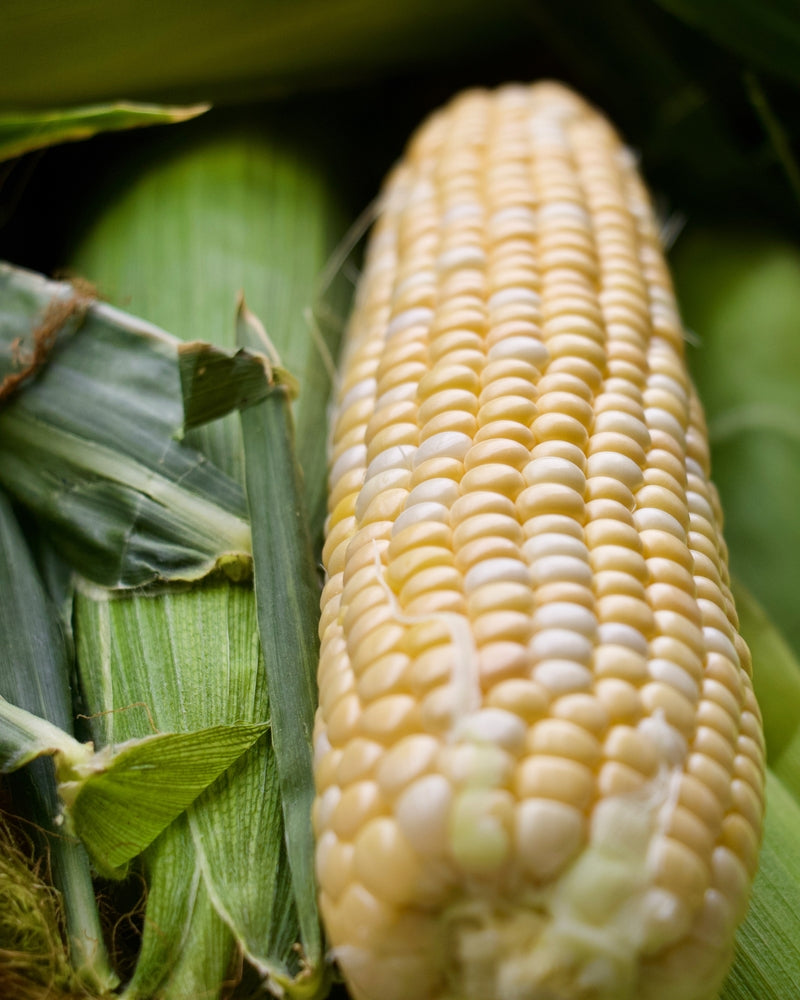
Watch the block, not one plant. Pollen shed usually begins before all silks have emerged and continues for several days. Hot, dry weather can shorten pollen life and dry silk surfaces. Heavy rain can temporarily wash pollen down, but a healthy block normally sheds more later. In a small planting, gently shaking stalks in late morning while pollen is shedding can improve distribution, but it cannot rescue dead silks or a severely drought-stressed crop.
Silver Queen can also cross with field corn, popcorn, ornamental corn, or another sweet corn flowering nearby. The current ear may show starchy kernels or mixed color depending on the pollen source. Use distance, flowering-time separation, or controlled pollination when eating quality or seed purity matters.
Harvest during the milk-stage window, not by calendar alone
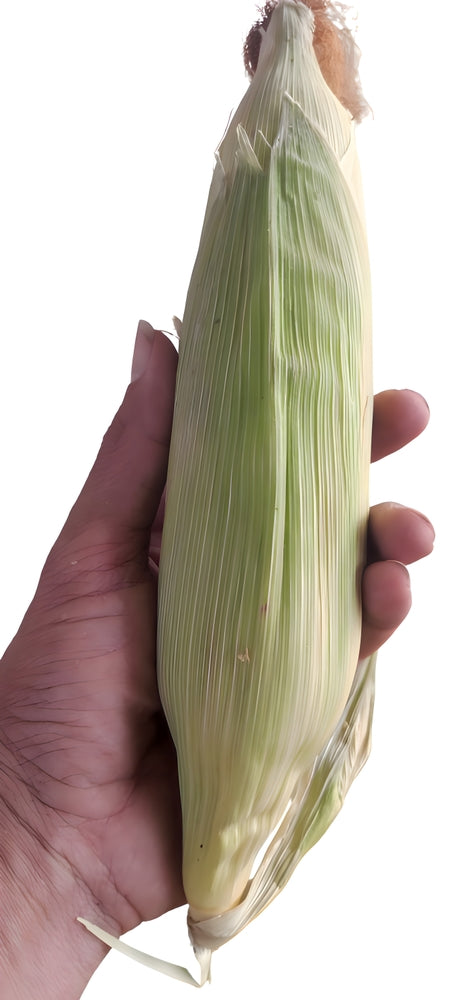
Begin checking ears when silks turn brown and the ears feel full from base to tip. Pull the husk back only enough to test a kernel. A ready kernel is plump and releases a milky liquid when pressed. Clear liquid indicates an immature ear. Thick, doughy contents indicate the ear is moving past peak fresh-eating quality.
| Signal | Interpretation |
|---|---|
| Silks brown and dry | The ear may be ready, but confirm with kernel fill |
| Ear feels rounded through the husk | Kernels have filled the cob |
| Kernel releases clear liquid | Too early |
| Kernel releases milky juice | Prime fresh-eating stage |
| Kernel is doughy or tough | Past peak; use promptly for cooking or processing |
| Husk and stalk fully dry | Far beyond sweet-corn harvest; grain is maturing toward seed |
Harvest in the cool part of the day when practical. Twist the ear downward and pull. Do not strip the entire plant or damage neighboring ears that may be several days behind. Silver Queen can have a brief harvest window within one block, so check daily once the first ears are ready.
Protect flavor from the moment the ear leaves the stalk
Normal-sugary corn begins converting sugar to starch quickly after harvest, especially when the ears remain warm. Put harvested ears in shade immediately. Refrigerate as soon as possible. If you are handling a large picking, use clean ice or rapid cooling rather than leaving sacks or tubs of corn in the sun while the field work continues.
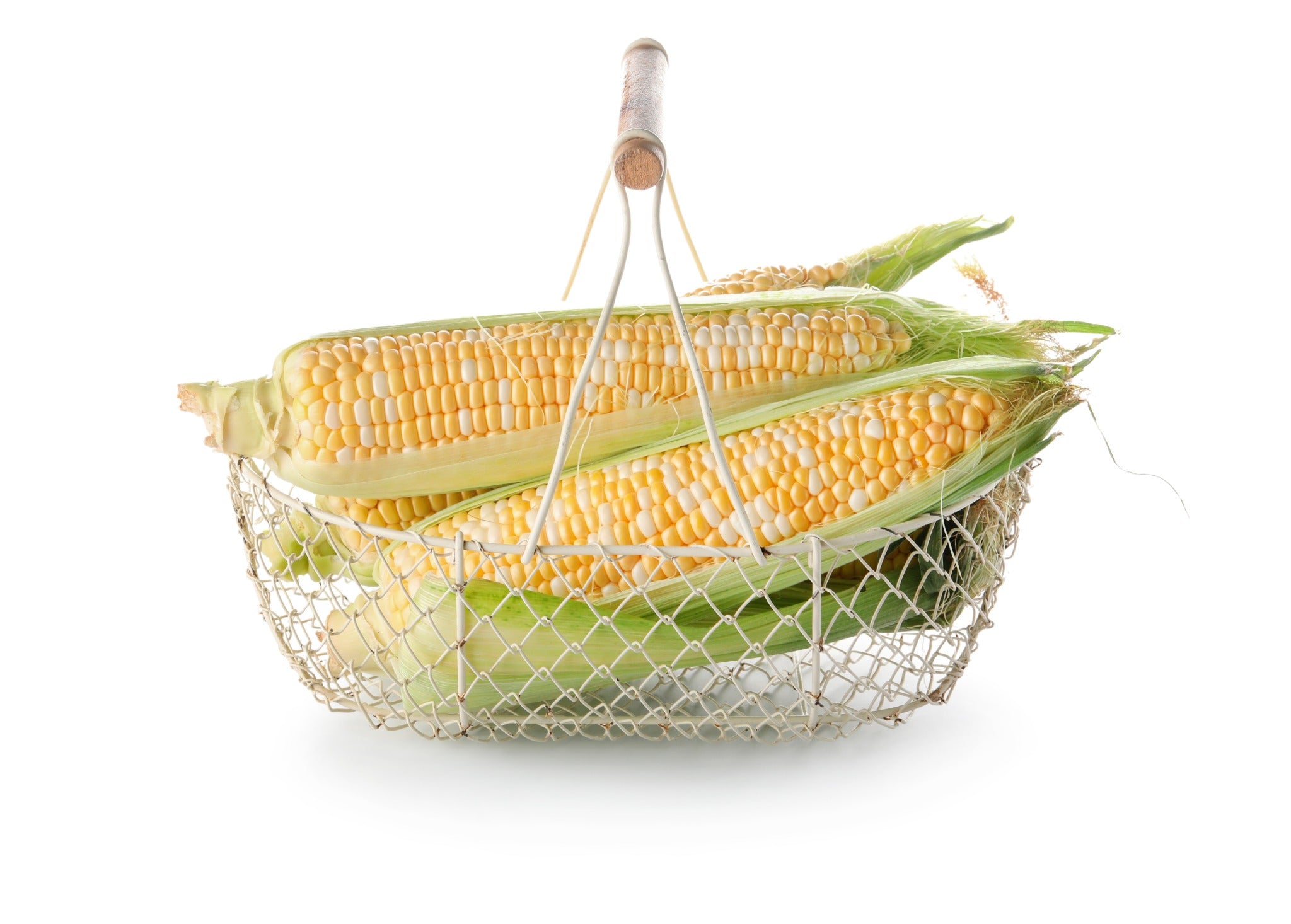
For fresh eating, the best schedule is often harvest, cool, shuck, cook, and eat on the same day. When freezing, follow a tested preservation method rather than improvising. The National Center for Home Food Preservation recommends selecting tender milk-stage ears, blanching whole-kernel or cream-style corn for four minutes before cutting, cooling promptly, draining, packaging, and freezing. Corn-on-the-cob blanching time varies with ear diameter.
| Use | Best handling choice |
|---|---|
| Same-day corn on the cob | Keep ears cold and shuck close to cooking time |
| Whole-kernel freezing | Blanch, cool promptly, cut kernels, package with recommended headspace |
| Cream-style freezing | Blanch, cut kernel tips, scrape cob, cool and package |
| Longer fresh storage | Expect flavor loss; refrigeration slows but does not stop starch conversion |
| Pressure canning | Use a tested low-acid corn process, not an untested family shortcut |
Plan for earworms, smut, wildlife, and lodging
Silver Queen’s late maturity can place fresh silks in the field when corn earworm moth pressure is high. The caterpillar usually feeds at the ear tip, leaving chewed kernels and frass. Timely harvest, resistant or earlier varieties, and locally recommended integrated pest management can reduce damage. In a home garden, a damaged tip can often be cut away while the sound remainder of the ear is used.
University of Maryland Extension specifically identifies Silver Queen as very susceptible to common corn smut. Smut forms pale swelling galls that later darken and release spores. Remove galls before they mature when the goal is disease management, do not compost mature spore-filled galls, and rotate where practical. In cuisines where young huitlacoche is intentionally harvested, it is treated as a food crop, but that is a separate use from allowing mature galls to spread spores through a seed plot.
Raccoons, deer, birds, and wind can destroy a nearly finished crop. Install wildlife protection before ears begin filling. Mounding soil against the base can help stabilize plants in loose ground, but strong roots begin with proper spacing, drainage, and early weed control.
Build a harvest calendar instead of gambling on one date
A late sweet corn can be part of a long harvest plan, but it should not have to carry the whole summer. One strategy is to plant an early sweet corn first and Silver Queen as the late crop. Another is to make two Silver Queen sowings roughly 10 to 14 days apart, provided the later planting still has time to mature. A third is to plant once and choose varieties with different maturities.
Do not plant different genetic classes side by side without understanding isolation requirements. Pollen from field corn or many other sweet-corn types can change kernel quality on the current ear. Time separation is only useful when the flowering windows truly do not overlap. Record the first tassel, first silk, and final pollen shed rather than relying only on planting date.
| Record | Why keep it |
|---|---|
| Planting date and soil temperature | Explains emergence speed |
| Percent emerged | Reveals seedbed and stand problems |
| First tassel and first silk | Shows flowering overlap |
| Rain or irrigation during flowering | Helps explain kernel set |
| First harvest date | Improves next year’s calendar |
| Earworm and smut incidence | Supports variety and timing decisions |
| Hours from harvest to cooling | Connects handling with eating quality |
Understand why Silver Queen is not a true-to-type seed-saving project
Silver Queen is a hybrid. Seed harvested from it can germinate, but the next generation will separate into different combinations of its parent genetics. Plants may vary in maturity, ear size, kernel color, sweetness, tenderness, height, and disease response. That variability can be interesting for a breeding project, but it is not a dependable way to maintain Silver Queen.
If your goal is reliable seed saving, choose an open-pollinated sweet corn such as Country Gentleman, Golden Bantam, or Stowell’s Evergreen, then grow a sufficiently large population and isolate it from other corn. If your goal is experimentation, label saved Silver Queen seed honestly as an F2 population, grow many plants, record the variation, and never market the result as true Silver Queen without a legitimate breeding and stabilization process.
The distinction protects gardeners and seed records. A famous name should not be carried forward merely because an ear is white and sweet. Variety identity comes from maintained seed, documented reproduction, and repeated field performance.
Regional notes for the Southeast and beyond
In the Southeast, plant early enough that pollination does not fall in the harshest stretch of summer. Late plantings can work, but they often face more earworm pressure, hurricane-season wind, heat stress, and smut. Coastal plain soils may dry quickly despite humid air, so check the root zone instead of assuming the crop has enough water because the weather feels muggy.
In the Mid-Atlantic, Silver Queen remains a familiar late crop, but succession planning is useful because spring can shift quickly from cool to hot. In the Northeast and upper Midwest, make sure the local frost-free season can finish a late hybrid. In dry western climates, irrigation timing and isolation from large commercial corn fields become major planning questions.
The variety’s best fit is a garden or farm where the grower can provide a long warm season, a strong pollen block, regular scouting, and immediate postharvest use. It is less suited to a tiny single-row planting or a gardener who needs ears to hold quality for many days.
What our corn work teaches about familiar names
Corn names can carry memory, status, family expectation, and regional pride. Those things matter. They can also make us overlook what the plant is telling us. A familiar name does not cancel the need to record soil temperature, population size, flowering overlap, water stress, disease, harvest stage, and handling time.
Our broader seedkeeping work has taught us that corn needs more than affection. It needs land, water, enough neighboring plants, protected seed records, and people with time to watch the crop. Silver Queen is a useful example because its reputation is strongest when the system around it is ready: a good stand, a complete pollen cloud, a grower checking ears every day, and a kitchen waiting nearby.
That is the difference between selling a remembered name and actually carrying a crop well.
Build a crop calendar that explains the late season
A Silver Queen calendar should include more than the sowing date. Record soil temperature, emergence, three-leaf stage, rapid stem elongation, first tassel, first pollen shed, first silk, brown silk, first milk-stage ear, final harvest, and the first serious earworm or disease pressure. Those dates reveal where the crop spent its extra time and whether the variety fits the farm or garden.
If emergence was slow, the delay began in cold or saturated soil. If tassels appeared normally but silks were late, water or root stress may have disrupted pollination. If ears filled but became starchy before the household used them, the weak point was harvest scheduling and cooling. If insect damage increased sharply in the second half of the block, the late harvest window crossed into heavier moth pressure.
Use the record to plan the next season. A gardener may still love Silver Queen and decide to plant one early block of it while using an earlier white corn for dependable first harvest. That is not abandoning a familiar variety. It is matching the crop to the season and the labor available.
Turn saved hybrid seed into an honest F2 experiment
Seed collected from Silver Queen ears can germinate, but it does not reproduce the commercial F1 uniformly. Gardeners who want to explore that segregation can make it a deliberate project. Label the seed Silver Queen F2, keep it separate from purchased F1 seed, and plant enough individuals to reveal variation rather than drawing conclusions from six plants.
Measure plant height, days to tassel and silk, ear number, kernel color, tenderness, sweetness, tip fill, disease response, and harvest date. Expect a range. Some plants may resemble the F1, some may be weak, and others may combine traits from the parent lines in unexpected ways. Decide the selection goal before choosing ears: earlier maturity, regional adaptation, flavor, plant stature, or another measurable trait.
A stable open-pollinated population requires repeated selection over multiple generations and enough plants to avoid severe inbreeding. Until that work is complete, share seed under a distinct experimental name with the generation and selection record. The experiment can be valuable, but calling the first saved generation Silver Queen would hide the biology that produced it.
Match the size of the block to the harvest labor available
A well-pollinated sweet-corn block can bring many ears into the milk stage within a short period. Before planting, estimate how many ears the household, farm stand, or preservation kitchen can pick, cool, sell, cook, or freeze in a day. A sixty-plant block producing one marketable ear per plant can overwhelm a small kitchen when all sixty ears become ready together.
Stagger complete blocks rather than planting tiny weekly rows. Each sowing still needs enough plants and a useful shape for pollen. Label the blocks and keep incompatible corn types from shedding at the same time. When the first block reaches three or four leaves, sowing the next block often creates a more meaningful separation than a calendar date chosen before the weather is known.
Harvest capacity is part of quality. Silver Queen loses its advantage when ripe ears wait on the stalk or sit warm because the grower planted more than the household can handle. The best crop plan connects seed count, expected ears, refrigerator space, market demand, and preservation labor before the first kernel goes into the ground.
Frequently asked questions
Is Silver Queen corn an heirloom?
No. Silver Queen is a conventional hybrid sweet corn. It is a classic and historically important market variety, but hybrid and heirloom are not interchangeable terms.
Is Silver Queen genetically modified?
No. A conventional hybrid is produced through controlled crossing of parent lines. Hybrid does not mean genetically engineered.
How long does Silver Queen take to mature?
Many references place it around the high 80s to mid-90s in days to harvest. Weather, soil temperature, fertility, moisture, and stand quality can shift the actual date.
Why is my Silver Queen starchy?
The ear may have been harvested too late, left warm after picking, crossed by incompatible corn pollen, or stored too long. Standard sugary corn loses sweetness quickly after harvest.
Can I save Silver Queen seed?
The kernels can germinate, but the next generation will segregate and will not reproduce a uniform Silver Queen crop. Use an open-pollinated variety for dependable seed saving.
Why are kernels missing from the ear?
Poor block shape, drought during silking, delayed silk emergence, weak pollen overlap, or post-pollination kernel abortion can all leave blank areas.
Why does Silver Queen get corn smut?
The variety is known to be susceptible. Remove galls before they release spores, manage crop residue, and consider a resistant variety where smut is persistent.
What is the best way to preserve Silver Queen?
Cool ears immediately. For freezing or canning, follow a tested National Center for Home Food Preservation process rather than an untested shortcut.
Sources and further reading
- UGA Extension: Home Garden Sweet Corn
- UGA Cooperative Extension: Variety Selection and Seed Saving for Organic Growers
- UGA Extension: Not Your Father’s Corn
- Penn State Extension: Sweet Corn Production
- North Carolina Cooperative Extension: Sweet Corn in the Home Garden
- Iowa State University Extension: The Birds and Bees of Corn Pollination
- University of Maryland Extension: Corn Smut of Corn
- University of Minnesota Extension: Growing Sweet Corn in Home Gardens
- National Center for Home Food Preservation: Freezing Corn
- Organic Seed Alliance: Sweet Corn Seed Production Quick Reference