Welcome to our store. Learn more

Free U.S. seed shipping $25+. Seeds ship free at the threshold.

Current Processing Times Before Shipping Are 1-2 Business Days

25% OFF Heirloom seed packets are $1.50, regularly $2.00. Seed packets only · sale price already applied · carries into checkout · coupon codes do not combine. Shop the sale →
← Back to Growing Guides & Planting Advice

Variety chooser and comparison guide

Seed Saving & Varieties

Kale vs. Collards vs. Swiss Chard: Flavor, Growing & Harvest

Compare kale, collards, and Swiss chard by species, leaf texture, cold tolerance, harvest pattern, and seed-saving system.

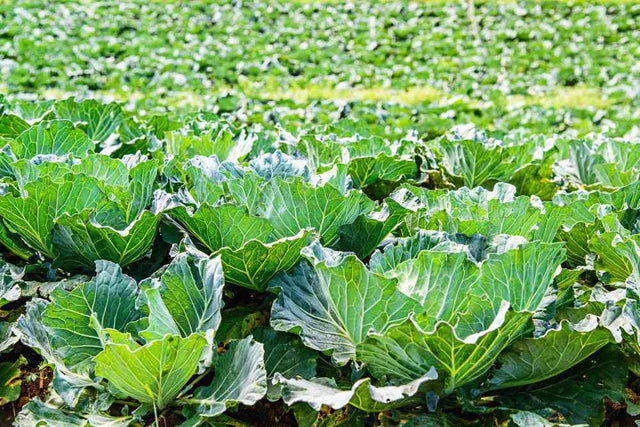
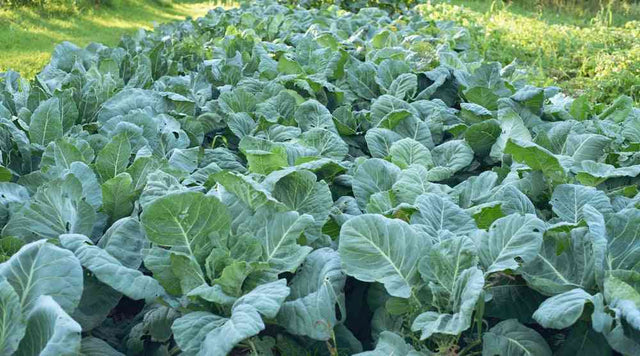
Kale, collard greens, and Swiss chard displayed side by side
In this article

    Quick answer

    Kale and collards are brassicas; Swiss chard is a beet relative

    Kale and collards are forms of Brassica oleracea and share many pests, crop-rotation needs, and cool-season traits. Swiss chard is Beta vulgaris, the same species group as beets, with different pests and family relationships. All provide leafy harvests, but they are not interchangeable in crop planning.

    Kale, collards, and chard at a glance

    Crop Plant family Harvest style
    Kale Brassicaceae Leaves from open rosette
    Collards Brassicaceae Large leaves over long season
    Swiss chard Amaranthaceae Leaves and thick petioles

    Compare kale, collards, and Swiss chard by species, leaf texture, cold tolerance, harvest pattern, and seed-saving system.

    Seedkeeper's field record
    Good seed begins the work. Good observation finishes it.
    Scientific nameBrassica oleracea, Brassica napus, and Beta vulgaris
    Crop identityThree distinct leafy crop groups often planted together
    Botanical familyBrassicaceae and Amaranthaceae
    Life cycleBiennials commonly grown as annual leaf crops
    Primary useBraised greens, soups, salads, chips, stalks, winter harvest, and seed saving
    Seed-saving systemKale and collards can cross within compatible Brassica groups; chard is wind-pollinated and crosses with beets
    Provenance statusRegional foodways are acknowledged without claiming one community owns every modern variety
    Regional fitExcellent cool-season crops for the Mid-Atlantic and Upper South; chard also carries into summer with water
    Kale, collard greens, and Swiss chard displayed side by side
    Kale and collards are brassicas; Swiss chard is a beet relative. Their leaf texture, stems, and cooking behavior differ.

    Choose the leaf crop by species, season, and kitchen use

    Three distinct leafy crop groups often planted together should be chosen by season, space, and kitchen use, not by a photograph alone. One gardener needs a fast spring crop; another needs a fall harvest that can stand through cold. A market grower values uniformity and bunching. A seedkeeper also asks how many plants can be maintained when flowering begins.

    Place brassicas and chard in the seasons they handle best

    Excellent cool-season crops for the Mid-Atlantic and Upper South; chard also carries into summer with water. Cool-season crops can survive cold that would stop a tomato, yet they lose quality when roots stall in saturated soil or when heads form under sustained heat. Count backward from the weather you want at harvest, not forward from the day you happen to feel ready.

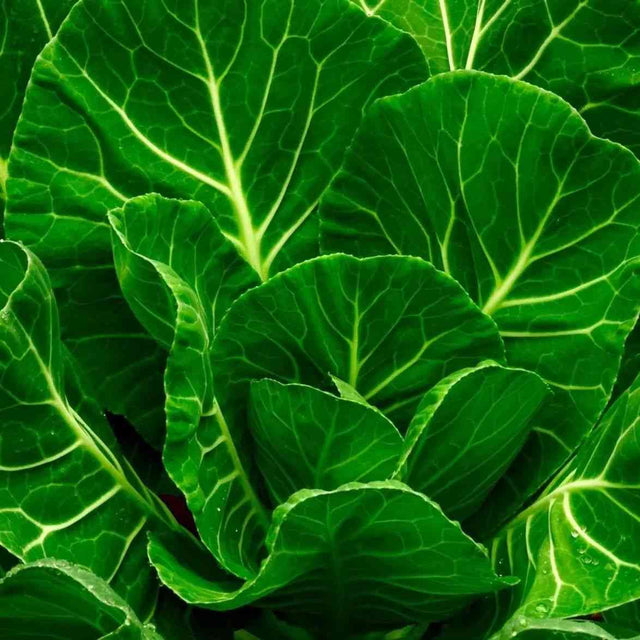
    Leafy greens with contrasting leaf textures and stem thickness
    Kale may be curled or blistered, collards form broad smooth leaves, and chard carries thick edible stems.
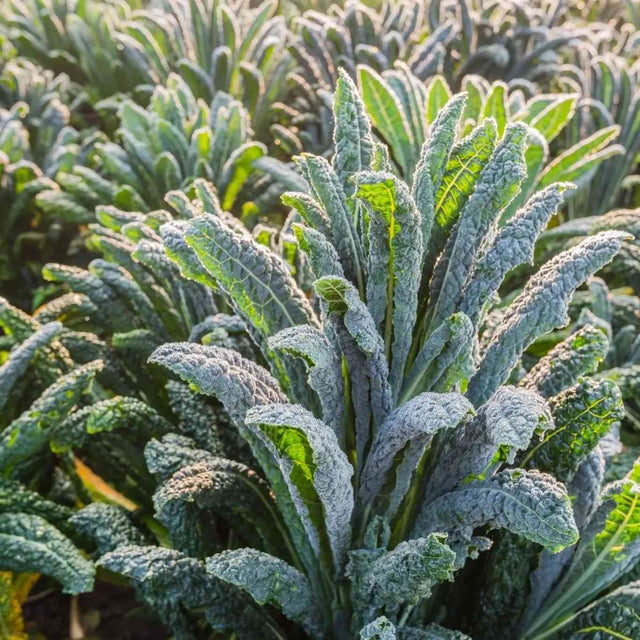
    Tuscan Lacinato kale with long dark blue-green leaves
    Lacinato kale grows upright, textured leaves that can be harvested from the bottom while the center keeps producing.
    Perpetual Spinach chard with smooth green leaves and pale stems
    Perpetual Spinach is a leaf chard that regrows after cutting and handles warmer weather better than true spinach.

    Protect the growing point during repeated leaf harvest

    Braised greens, soups, salads, chips, stalks, winter harvest, and seed saving. Quality is often a narrow gate. Lettuce turns bitter, radish becomes woody, broccoli loosens into flower, cabbage splits, and spinach bolts. Harvest is not the reward after the work; it is part of the work.

    Keep brassica crossing groups separate from beet-family chard

    Kale and collards can cross within compatible Brassica groups; chard is wind-pollinated and crosses with beets. A food crop can be harvested at its best eating stage. A seed crop must be carried through flowering, pollination, and full maturity. That takes more space, more time, and a willingness to leave the finest plants standing.

    Frequently asked questions

    What is the biggest mistake with kale vs collards vs Swiss chard?
    Can I grow this crop in containers?
    Why did the crop become bitter, tough, or loose?
    Can I save seed from one plant?
    Should I trust the days-to-maturity number exactly?

    Three leafy crops, three different botanical jobs

    Kale and collards are brassicas, while Swiss chard is a beet relative. That difference matters for rotation, pests, seed saving, and kitchen use. Kale and collards share many caterpillar and flea-beetle problems and can cross with compatible Brassica oleracea crops when allowed to flower. Chard belongs with beets in a rotation and produces seed through a different crossing group.

    Collards build broad leaves on an upright stalk and tolerate repeated lower-leaf harvest. Curly and Lacinato kales offer different textures and plant shapes. Chard produces fleshy petioles as well as leaves and often remains productive through weather that causes brassicas to decline.

    Choose by the season you need to cover

    For the coldest harvest windows, select hardy kale or collards and use protection appropriate to the region. For summer color and repeated harvest where cabbage worms are relentless, chard can be the more dependable choice. A mixed planting is often more resilient than asking one leafy crop to perform through every season.

    Harvest architecture differs

    Take lower kale and collard leaves while leaving the center intact, and remove old yellowing leaves before they harbor pests. Chard can be harvested by snapping or cutting outer stalks at the base. For bunching, select uniform leaves of similar size; for household use, stagger harvest to keep each plant photosynthesizing. Cool, wash, and dry leaves quickly because field heat shortens storage life.

    In the kitchen, stem thickness and leaf age matter as much as crop name. Young leaves cook quickly, while mature collards, sturdy kale, and broad chard stalks reward different cutting and cooking methods.

    Research and field references

    Continue with the next decision

    Young red and green lettuce seedlings establishing for a fall garden What to Plant in August in the Mid-Atlantic and Upper SouthTo decide what to plant in August, count backward from local first frost, add time for heat-delayed germination... Mature spinach leaves growing in a cool-season bed How to Grow Spinach from Seed: Cool Soil, Succession Sowing & Seed SavingSow spinach in cool soil, keep moisture even, thin early, harvest before heat, and understand the crop before...

    Products connected to this guide

    Collard Seeds - Heading - Carolina Cabbage Collard growing in a lush green field, showcasing dense leafy heads ideal for home gardening and cooking.Carolina Cabbage Collard$1.50 Champion Collard greens growing in a lush garden bed, showcasing broad, dark-green leaves ideal for home vegetable gardens.Champion Collards$1.50 Kale Seeds - Tuscan Lacinato (Dinosaur) Kale - Alliance of Native Seedkeepers - Vegetable SeedsTuscan Lacinato (Dinosaur) Kale$1.50 Dark Green Collard Seeds - Vates Collard Alliance Of Native Seedkeepers Vegetable SeedsVates Collard$1.50

    Selected next steps

    Red Russian Kale featured in the Kale Seeds collection. Heirloom Kale Seeds for Home Gardens 6 options Georgia Southern Collard featured in the Collard Seeds collection. Heirloom Collard Seeds for Home Gardens 4 options Swiss Five Color Silverbeet Chard featured in the Chard Seeds collection. Heirloom Chard Seeds for Home Gardens 8 options

    Sources and further reading

    Evidence used in this article

    1. UMN Extension, Growing Greens
    2. University of Minnesota Extension: Growing Spinach and Swiss Chard