How to start Golden Purslane Seeds from seedPreparation, timing, depth, germination, transplanting, spacing, and early care
Variety-specific germination notes
Preparation: Use clean seed-starting conditions, the listed sowing depth and temperature, and steady moisture without saturation. Germination light: Surface sow or press into the mix; light is part of the germination requirement. Expected emergence: 5-10 Days. Temperature: 70-85 °F.
Complete sowing and planting guidance
Golden Purslane is a warm-season, fast-germinating plant that establishes quickly when given the right conditions, but because of its extremely small seeds and sensitivity to moisture imbalance during early stages, proper sowing technique is critical for success. Unlike larger-seeded crops, purslane requires a more precise approach to seed placement, surface preparation, and watering to ensure even germination and strong early growth.
The first and most important factor is timing. Golden Purslane should only be sown once soil temperatures are consistently warm—ideally above 65°F. Cold soil will significantly delay germination and can lead to poor or uneven emergence. This plant thrives in heat, so aligning planting with stable warm conditions ensures rapid and uniform establishment. It is best suited for late spring through summer planting in most regions.
Soil preparation should focus on creating a fine, level seedbed. Because the seeds are extremely small, they must be sown very shallowly and require close contact with the soil surface. Begin by loosening the soil to a depth of 4–6 inches, removing clumps, stones, and debris. The surface should be smoothed and lightly firmed to create an even planting area. Well-drained soil is essential—purslane does not tolerate waterlogged conditions, especially during germination.
Seeds should be sown directly onto the soil surface or covered with no more than a very light layer of soil—approximately 1/8 inch or less. In many cases, simply pressing the seeds gently into the soil without covering them is sufficient. Because of their size, burying them too deeply is one of the most common causes of poor germination. To achieve even distribution, seeds can be mixed with fine sand before sowing, which helps prevent clumping and ensures more uniform spacing.
Spacing depends on the intended harvest method. For dense, cut-and-come-again production, seeds can be broadcast lightly over the surface or sown in close rows. For more structured growth, aim for spacing of about 4–6 inches between plants, with rows spaced 12–18 inches apart. Keep in mind that Golden Purslane spreads outward as it grows, so initial spacing should account for its mature habit.
Watering immediately after sowing is critical but must be done gently. Use a fine mist or light spray to avoid displacing the tiny seeds. The soil should be kept consistently moist during the germination period, which typically occurs within 5–10 days under warm conditions. However, moisture must be carefully balanced—overwatering can lead to damping-off or seed rot, while drying out can prevent germination entirely. Light, frequent misting is often more effective than heavy watering at this stage.
Because seedlings are small and delicate, early-stage care is essential. Avoid crusting of the soil surface, which can prevent seedlings from emerging. If crusting occurs, lightly misting or gently loosening the surface can help. Weed control is especially important during this phase, as young purslane seedlings are not competitive and can be easily overtaken. Keeping the area clean during establishment ensures strong, uniform growth.
Transplanting Golden Purslane is possible but generally not preferred due to the plant’s rapid growth and ease of direct sowing. If transplanting is used—typically for controlled production or spacing—seeds should be started in shallow trays or containers using a fine, well-draining medium. Because the seeds are so small, they should be surface-sown and lightly pressed into the medium rather than buried. Maintain consistent moisture and warmth until germination.
Seedlings for transplanting should be moved when they are still small, ideally when they have developed a few true leaves but before roots become crowded or tangled. Handle seedlings carefully, as they are delicate at this stage. Transplant into well-prepared soil at the same depth they were growing in the container, spacing them 4–6 inches apart. Water gently after transplanting to settle the soil around the roots.
Hardening off is important if seedlings were started indoors or in protected conditions. Gradually expose them to outdoor sunlight and temperature fluctuations over several days to reduce transplant shock. Even though purslane is resilient once established, sudden environmental changes can slow early growth.
After establishment, Golden Purslane requires minimal intervention and will begin to spread and fill in the growing area. Ensuring strong early germination and seedling development is the most important step—once established, the plant becomes highly self-sufficient and productive.
Attention to seed depth, moisture balance, and soil preparation at the planting stage sets the foundation for dense, uniform growth and high-quality harvests throughout the season.
How to grow this specific varietyLight, water, fertility, support, spacing, airflow, crop behavior, and season-long care
Complete growing guide
Golden Purslane is one of the most adaptable and low-maintenance leafy crops, but achieving dense, tender, high-quality growth depends on managing a few key environmental factors—primarily sunlight, moisture balance, and harvest timing. Unlike many greens that require rich soil and constant care, purslane thrives under conditions that would stress other crops, but it still responds dramatically to optimized growing practices.
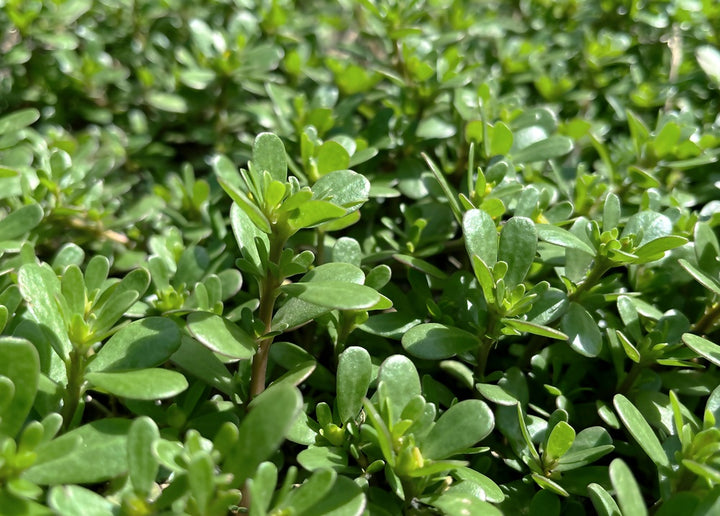
The most important factor in growing Golden Purslane successfully is maximizing sunlight. This plant is highly responsive to full sun and will produce its best growth—compact, succulent, and richly colored—when exposed to strong, direct light for most of the day. In lower light conditions, it tends to stretch, producing longer, weaker stems with reduced leaf density. This not only affects yield but also reduces the desirable crisp texture. Ensuring full sun exposure keeps plants low, dense, and highly productive.
Moisture management is where experienced growers can significantly improve quality. While Golden Purslane is extremely drought-tolerant, the goal is not to grow it under stress but to maintain a balance that encourages tender, succulent growth without creating excess water conditions. Moderate, consistent watering produces the best texture and flavor. Allowing soil to dry slightly between waterings encourages healthy root development, but prolonged drought will slow growth and reduce leaf size. On the other hand, overwatering—especially in poorly drained soil—can quickly lead to root rot, which is one of the few serious threats to this crop. Well-drained soil is essential, and raised beds or sandy soils are ideal.
Soil fertility plays a more subtle role. Golden Purslane does not require rich soil and often performs better in moderately fertile conditions. Excess nutrients, particularly nitrogen, can lead to overly lush, watery growth that lacks the firm texture and flavor intensity that make this plant desirable. Incorporating a small amount of compost is usually sufficient. The plant’s natural efficiency allows it to thrive where many other crops would struggle, making it an excellent choice for low-input systems.
Growth habit management is another important aspect. Golden Purslane grows as a low, spreading plant that forms a dense mat over time. This natural groundcover habit helps suppress weeds once established, but early-stage weed control is critical. During initial growth, seedlings are not highly competitive, so keeping the area clean ensures strong establishment. Once the canopy fills in, the plant becomes much more self-sufficient.
Harvesting strategy directly influences plant performance. Golden Purslane is a true cut-and-come-again crop, and regular harvesting encourages branching and denser growth. Instead of allowing stems to grow long and mature fully, frequent cutting keeps the plant in an active vegetative state, producing tender new shoots. Cutting just above the base or at branching points stimulates multiple new growth tips, increasing overall yield. If left unharvested for too long, stems can become thicker and slightly less tender.
Temperature plays a supportive but important role. Golden Purslane thrives in warm to hot conditions and continues to perform even during periods of intense heat when many greens fail. This makes it particularly valuable as a summer crop. However, while it tolerates extreme heat, growth quality improves when moisture is maintained and stress is minimized. In cooler conditions, growth slows significantly, and the plant is highly sensitive to frost.
Another key consideration is airflow and density. While purslane can grow densely, extremely tight spacing combined with high humidity can create conditions where moisture lingers near the soil surface. This can increase the risk of fungal issues, even in a generally disease-resistant plant. Occasional thinning or consistent harvesting helps maintain airflow and reduces this risk.
Golden Purslane also excels in alternative growing systems. It performs exceptionally well in containers, raised beds, and even marginal soils, as long as drainage is adequate. Its shallow root system allows it to adapt to confined spaces, making it ideal for small-scale or urban growing environments. In these settings, careful watering becomes even more important, as containers can dry out quickly but also become waterlogged if overwatered.
One of the most powerful advantages of Golden Purslane is its ability to produce under stress conditions that limit other crops. It can serve as a reliable summer green when temperatures are too high for lettuce or spinach. This makes it a strategic crop in seasonal planning, filling gaps when other greens are unavailable.
Overall, growing Golden Purslane successfully is less about intensive care and more about maintaining balance—strong sunlight, well-drained soil, moderate moisture, and regular harvesting. When these conditions are met, it produces a continuous supply of tender, nutrient-dense greens with minimal effort, making it one of the most efficient and rewarding crops to grow.
Practical field and garden tipsExtra techniques, timing adjustments, and observations that improve success
Golden Purslane is often described as effortless, but producing consistently tender, clean, high-quality growth—especially for market or repeated harvest—comes down to understanding how to control its natural tendencies. This plant is highly opportunistic: it will grow almost anywhere, but how you manage light, moisture, density, and harvest timing determines whether you get coarse, sprawling growth or compact, premium-quality greens.
The most important technique is controlling growth through harvesting. Purslane naturally wants to sprawl and mature quickly, which leads to thicker stems and a slightly tougher texture over time. To keep it in its best edible state, harvest early and often. Frequent cutting forces the plant to branch, creating denser, more tender regrowth. Instead of letting stems elongate, cut them back regularly to maintain a compact canopy. This not only improves texture but significantly increases total yield over time.
Light intensity directly affects plant structure. Golden Purslane grown in full, intense sun will stay low, tight, and succulent, while plants grown in partial shade tend to stretch, producing longer stems with wider spacing between leaves. If you notice leggy growth, it’s almost always a light issue. For the highest quality harvest, prioritize full sun exposure, especially during peak growing hours. In extremely hot climates, slight afternoon shade can reduce stress, but too much shade will reduce quality.
Watering strategy is one of the most misunderstood aspects of growing purslane. While it is drought-tolerant, that does not mean neglect produces the best results. Mild, consistent moisture produces the most tender and juicy growth. However, overwatering is one of the few ways to damage the crop. The ideal approach is to allow the soil surface to dry slightly between waterings while maintaining moisture deeper in the root zone. This encourages balanced growth without promoting rot or overly soft tissue.
Soil management plays a subtle but important role. Golden Purslane performs best in moderately fertile, well-drained soils. Excess fertility—especially nitrogen—can cause overly lush, watery growth that lacks structure and flavor. If plants appear overly soft or weak, fertility may be too high. In contrast, slightly leaner soils produce more concentrated flavor and better texture. This makes purslane an excellent crop for areas where other vegetables struggle.
Density control is another key technique. Purslane can be grown densely, especially for baby greens, but overly crowded conditions can trap moisture and reduce airflow at the soil surface. This can create microenvironments where fungal issues develop, even in an otherwise resilient plant. If growth becomes too thick, selective thinning or heavier harvesting improves airflow and plant health.
Temperature management can also be used strategically. Golden Purslane thrives in heat and will continue producing when many other greens fail. This makes it ideal as a summer gap crop. However, extreme heat combined with dry soil can slow growth and reduce leaf size. Maintaining consistent moisture during heat waves keeps plants actively producing. Unlike many greens, purslane does not bolt in the traditional sense, but stress can still reduce quality.
Another powerful technique is succession planting. Because purslane grows so quickly, planting small amounts every 2–3 weeks ensures a continuous supply of young, tender growth. This prevents reliance on older plants that may become tougher over time. It also spreads risk—if one planting is affected by weather or pests, others will still perform.
Weed management is most important at the beginning. Once established, purslane forms a dense mat that suppresses most weeds naturally. But during early stages, it is not competitive. Keeping the area clean during establishment allows it to take over the space effectively. After that point, maintenance becomes minimal.
For container growing, drainage becomes even more critical. Purslane adapts well to containers, but excess water is more dangerous in confined soil. Use well-draining mixes and avoid letting containers sit in water. Because containers dry faster, more frequent but controlled watering is needed compared to in-ground planting.
If growing for maximum nutritional value, harvest timing matters. Younger leaves and stems are more tender and have a more balanced flavor, while older growth becomes slightly more fibrous. Regular harvesting not only improves texture but also maintains higher overall quality.
Finally, one of the most overlooked advantages of Golden Purslane is its ability to thrive under neglect—but the best results come from controlled neglect. Allowing slight stress (but not extremes) can improve flavor and structure, while still maintaining enough moisture and care to support steady growth. Finding that balance is what separates average yields from consistently high-quality production.
With proper light, controlled moisture, and disciplined harvesting, Golden Purslane becomes one of the most efficient, productive, and reliable greens you can grow, especially in conditions where other crops struggle.
Harvest, storage, uses, and benefitsWhen and how to harvest, ways to use the crop, storage, culinary value, habitat value, and garden roles
Uses and benefits
Golden Purslane is one of the most uniquely valuable leafy crops due to its rare combination of culinary versatility, exceptional nutritional density, environmental resilience, and efficiency in production. Unlike many greens that serve a single purpose, purslane functions as a multi-use crop that bridges fresh eating, cooked applications, and functional nutrition, all while requiring minimal inputs to produce high yields.
From a culinary perspective, Golden Purslane stands out for its crisp, succulent texture and mild, slightly lemony flavor. The entire above-ground portion—leaves and stems—is edible, offering a refreshing crunch that holds up well in raw dishes. It is most commonly used fresh in salads, where its natural juiciness reduces the need for heavy dressings. It also works exceptionally well in sandwiches, wraps, and as a garnish, adding both texture and brightness. Unlike more delicate greens, purslane maintains structure when lightly cooked, making it suitable for sautéing, stir-fries, soups, and stews. In many traditional cuisines, it is simmered into dishes where its slight tang balances richer ingredients.
Beyond fresh and cooked uses, purslane can also be preserved. It can be pickled, fermented, or added to relishes, where its firm texture and acidity translate well into long-term storage products. This makes it not only a fresh-market crop but also a candidate for value-added processing. Its ability to retain structure during preservation gives it an advantage over more fragile leafy greens.
Nutritionally, Golden Purslane is one of the most remarkable leafy vegetables available. It is one of the richest plant sources of omega-3 fatty acids, particularly alpha-linolenic acid (ALA), which is uncommon in terrestrial plants. In addition, it contains high levels of vitamins A, C, and E, as well as important minerals such as magnesium, potassium, and iron. Its antioxidant content supports overall health, and its combination of nutrients makes it especially valuable in diets focused on whole, nutrient-dense foods. The succulent nature of the plant also contributes to hydration, making it a functional food in hot climates.
From a growing and production standpoint, Golden Purslane offers exceptional efficiency. It thrives in conditions that limit or eliminate many other crops—high heat, low water availability, and poor soils. This makes it a strategic crop for summer production when traditional greens like lettuce and spinach fail. Its rapid growth cycle allows for quick turnaround from planting to harvest, often within a few weeks, and its cut-and-come-again nature enables multiple harvests from a single planting.
Agriculturally, purslane plays a supportive role in sustainable systems. Its low-growing, spreading habit helps cover soil, reducing erosion and moisture loss while suppressing weeds once established. This groundcover effect improves soil microclimate conditions and can reduce the need for additional weed control measures. While it is not a nitrogen-fixing plant, it contributes organic matter when incorporated back into the soil, supporting long-term soil health.
Golden Purslane is also highly adaptable to different growing environments. It performs well in in-ground beds, raised beds, and containers, making it suitable for both large-scale production and small-space gardening. Its shallow root system allows it to thrive in confined spaces, while its tolerance for stress reduces the need for intensive management. This adaptability makes it accessible to beginner growers while still offering value to experienced producers.
Another major benefit is its role in food security and resilience. Because it grows quickly, requires minimal resources, and produces edible biomass rapidly, it can serve as a reliable food source in challenging conditions. Its ability to be harvested continuously and its tolerance for neglect make it especially useful in low-input or unpredictable growing environments.
Culturally, purslane has been used for thousands of years across many regions, valued both as a food and for its medicinal properties. Its continued use in traditional diets reflects its practicality and nutritional importance. Modern interest in purslane has grown as its health benefits have become more widely recognized, leading to increased demand for cultivated varieties like Golden Purslane.
Overall, Golden Purslane delivers a rare combination of high nutritional value, culinary flexibility, environmental resilience, and production efficiency. It is a crop that not only performs reliably under challenging conditions but also provides meaningful benefits in both diet and growing systems, making it one of the most practical and underutilized greens available.
Seed saving and carrying the variety forwardPollination, isolation, selection, harvest, cleaning, drying, and storage
Saving seeds from Golden Purslane (Portulaca oleracea L.) is both highly achievable and highly productive, but it requires careful attention to timing, handling, and seed collection due to the plant’s unique seed production habits. Unlike many crops that produce large, easily collected seeds, purslane produces extremely small, lightweight seeds in capsules that open quickly when mature. This means that successful seed saving depends less on complexity and more on precision and observation.
The process begins with plant selection. Even though purslane is generally uniform, selecting the best plants ensures stronger future crops. Choose plants that exhibit vigorous growth, compact structure, tender stems, and resistance to stress or disease. Avoid plants that bolt too quickly, appear weak, or show signs of pest damage. Because purslane grows rapidly, it is easy to overlook this step, but consistent selection over time can improve overall plant quality and adaptation to your specific growing conditions.
Golden Purslane will naturally begin flowering once it reaches maturity or experiences slight stress. The flowers are small, yellow, and open briefly during sunny conditions. After pollination, these flowers develop into tiny seed capsules. Each capsule contains numerous very fine, dark seeds. These capsules mature quickly, and once fully dry, they split open (a process called dehiscence), releasing seeds into the surrounding soil. This is the plant’s natural reseeding mechanism and is the primary challenge in seed saving—if not collected in time, seeds are easily lost.
Monitoring plants closely during the seed production phase is essential. Seed capsules transition from green to a dry, tan or light brown color as they mature. At this stage, they are very close to opening. The ideal time to harvest is just before or right as the capsules begin to dry but before they fully split. Waiting too long can result in most seeds dropping to the ground unnoticed.
There are several effective harvesting techniques depending on scale. For small plantings, individual seed heads can be pinched or cut as they mature. Because seeds are so small, it is helpful to place a container or cloth beneath the plant while harvesting to catch any that fall. Another method is to gently shake mature plants over a tray or paper to collect seeds that are ready to release.
For larger or more efficient harvesting, entire plants can be cut once a significant number of seed capsules have matured. These plants can then be placed upside down or laid on a clean surface in a dry, well-ventilated area. As the remaining capsules dry, they will open and release seeds, which can be collected from the surface below. Using a cloth, tarp, or paper makes collection easier and reduces loss.
After collection, seeds should be cleaned to remove plant debris, capsule fragments, and dust. Because purslane seeds are extremely small, fine screening or gentle winnowing is the best method. A light airflow can help separate lighter debris from heavier seeds. Care should be taken during this process, as seeds can easily be lost if airflow is too strong.
Proper drying is critical for long-term storage. Although seeds are small, they must be completely dry before being stored. Spread them out in a thin layer in a dry, shaded area with good airflow for several days. Avoid direct sunlight during drying, as excessive heat can reduce viability. Fully dried seeds should feel hard and flow freely without clumping.
Storage conditions greatly affect seed longevity. Place dried seeds in airtight containers such as glass jars or sealed envelopes stored within a container. Because of their small size, even slight humidity can affect them, so maintaining a dry environment is essential. Adding a desiccant packet or a small amount of dry rice can help control moisture. Store seeds in a cool, dark place with stable temperatures. Under proper conditions, purslane seeds can remain viable for 3–5 years or longer.
Golden Purslane is primarily self-pollinating, but some cross-pollination can occur between different purslane types if grown nearby. If maintaining a specific variety is important, isolate different types or grow only one variety at a time. However, for most growers, this is not a major concern, as plants tend to remain relatively consistent.
One of the most notable characteristics of purslane is its tendency to self-seed readily. If allowed to mature and drop seeds naturally, it will often reappear in the same area in subsequent seasons without replanting. While this can be convenient, it can also lead to uncontrolled spreading if not managed. Intentional seed saving allows for better control over planting and variety selection.
For growers interested in long-term improvement, saving seeds from the best plants each season can gradually enhance traits such as leaf size, growth habit, and stress tolerance. Because of its short lifecycle and high seed production, purslane responds quickly to selection pressure.
Overall, seed saving with Golden Purslane is less about difficulty and more about timing and careful handling. With close observation, proper drying, and controlled storage, it is one of the most reliable crops for producing abundant, viable seed year after year.
Common pests, diseases, and growing problemsIdentification, prevention, crop-safe response, and when intervention is justified
Complete pest and problem guide
Golden Purslane is widely regarded as a resilient, low-maintenance crop, but it is not completely immune to pests, diseases, and environmental stressors. Because it is a succulent, fast-growing groundcover, most issues arise from excess moisture, poor airflow, or early-stage pest pressure rather than chronic vulnerability. Understanding how and when problems develop is key to maintaining a clean, productive stand.
One of the most common pest issues in purslane is aphids. These small, soft-bodied insects cluster on tender stems and leaf joints, feeding on plant sap. This can lead to distorted growth, sticky honeydew residue, and eventual development of sooty mold. While mature purslane can often tolerate minor infestations, heavy populations can slow growth and reduce overall vigor. Early detection is important—inspect new growth regularly. A strong spray of water can dislodge aphids, and persistent infestations can be controlled with insecticidal soap or neem oil. Encouraging beneficial insects such as lady beetles and lacewings provides long-term biological control.
Spider mites may appear during hot, dry conditions, especially when plants are stressed. These tiny pests feed on leaf tissue, causing fine stippling, dull coloration, and eventual leaf decline. Because purslane thrives in dry environments, mite outbreaks can sometimes go unnoticed until damage is visible. Increasing humidity slightly through occasional rinsing and maintaining plant vigor helps reduce susceptibility. In severe cases, miticidal treatments or repeated water sprays can help control populations.
Flea beetles can affect young purslane seedlings, creating small “shot holes” in leaves. While established plants typically outgrow this damage, seedlings can be weakened if infestations are heavy. Row covers during early growth stages are effective in preventing damage. Once plants mature and begin rapid spreading, flea beetle pressure becomes less significant.
Cutworms are another early-stage threat, particularly in garden beds with prior plant residue. These larvae cut seedlings at the soil line, often overnight. Using collars around young plants, keeping the planting area clean, and disturbing soil before planting can reduce their presence. Once plants are established, they are far less vulnerable to this type of damage.
Disease pressure in Golden Purslane is generally low, but when problems occur, they are almost always related to excess moisture and poor drainage. Root rot is the most significant issue, caused by waterlogged soil conditions. Purslane is highly adapted to dry environments and does not tolerate saturated soil. Symptoms include wilting despite wet soil, yellowing leaves, and eventual plant collapse. Prevention is critical—plant in well-drained soil and avoid overwatering. Raised beds or sandy soils are especially beneficial for preventing root issues.
Fungal diseases such as damping-off can affect seedlings, particularly in overly moist or poorly ventilated conditions. This results in seedlings collapsing shortly after emergence. Using well-drained soil, avoiding overwatering, and ensuring good airflow significantly reduces this risk. Starting with clean soil and spacing seedlings properly also helps prevent fungal spread.
Leaf spot diseases are rare but can occur in humid environments. These appear as small dark lesions on leaves and may spread if conditions remain wet. While usually not severe, they can reduce plant quality if unmanaged. Removing affected leaves and improving airflow typically resolves the issue without further intervention.
Environmental stress is often a bigger factor than pests or disease. Although purslane is extremely drought-tolerant, inconsistent watering—especially sudden overwatering after dry periods—can cause stress and reduce growth quality. Excess shade can also lead to leggy, weak growth, while overcrowding can trap moisture and increase disease risk. Maintaining full sun exposure and proper spacing keeps plants compact, healthy, and productive.
Weed competition is another consideration, particularly during early establishment. While mature purslane can spread and outcompete many weeds, seedlings are less competitive. Keeping the area weed-free during early growth ensures strong establishment and reduces competition for light and nutrients.
Because purslane grows low and dense, airflow near the soil surface is important. Overly dense plantings or humid conditions can create microenvironments where moisture lingers, increasing the chance of disease. Thinning or harvesting regularly helps maintain airflow and reduces these risks.
The most effective approach to managing pests and problems in Golden Purslane is prevention through proper growing conditions: well-drained soil, full sun, moderate watering, and early monitoring. Healthy, unstressed plants are highly resilient and can recover quickly from minor damage. With minimal intervention and attention to environmental balance, purslane remains one of the most trouble-free crops to grow.
Questions gardeners ask about this seedProduct-specific answers for sowing, care, harvest, use, and seed saving
Q: What is Golden Purslane and how is it different from wild purslane?
A: Golden Purslane is a cultivated variety of Portulaca oleracea selected for its lighter green to golden stems, more upright growth, and milder, less tangy flavor. Compared to wild purslane, it tends to have more uniform growth, larger and more tender leaves, and a cleaner appearance, making it more desirable for culinary use. It is less sprawling and easier to harvest, especially in garden or market settings.
Q: Is Golden Purslane edible raw, and how does it taste?
A: Yes, Golden Purslane is most commonly eaten raw. It has a crisp, succulent texture with a mild, slightly lemony flavor. The leaves and stems are juicy and refreshing, making them ideal for salads, garnishes, and fresh dishes. The flavor is less sharp than wild purslane, which makes it more versatile in a wider range of recipes.
Q: How fast does Golden Purslane grow?
A: It is a very fast-growing plant, often ready for harvest within 20–40 days depending on conditions. Once established, it grows rapidly in warm weather and can be harvested repeatedly. Its quick growth makes it ideal for succession planting and continuous harvest systems.
Q: Can Golden Purslane be grown in poor soil?
A: Yes, it is highly tolerant of poor or sandy soils and does not require rich fertility to grow well. In fact, overly rich soil can lead to excessive, watery growth with reduced flavor intensity. It performs best in well-drained soil with moderate fertility.
Q: Does Golden Purslane need a lot of water?
A: No, it is drought-tolerant once established. However, consistent moderate moisture will produce more tender, succulent growth. Overwatering should be avoided, as it can lead to root rot and reduced plant health. It thrives in conditions where many other greens would struggle.
Q: Can Golden Purslane be grown in containers?
A: Yes, it is very well-suited to container growing due to its shallow root system and compact growth habit. Containers must have excellent drainage, as purslane does not tolerate waterlogged conditions. It is a great option for patios, balconies, and small-space gardens.
Q: Does Golden Purslane require full sun?
A: Yes, it performs best in full sun. Strong sunlight promotes compact growth, better flavor, and higher productivity. In lower light conditions, plants may become leggy and less dense.
Q: How do I harvest Golden Purslane?
A: Harvest by cutting stems just above the soil line or pinching off sections of growth. This encourages branching and regrowth, allowing for multiple harvests from the same plant. Frequent harvesting keeps the plant tender and prevents it from becoming too woody or overgrown.
Q: Will Golden Purslane regrow after cutting?
A: Yes, it is a highly regenerative plant. As long as the base of the plant remains intact, it will continue to produce new growth after cutting. This makes it an excellent cut-and-come-again crop.
Q: Does Golden Purslane flower, and does that affect quality?
A: Yes, it produces small yellow flowers, especially as it matures or experiences stress. Once flowering begins, stems may become slightly tougher and less tender. Regular harvesting helps delay flowering and maintain quality.
Q: Is Golden Purslane invasive or hard to control?
A: It can reseed easily if allowed to go to seed, especially in warm climates. However, it is easy to manage through regular harvesting and removal before seed set. It is not aggressive in the same way as invasive weeds but can naturalize if unmanaged.
Q: Can I grow Golden Purslane indoors?
A: Yes, it can be grown indoors if provided with sufficient light, ideally from a bright window or grow lights. Without adequate light, growth will be weak and stretched. Indoor growing is most successful when conditions mimic warm, sunny outdoor environments.
Q: Is Golden Purslane nutritious?
A: Extremely. It is one of the richest plant sources of omega-3 fatty acids, along with vitamins A, C, and E, and important minerals. Its nutritional density makes it highly valued in health-focused diets.
Q: Can I save seeds from Golden Purslane?
A: Yes, it is typically open-pollinated and easy to save. Allow plants to flower and set seed, then collect seeds once they mature and dry. Seeds are very small and should be handled carefully. Stored properly, they remain viable for several years.
Q: Why are my purslane plants leggy or weak?
A: This is usually caused by insufficient light or overcrowding. Purslane requires strong sunlight to maintain compact growth. Improving light exposure and spacing will correct this issue.
Q: Is Golden Purslane good for beginners?
A: Yes, it is one of the easiest crops to grow. Its tolerance for heat, drought, and poor soil makes it very forgiving. As long as drainage and sunlight are adequate, it performs reliably with minimal care.
Q: Can Golden Purslane be grown year-round?
A: It is a warm-season plant and grows best in warm temperatures. In frost-free climates, it can be grown for much of the year. In cooler climates, it is best grown during the warmest months or indoors under controlled conditions.
History, provenance, and cultural contextWhat is documented, what is reported, what remains uncertain, and how the variety reached gardeners
Scientific name: Portulaca oleracea L.
Plant and variety history
Golden Purslane (Portulaca oleracea) has a long, complex, and often misunderstood history that spans thousands of years and multiple continents. Unlike many cultivated crops that were clearly domesticated from wild ancestors in a single region, purslane occupies a unique position as both a wild plant and a cultivated vegetable, with evidence suggesting it has been used by humans since prehistoric times. Its exact center of origin is debated, but it is most commonly associated with a broad region stretching from North Africa and the Middle East into South Asia, where it likely evolved as a heat- and drought-adapted species in disturbed soils and arid environments.
Archaeological evidence indicates that purslane was consumed by humans as early as 4,000 years ago, with seeds found in ancient sites across the Mediterranean and Middle Eastern regions. It was valued not only for its ability to grow in harsh conditions but also for its nutritional density and reliability as a food source. In ancient agricultural systems, plants that could thrive without irrigation or intensive care were essential, and purslane quickly became one of those dependable species.
In classical antiquity, purslane was widely recognized and documented. Ancient Greek and Roman writers, including Pliny the Elder, wrote about its culinary and medicinal uses. It was cultivated intentionally in gardens and was considered both a vegetable and a medicinal herb. Purslane was believed to have cooling properties and was used in traditional remedies to address inflammation, digestive issues, and other ailments. Its dual role as both food and medicine contributed to its widespread adoption across early civilizations.
As trade routes expanded, purslane spread throughout Europe, Asia, and eventually into Africa and the Americas. It adapted easily to a wide range of climates, particularly warm and temperate regions, and often established itself in disturbed soils, agricultural fields, and garden beds. Because of this adaptability, it developed a reputation in some regions as a “weed,” even while it continued to be cultivated and consumed in others. This dual identity—as both a cultivated crop and a wild plant—has followed purslane throughout its history.
In many traditional cultures, purslane remained an important seasonal green. In the Mediterranean, it has long been used in salads and cooked dishes, often paired with olive oil, vinegar, or yogurt. In Mexico and parts of Central and South America, known as “verdolaga,” it is a staple ingredient in traditional dishes, often cooked with meats or in sauces. In the Middle East and South Asia, it has been incorporated into a variety of preparations, reflecting its adaptability across culinary traditions.
Golden Purslane represents a cultivated selection of this ancient species, bred or selected for improved qualities such as lighter coloration, more uniform growth, and a milder, more palatable flavor. Unlike wild purslane, which can be sprawling and variable, Golden Purslane offers a more controlled growth habit and a cleaner, more consistent appearance, making it better suited for market production and intentional cultivation. This transition from wild-gathered plant to refined garden crop reflects a broader pattern seen in many traditional species that have been brought into more formal agricultural systems.
In modern times, purslane has experienced a resurgence in interest, driven largely by its exceptional nutritional profile. Scientific research has identified it as one of the richest plant sources of omega-3 fatty acids, along with high levels of vitamins A, C, and E, and various antioxidants. This has shifted its perception in many parts of the world—from overlooked weed to “superfood.” As a result, cultivated varieties like Golden Purslane are increasingly valued not just for their resilience but for their health benefits and culinary potential.
Agriculturally, purslane continues to reflect its ancient origins. It thrives in conditions that mimic its natural habitat—heat, sunlight, and well-drained soil—and requires minimal inputs to produce abundant yields. This makes it particularly relevant in modern sustainable and low-input farming systems, where water conservation and soil health are priorities. Its ability to grow quickly and repeatedly under these conditions reinforces its long-standing role as a reliable, opportunistic food source.
The history of Golden Purslane is ultimately a story of continuity and adaptation. From ancient foraging and early cultivation to modern rediscovery and refinement, it has remained a plant closely tied to human survival, culture, and innovation. Its persistence across time and geography reflects both its biological resilience and its enduring value as a food and medicinal resource.