Amaranth can make a liar out of a label. A red plant may be grain, greens, dye, cut flower, or some combination of the four. A tassel may be beautiful and awkward to thresh. A leaf type may produce seed, but not enough to justify calling it a grain crop.
I have learned to ask one question before the packet is opened: what work is this planting supposed to do? Without that answer, amaranth becomes a row of impressive plants and confused expectations.


One genus, several different crops
The genus Amaranthus contains cultivated crops, ornamentals, wild plants, and serious agricultural weeds. USDA’s amaranth germplasm collection preserves grain, vegetable, ornamental, and wild material because the diversity is real. A gardener should not treat every member of the genus as interchangeable.
| Primary use | What is being selected | Useful species or forms | What can go wrong |
|---|---|---|---|
| Leafy greens | Tender leaves, regrowth, delayed toughness, summer production | Often Amaranthus tricolor, A. dubius, or leaf selections of A. cruentus | Waiting too long produces coarse stems and leaves |
| Grain | Seed yield, maturity, head structure, threshability, uniform drying | Commonly grain selections of A. cruentus or A. hypochondriacus | A beautiful head may shatter, lodge, or mature unevenly |
| Ornamental and cut flower | Stem strength, branching, plume or tassel form, color | Includes A. caudatus tassel types and upright ornamental selections | Heavy heads can lodge and wet centers can mold |
| Dye | Documented pigment use, clean plant material, identity stewardship | Named dye selections such as Hopi Red Dye amaranth | Reducing a culturally named variety to generic décor erases context |
| Seed preservation | Representative population, isolation, true-to-type selection | Any documented open-pollinated variety | Volunteers and nearby amaranths can compromise identity |
Leaf amaranth is a summer green, not a copy of spinach
UMN identifies Amaranthus tricolor as a heat-loving green that can fill the summer gap after spinach struggles. That is a useful comparison, but it should not be stretched into sameness. Amaranth has its own texture, flavor, cooking behavior, and growth habit.
Leaf types should be harvested young and repeatedly. The useful traits are tender regrowth, manageable branching, clean leaves, and the ability to continue through heat. If the garden’s goal is greens, letting the entire planting become six-foot seed plants defeats the original plan. Reserve a separate group for seed.
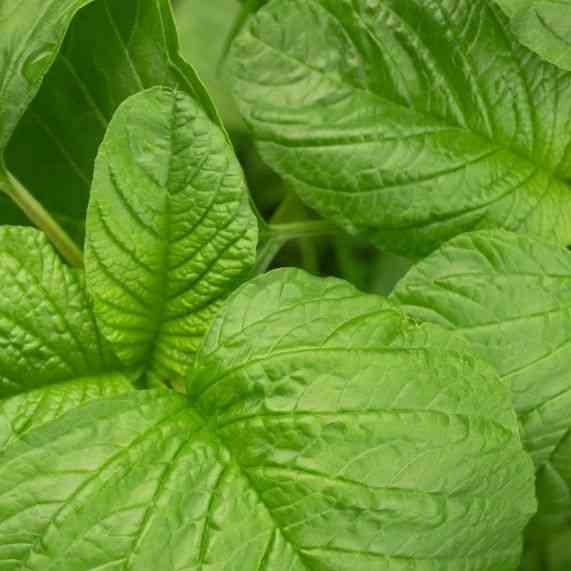
Green Leaf “Lu Hsien,” listed as Amaranthus tricolor, belongs in this category. Judge it by leaf tenderness, regrowth after cutting, response to humidity, and how quickly stems become coarse. The right record is not simply “grew well.” It is how many useful cuttings the row gave before quality changed.

Grain amaranth must finish the season cleanly
A grain type needs more than edible seed. It needs enough season to mature, a head that can be harvested before birds and storms take it, and seed that can be cleaned with the equipment available. UMN notes that amaranth seed often matures around 90 to 100 days in its Minnesota guidance, but variety, climate, and planting date can shift the real finish.
In eastern North Carolina, heat is rarely the only problem. Humidity and late rain can make a mature-looking head difficult to dry. A tall plant may lodge in a thunderstorm. A late planting may keep green tissue around the seed long after the gardener is ready to harvest. Choose a grain type with the end of the season in mind, not just the first month of growth.
Opopeo can be grown for both leaf and seed use, but the row should still be divided by purpose. Repeated leaf cutting changes the architecture and can reduce the grain harvest. A plant cannot be managed as a leaf crop all summer and then be expected to behave like an untouched grain crop in fall.


Ornamental amaranth is selected for form and timing
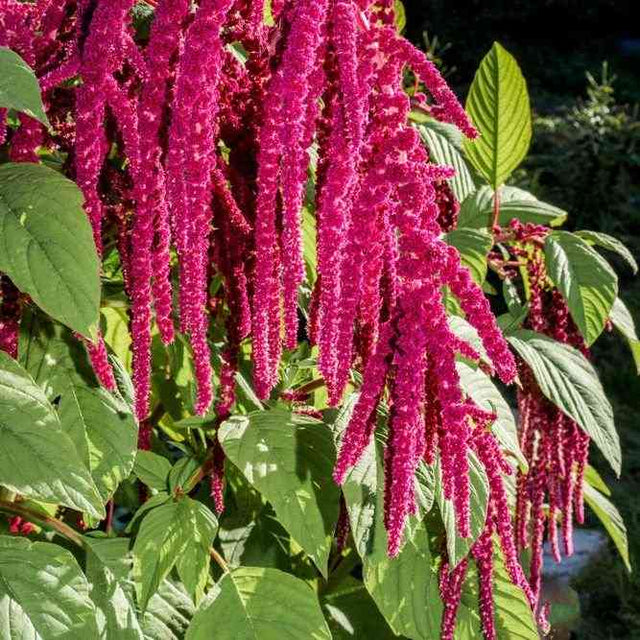
Love Lies Bleeding, Amaranthus caudatus, is grown for long hanging tassels. Its success in a cut-flower or display row depends on stem strength, head length, harvest timing, and whether the planting can be reached before wind or rain damages the display.
An upright plume and a hanging tassel are not interchangeable design materials. Nor are all ornamental types efficient grain plants. A flower grower may want branching and multiple stems. A grain grower may prefer a more uniform head that dries and threshes cleanly. The plant cannot serve every market equally.
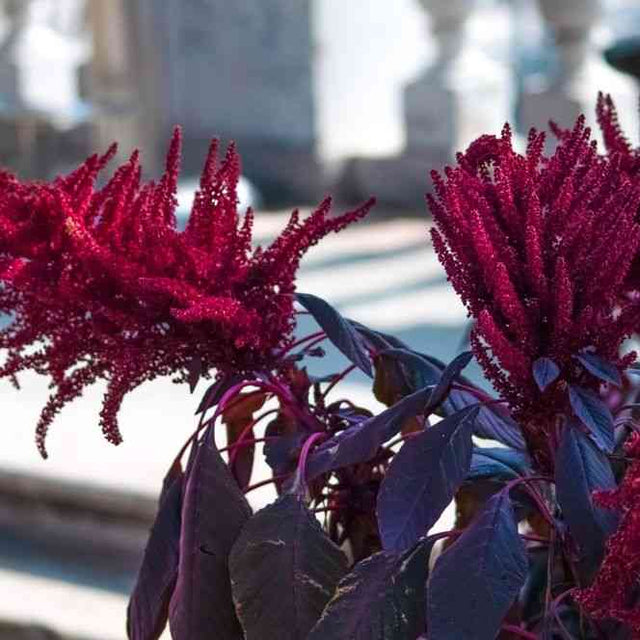
UMN’s cut-flower guidance for Hopi Red Dye amaranth also notes that tall, heavy plants can topple or break and that color can fade as the season progresses. Those are not failures of the variety. They are management facts that should shape planting date, spacing, wind protection, and harvest timing.
Dye amaranth requires cultural and varietal stewardship
Hopi Red Dye amaranth should not be treated as a generic red ornamental with an exotic name. The name identifies a living Hopi variety and a relationship that is larger than garden color. Public writing should distinguish documented community use, current seed-catalog description, and the present grower’s own practice.
For the home gardener, the practical responsibilities are clear: preserve the full variety name, keep the seed source, avoid inventing ceremonial claims, grow enough plants to maintain a population, and record any selection imposed by the garden. If leaves or flowers are harvested for dye experiments, describe the method as the grower’s own unless a community-approved source is being followed.
A culturally named seed is not a costume. The record belongs beside the packet, and respect belongs beside the harvest.
Do not confuse a named crop with Palmer amaranth
Palmer amaranth, Amaranthus palmeri, is a major agricultural weed that has spread widely and developed resistance to multiple herbicides. USDA and Extension sources emphasize early identification and preventing seed production. It can be difficult to distinguish from other pigweeds.
An unidentified volunteer should not be eaten or saved simply because it resembles a cultivated amaranth. Keep named crop rows labeled from sowing onward. Remove unknown pigweeds before they flower, especially near fields, wildlife plantings, livestock feed areas, and equipment paths where seed can move.
Palmer amaranth is not evidence that garden amaranth is inherently unsafe. It is evidence that identification matters. A genus name is not a variety record.

Four Alliance varieties, four different uses
| Variety | Primary use to plan around | Secondary possibilities | Do not assume |
|---|---|---|---|
| Green Leaf “Lu Hsien” | Tender summer greens and repeated cutting | A small reserved group may be allowed to flower for seed | That a leaf row managed by cutting will also produce a strong grain crop |
| Hopi Red Dye | Documented dye identity and culturally accountable stewardship | Young greens, seed, and cut material may be possible where properly documented | That every red amaranth is equivalent or that cultural claims can be generalized |
| Love Lies Bleeding | Hanging ornamental tassels and dried or fresh design use | Seed can be collected from mature heads | That a dramatic tassel is the easiest grain head to thresh |
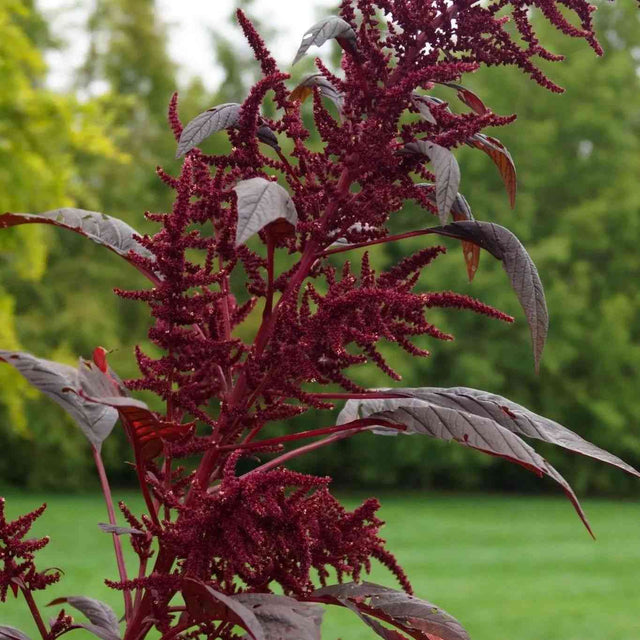
| Opopeo | A dual-purpose red-purple planting for young leaves and mature seed | Ornamental use and seed saving | That repeated leaf cutting has no effect on later seed yield |
A useful trial gives each variety one declared primary job. That prevents the end-of-season review from becoming vague. Measure the crop against the work you asked it to do.
What failure looks like
| Symptom | Likely cause or mismatch | Better decision |
|---|---|---|
| Leaf row becomes coarse before much was harvested | Harvest started too late or cutting interval was too long | Begin with young leaves and reserve separate plants for seed |
| Grain heads mature unevenly | Mixed maturity, late planting, branching, or weather delay | Choose a more uniform grain type and plant with a harvest deadline |
| Tall plants lodge | Heavy heads, wind exposure, rich growth, or weak spacing plan | Use support, wider spacing, wind protection, or a shorter variety |
| Cut flowers weather before harvest | The crop was planted without a market or harvest date | Cut at the intended stage before rain, shattering, or bird damage |
| Saved seed produces mixed forms | Crossing, volunteers, or selection from too few plants | Improve isolation, rogue off-types, and maintain a larger labeled population |
| Unknown pigweed appears in the row | Volunteer seed or contaminated material | Identify and remove before flowering rather than guessing |
Maintain seed identity deliberately
Amaranths can exchange pollen, and volunteers complicate a seed increase. Keep the row labeled, remove off-types before flowering, separate compatible varieties, and save from several representative plants. A single unusual plant may be worth observing, but it should not quietly redefine the variety.
Clean tiny seed in stages. Remove large chaff first, then use progressively finer screens and controlled airflow. Label species, variety, source, year, primary use, and any selection made. The smaller the seed, the easier it is for the record to be lost while the seed remains.
Choose the amaranth by the work
Choose leaf amaranth when the kitchen needs summer greens. Choose grain amaranth when the season and harvest setup can finish the seed. Choose tassel or plume forms when the garden needs shape and color. Choose dye varieties with full respect for their names and histories.
Amaranth is generous because it can do many things. It becomes useful when the gardener decides which one matters.